Solar panels in Nottinghamshire: compare quotes from vetted installers
Tell us a little about your home and up to three MCS-certified local installers will quote. It's free, takes about two minutes, and there's no obligation.
- Free and no obligation
- Only MCS-certified installers, checked by us
- Up to 3 quotes, so you can compare prices
- Local to Nottinghamshire
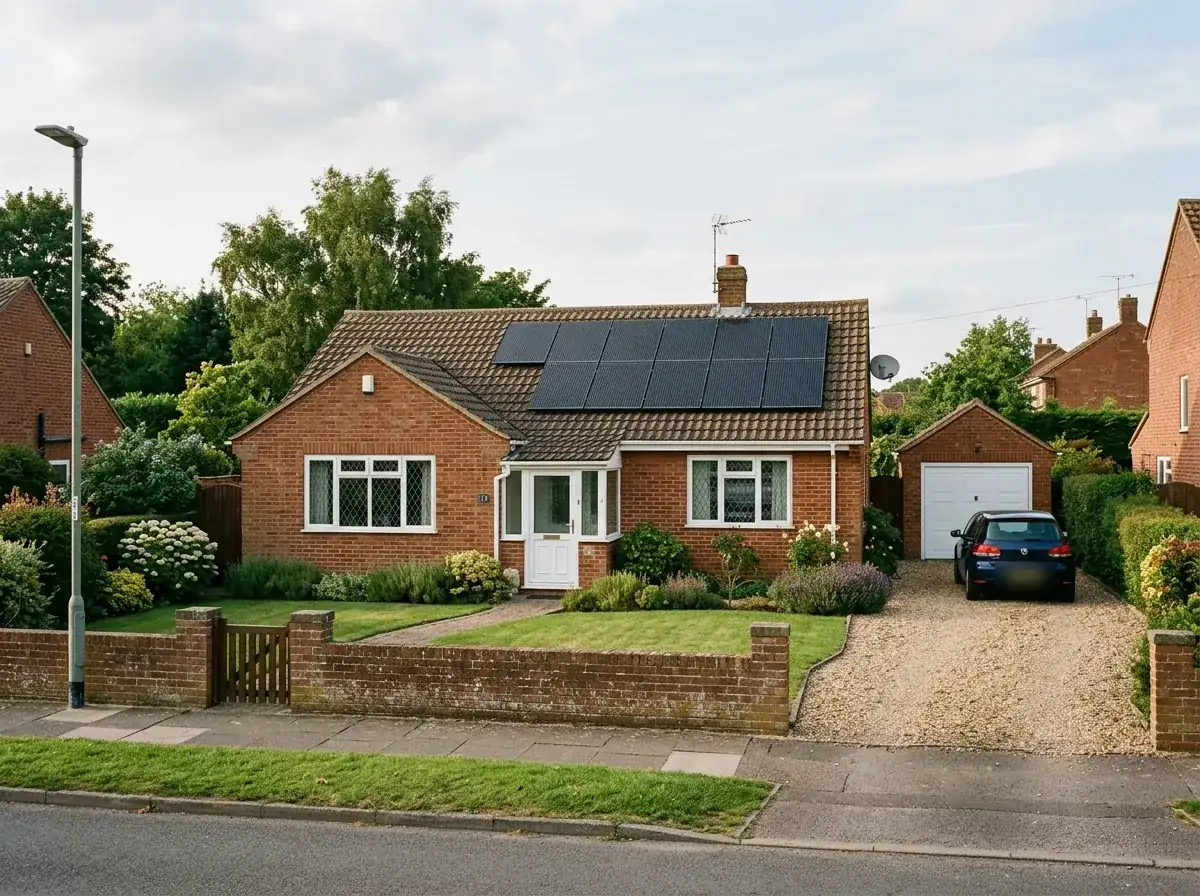
See if your home is suitable
Start with your postcode. We only ask for contact details at the very end.
0% VAT on solar ends 31 March 2027. That's under six months away, and it's due to go back to 5% after.
What the VAT change means for youWhat independent sources say
Don't just take our word for it. Here's what researchers and the government have published this year. Each link opens the original.
Solar and a battery could save around £823 a year
The think tank modelled a typical 3-bed home with a 4kW south-facing system and a 5kWh battery. East or west roofs came out at about £728. The figures are illustrative and depend on your tariff.
Read the research GOV.UK · 26 August 2026Rooftop solar can save up to £480 a year
A government announcement about new plug-in solar kits compared them with rooftop systems, which it says can save households up to £480 a year on bills.
Read the announcement Solar Energy UK and MCS data · 20262026 is a record year for home solar
Over 207,000 MCS-certified installs had been recorded by the time of the report, beating the previous record that had stood since 2011.
Read the reportThese organisations are not connected to Notts Solar Quotes and do not endorse us. Savings vary by home, roof and tariff.
How it works
Three simple steps, and you stay in control the whole way.
Tell us about your home
Your postcode, the type of home and roof, and what you're interested in. About two minutes.
We match you with installers
Up to three vetted, MCS-certified installers who cover your area will get in touch to arrange a survey.
Compare and decide
Compare written quotes side by side. Choose one, or none at all. There's no pressure and no fee.
How much could solar save you?
A typical 4kW system for a 3-bed home costs about £7,300 to £7,500 installed, based on MCS data from spring 2026. Without a battery it typically cuts electricity bills by around £400 to £650 a year, plus payments for the power you send back to the grid.
Rough solar savings estimator
Change the answers to see a rough guide for your home. An installer's survey gives the real figure.
- Likely system size
- 4 kW
- Typical installed cost
- £5,500–£7,000
- Bill savings and export
- £400–£600 a year
- Rough payback
- 9–14 years
Mostly north-facing roofs make much less power. An installer can tell you if another roof, a garage or the garden would work better.
Based on the MCS average cost of £1,586 per kW in England (October 2026), batteries at £3,000–£5,000, electricity at 26.32p per kWh (October–December 2026 price cap) and export at 10p per kWh. Your figures will differ.
Get exact quotes for my homeTypical costs at a glance
| System | Suits | Typical installed cost |
|---|---|---|
| 3kW | Smaller homes, 2-bed | £5,000–£6,500 |
| 4kW | Typical 3-bed home | £5,500–£8,000 |
| 5–6kW | Larger homes, 4-bed+ | £7,500–£9,500 |
| 4kW with battery | Using more of your own power | £10,000–£14,000 |
Prices include 0% VAT. Sources: The Green Age, March 2026; Heatable, 2026.
Whatever your reason, we can help
Solar suits more homes than people think. Pick what matters most to you.
Cut my electricity bills
See what panels cost and how much a typical home saves each year.
Costs and savingsI already have panels
Add a battery to use more of your own power, often without new panels.
Batteries explainedI'm on a lower income
Check which grants and funded schemes are open in Nottinghamshire now.
Grants and helpMy home is older or listed
When you need planning permission, and what conservation areas mean.
Planning rulesI have an electric car or heat pump
Higher electricity use usually means a bigger system pays back faster.
Get tailored quotesI'm not sure who to trust
What to check before you sign, and the red flags to walk away from.
Quote checklistIs my home suitable for solar?
Most homes in Nottinghamshire can take solar panels. An installer checks four things at the survey:
- Roof direction. South-facing is best, but east and west roofs still work well.
- Shade. Tall trees, chimneys or nearby buildings can cut output. Some systems handle shade better than others.
- Roof condition. Panels last 25 years or more, so the roof should be in good shape first.
- Planning. Most roofs don't need permission. Listed buildings do, and some conservation areas have extra rules.
Not sure about any of these? That's what the free survey is for.
Check my home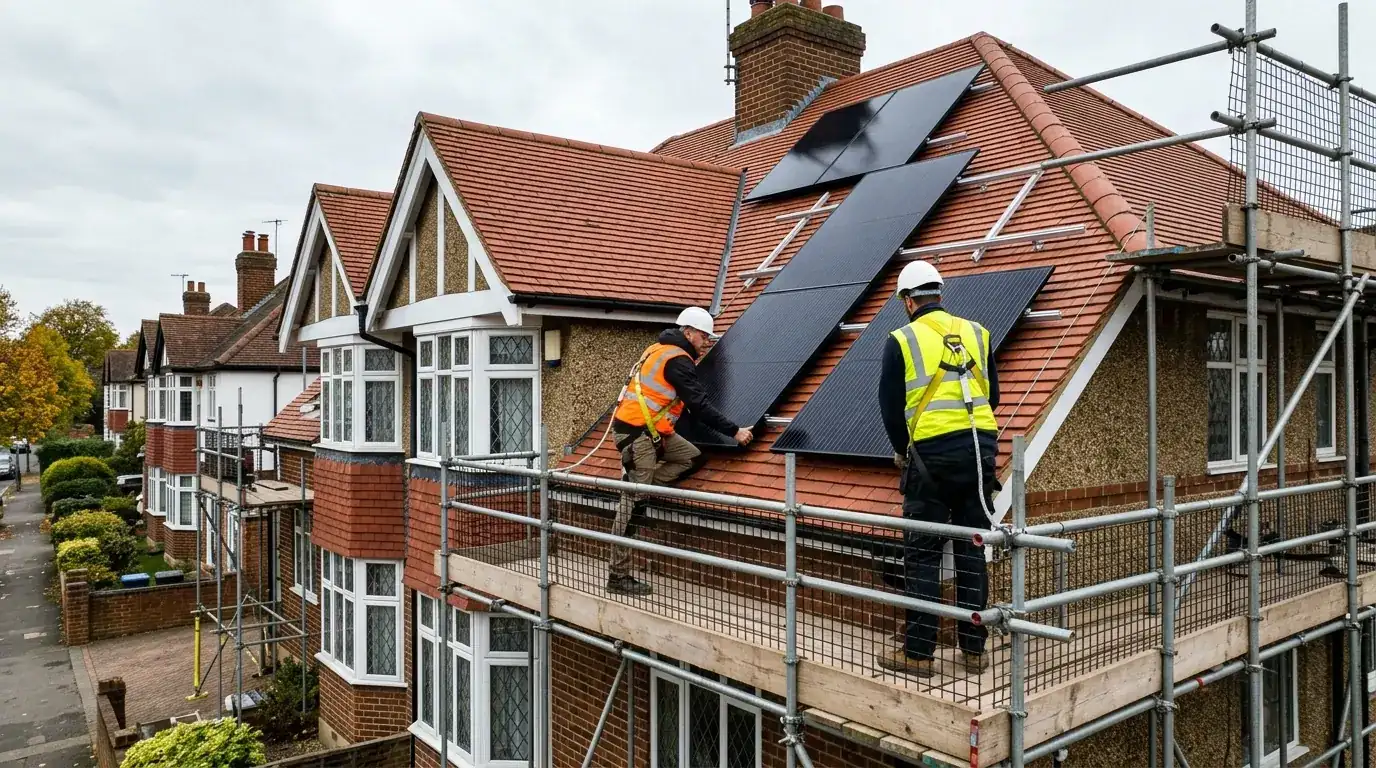
Areas we cover
We take enquiries from across Nottinghamshire. Our local guides cover these towns and the villages around them.
Retford
Bassetlaw District Council · DN22
Solar in RetfordWorksop
Bassetlaw District Council · S80, S81
Solar in WorksopNewark
Newark and Sherwood District Council · NG24, NG23
Solar in NewarkMansfield
Mansfield District Council · NG18, NG19, NG20, NG21
Solar in MansfieldSouthwell
Newark and Sherwood District Council · NG25
Solar in SouthwellOllerton
Newark and Sherwood District Council · NG22
Solar in OllertonSutton-in-Ashfield
Ashfield District Council · NG17
Solar in Sutton-in-AshfieldHucknall
Ashfield District Council · NG15
Solar in HucknallCompare all areas. We also help homeowners on farms and rural properties: see solar for farms and solar with an EV charger. Live somewhere else in Nottinghamshire? You can still get quotes.
Guides for homeowners
Straight answers on costs, grants and the VAT deadline, checked every month.
How much do solar panels cost in Nottinghamshire in 2026?
What solar panels really cost in Nottinghamshire in 2026, from a 3kW system to panels with a battery, with savings and payback explained.
Read the guideGrants & savingsSolar panel VAT: what happens after 31 March 2027?
0% VAT on home solar and batteries ends on 31 March 2027. Here is what changes, what it could cost, and how to plan without rushing.
Read the guideGrants & savingsAre there solar panel grants in Nottinghamshire in 2026?
What solar grants are really available in Nottinghamshire in 2026, who qualifies for the Warm Homes: Local Grant, and why ECO4 is winding down.
Read the guideQuestionsSolar panel questions answered
The 15 things people ask most, from winter output to batteries, in a sentence or two each.
Read the guideFarmsSolar for farms and rural properties
Barn roof costs, planning limits, grid connection and tax relief for Nottinghamshire farms.
Read the guideGlossarySolar jargon explained
kWp, G98, SEG, MCS, hybrid inverter: 25 terms from installer quotes in plain English.
Read the glossarySolar panel questions Nottinghamshire homeowners ask most
Straight answers, last updated . For more detail, see all solar panel questions answered.
Is this service free?
Yes. Getting quotes through Notts Solar Quotes is free and there is no obligation to buy. Installers may pay us a fee for introductions, which never changes your price.
Who will contact me?
Up to three independent, MCS-certified installers who cover your area. We check every installer before we pass on any enquiry, and we never sell your details to anyone else.
How much do solar panels cost in Nottinghamshire?
A typical 4kW system for a 3-bed home costs about £7,300 to £7,500 installed, based on MCS data from spring 2026. Adding a battery usually takes the total to roughly £10,000 to £14,000.
Do solar panels work in Nottinghamshire's weather?
Yes. Panels make electricity from daylight, not just bright sunshine. A south-facing 4kW system typically makes around 3,400 kWh a year, which is over the yearly use of a typical home.
When does 0% VAT on solar panels end?
0% VAT on solar panels and batteries for homes runs until 31 March 2027. From 1 April 2027 it is due to go back to 5%.
I already have solar panels. Can I add a battery?
Usually, yes. Adding a battery to existing panels also qualifies for 0% VAT until 31 March 2027. An installer will check your inverter and wiring first.
Do I need planning permission?
Most roof panels on houses in England are permitted development, so no planning application is needed. Listed buildings and some walls facing a road in conservation areas are the main exceptions.
Are solar panels worth it in Nottinghamshire?
For most homes with a south, east or west-facing roof, yes. A 4kW system costs about £7,300 to £7,500 fitted and typically cuts electricity bills by around £400 to £650 a year, plus export payments. That usually means a payback of roughly 9 to 14 years, on panels that last 25 years or more.
How many solar panels do I need for a 3-bed house?
Most three-bed homes suit a 4kW system, which is about 9 or 10 modern 400–450W panels. Smaller homes often fit 3kW (7 or 8 panels) and larger detached homes 5–6kW.
Do solar panels work in winter and on cloudy days?
Yes. Panels run on daylight, not heat, so they still work when it is cloudy. Output is much lower in winter, and most of the roughly 3,400 kWh a 4kW system makes each year comes between April and September.
How long do solar panels last?
Usually 25 to 30 years or more, and most panels come with a 25-year performance warranty. The inverter normally needs replacing once, after about 10 to 15 years.
Do solar panels need cleaning?
Rarely. Rain washes most dirt off a sloping roof. It is worth checking now and then for heavy bird mess or leaves, especially on low-pitched roofs near trees.
Can solar panels power my whole house?
Not all year round. In summer a 4kW system can cover most daytime use, but you stay connected to the grid for evenings and winter. A battery lets you use more of your own power.
Do I need a battery with solar panels?
No, but it helps if the house is empty during the day. A 4–5kWh battery typically adds £3,000 to £5,000 and stores daytime power for the evening. Batteries also have 0% VAT until 31 March 2027.
How much can I earn selling electricity back to the grid?
Under the Smart Export Guarantee, energy suppliers pay roughly 5p to 15p for each kWh you export. Your system must be MCS-certified to qualify, and rates vary, so it pays to compare suppliers.
Is my roof suitable for solar panels?
South-facing roofs are best, but east and west-facing roofs work well too. The roof should be in good condition with little shade. Mostly north-facing roofs make much less power. An installer's survey will confirm.