Costs
How much do solar panels cost in Nottinghamshire in 2026?
A typical 4kW solar panel system for a three-bedroom home costs about £6,500 to £8,500 installed in 2026, with the average close to £7,300–£7,500. Adding a battery takes most systems to roughly £10,000–£14,000. There is currently 0% VAT on home solar, until 31 March 2027.
Last checked October 2026 · 5 min read
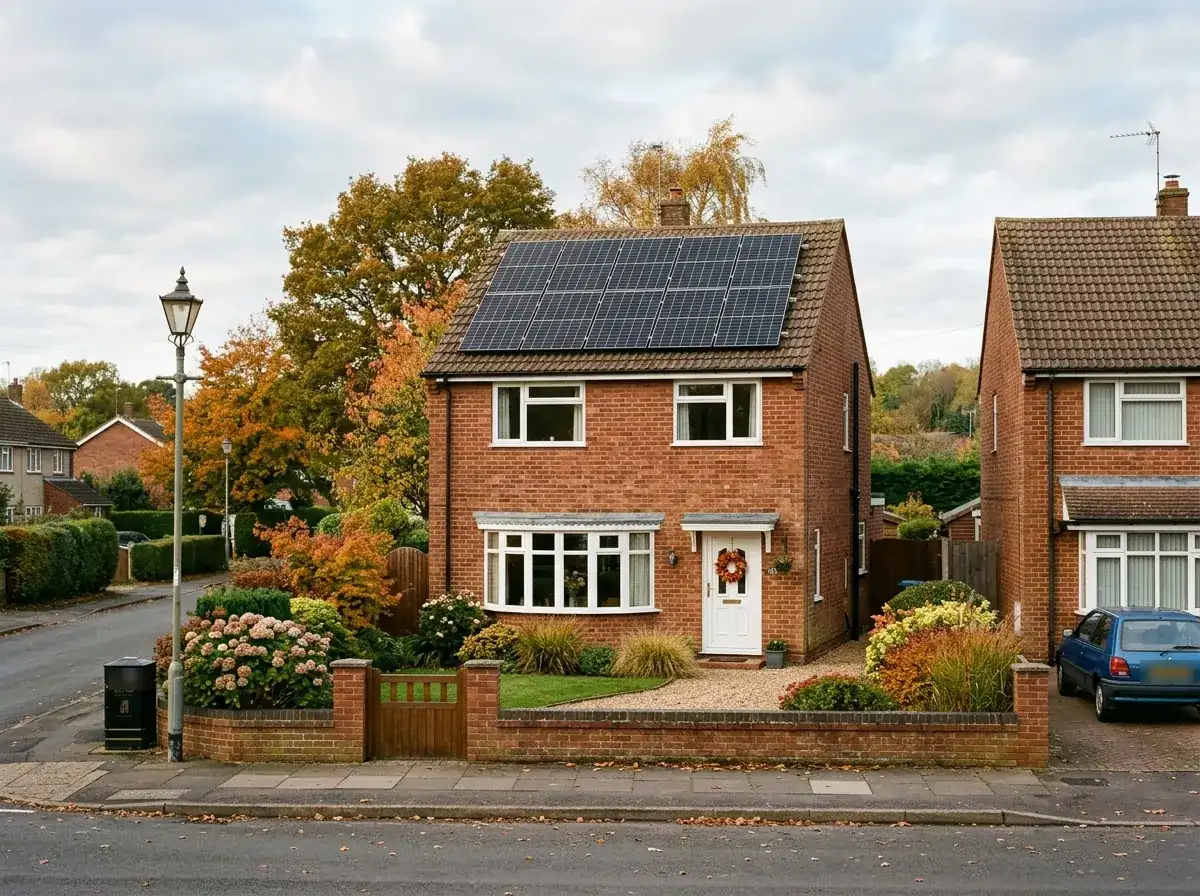
0% VAT on solar ends 31 March 2027. That's under six months away, and it's due to go back to 5% after.
What the VAT change means for youMost Nottinghamshire homes pay between £6,500 and £8,500 for a 4kW solar panel system, fully installed. That is the typical range reported by Heatable. MCS installation data for spring 2026 puts the average 4kW system at about £7,300–£7,500 (The Eco Experts; The GreenAge).
How much does a solar system cost by house size?
The bigger the home and the more electricity you use, the bigger the system you are likely to need. These are typical installed prices in 2026, including VAT at 0%.
| Home | System size | Typical installed cost |
|---|---|---|
| 2-bed home or bungalow | 3kW | £5,000–£6,500 |
| 3-bed home | 4kW | £6,500–£8,500 |
| 4-bed+ home | 5kW | £8,000–£10,000 |
| 3-bed home with battery | 4kW + battery | £10,000–£14,000 |
Figures from Heatable’s 2026 cost guide. A battery added to panels you already have usually costs about £3,000–£5,000 for a 4–5kWh unit (Renewable Energy Hub), though larger or premium batteries cost more.
How many solar panels does a typical home need?
Around 10 panels for a three-bedroom home. MCS-based figures from The Eco Experts give about 6 panels (2.1kW) for a 1–2 bedroom home, 10 panels (3.5kW) for a 3-bedroom home and 14 panels (4.9kW) for a home with 4 or more bedrooms.
The right size for you depends on how much electricity you use and how much roof space faces the sun. An installer will work this out from your bills and a survey.
Is solar more expensive in the East Midlands?
Slightly, on average. MCS data reported by The Eco Experts shows an average of £1,586 per kW across England, but £1,769 per kW in the East Midlands, with an average spend of about £8,002. That gap can come from bigger systems, roof types and which installers are working locally. It is a good reason to compare more than one quote.
How much could solar panels save me each year?
A 4kW system without a battery typically cuts electricity bills by about £400–£650 a year, before any payment for the power you export (Heatable).
A 4kW south-facing system makes about 3,400kWh of electricity a year (Stratford Energy). Every unit you use yourself is a unit you do not buy at the current price cap of 26.32p per kWh (October–December 2026, Uswitch). Units you do not use can be sold back to your supplier through the Smart Export Guarantee (SEG).
Rough solar savings estimator
Change the answers to see a rough guide for your home. An installer's survey gives the real figure.
- Likely system size
- 4 kW
- Typical installed cost
- £5,500–£7,000
- Bill savings and export
- £400–£600 a year
- Rough payback
- 9–14 years
Mostly north-facing roofs make much less power. An installer can tell you if another roof, a garage or the garden would work better.
Based on the MCS average cost of £1,586 per kW in England (October 2026), batteries at £3,000–£5,000, electricity at 26.32p per kWh (October–December 2026 price cap) and export at 10p per kWh. Your figures will differ.
Get exact quotes for my homeHow long does it take for solar panels to pay for themselves?
Most estimates put payback at roughly 7–11 years (Stratford Energy; The GreenAge). Some sources are more cautious: Heatable suggests 10–13 years for a 4kW system without a battery. The answer depends on how much of your own power you use, your roof, and what you pay for electricity.
You will use more of your own power if someone is at home in the day, or if you run the washing machine and dishwasher while the sun is up.
What pushes the price up or down?
Two quotes for the “same” system can be a few thousand pounds apart. These are the usual reasons:
Roof shape. Complex roofs with several faces, dormers or valleys take longer to fit.
Scaffolding. Some installers include it; elsewhere it can add hundreds of pounds.
Panel and inverter choice. Premium panels and hybrid inverters (which make it easy to add a battery later) cost more.
Bird protection. Mesh around the panels to stop pigeons nesting is often an extra.
Battery size. The biggest single add-on.
All of these are listed as cost drivers by Heatable. Always ask what is included before you compare prices.
Does the direction of my roof change the value?
Yes, but east and west roofs still work well. Sunsave models a 4.5kW system in central Nottingham making about 4,404kWh a year facing south, 3,517kWh facing east and 3,415kWh facing west. A west-facing roof makes more power in the late afternoon, which can suit people who get home from work early.
Shade from trees, chimneys or nearby buildings matters too. Ask each installer to show you their generation estimate for your roof.
Do solar panels still work on cloudy Nottinghamshire days?
Yes. Panels make electricity from daylight, not just direct sunshine, so they still work on grey days, just less (The GreenAge). Nottingham gets about 1,204kWh of solar energy per square metre a year, around 9% above the UK average (Sunsave).
Is there any help with the cost?
0% VAT until 31 March 2027. Home solar panels and batteries currently have no VAT. From 1 April 2027 the rate is due to go back to 5% (GOV.UK). On a £7,500 system, 5% VAT would add about £375.
Lower-income households may also qualify for a free upgrade through the Warm Homes: Local Grant, run through local councils. Read our guide to solar grants in Nottinghamshire and our VAT deadline explainer.
How do I get an accurate price for my home?
Online figures are a guide. The only way to get a real price is for an installer to look at your roof, your electricity use and where the sun falls. We can pass your details to up to three MCS-certified local installers, so you can compare quotes side by side. It is free and there is no obligation. See how we vet installers.
Quick answers
The short version, if you're in a hurry.
How much does a 4kW solar system cost in 2026?
Typically £6,500 to £8,500 fully installed, with MCS data putting the average at about £7,300 to £7,500. VAT is currently 0%.
How much do solar panels with a battery cost?
A 4kW system with a battery usually costs roughly £10,000 to £14,000. The price depends mostly on the size and brand of the battery.
How much will solar panels save on my bills?
A 4kW system without a battery typically saves about £400 to £650 a year, before export payments. Using more power during the day increases your savings.
How long is the payback on solar panels?
Most estimates are roughly 7 to 11 years, though some sources say longer. It depends on your roof, your electricity use and whether you add a battery.
Are solar panels dearer in Nottinghamshire?
MCS data shows the East Midlands average is about £1,769 per kW, higher than the England average of £1,586. Comparing several quotes helps you find a fair price.
Is scaffolding included in a solar quote?
Sometimes. Some installers include it and others charge extra, which can add hundreds of pounds, so always ask.
Solar in your part of Nottinghamshire
Local guides with council rules, grants and the villages each one covers.
Solar panels in Retford
Bassetlaw District Council · DN22
Read the Retford guideSolar panels in Worksop
Bassetlaw District Council · S80, S81
Read the Worksop guideSolar panels in Newark
Newark and Sherwood District Council · NG24, NG23
Read the Newark guideSolar panels in Mansfield
Mansfield District Council · NG18, NG19, NG20, NG21
Read the Mansfield guideMore guides
Sources
Figures last checked October 2026.
- Heatable – solar panel costs
- The Eco Experts – solar panel costs (MCS data)
- The GreenAge – Solar panels in 2026: are they worth it?
- Renewable Energy Hub – solar panels and battery prices
- Stratford Energy – solar generation and payback
- Uswitch – October 2026 energy price cap
- Sunsave – solar panels in Nottingham
- GOV.UK – VAT on energy-saving materials (Notice 708/6)