Solar and EV charging
Solar panels and EV chargers in Nottinghamshire
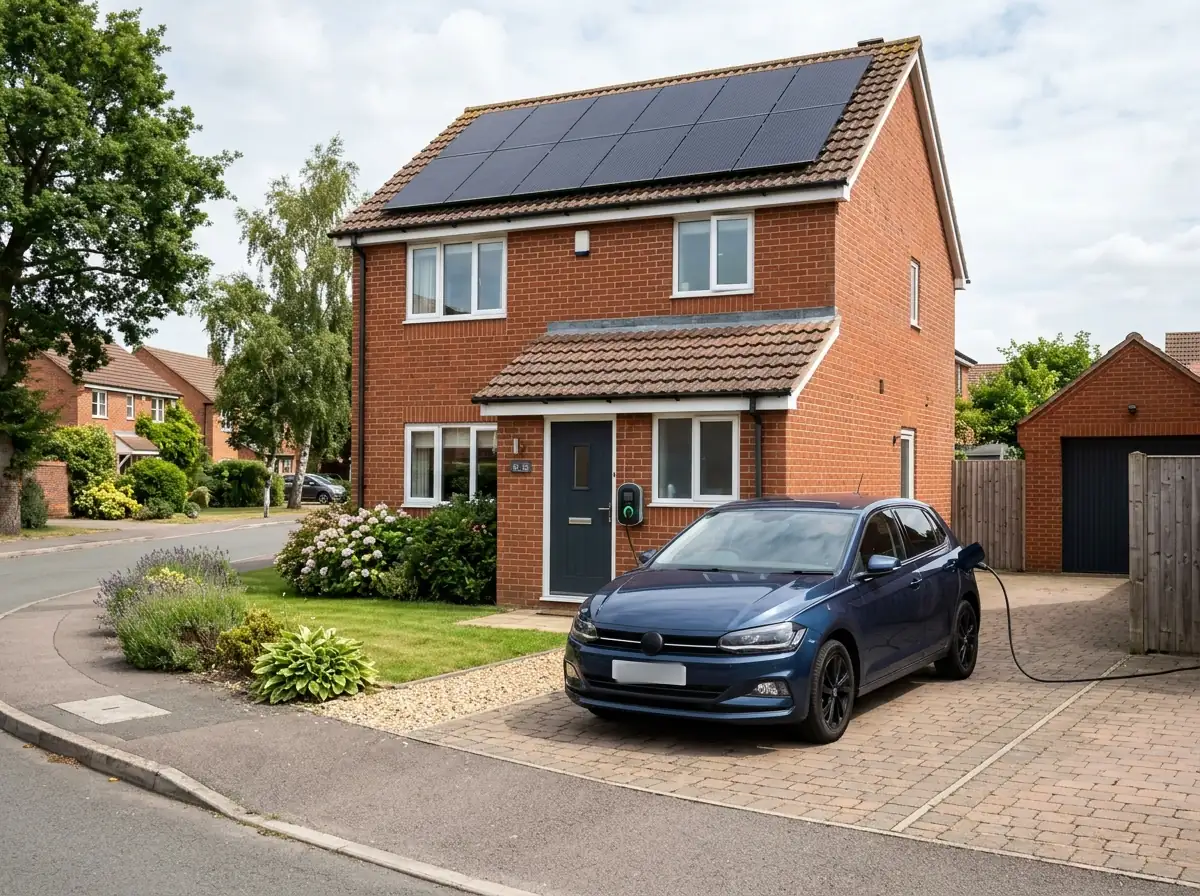
A home EV charger usually costs about £800 to £1,200 fitted. Solar panels can charge it with your own spare electricity. A solar-aware charger sends surplus power to the car instead of exporting it. But most charging in winter and in the evening will still come from the grid, so a cheap overnight EV tariff matters as much as the panels.
Free · no obligation · about a minute · Quick answers
Last updated
0% VAT on solar ends 31 March 2027. That's under six months away, and it's due to go back to 5% after.
What the VAT change means for youHow much does a home EV charger cost to install?
A standard 7kW home charger usually costs about £800 to £1,200 fitted. That covers the unit (around £450 to £900) and a standard installation (around £350 to £500), according to Heatable. Harder jobs, such as long cable runs, can cost £1,200 to £1,500 or more.
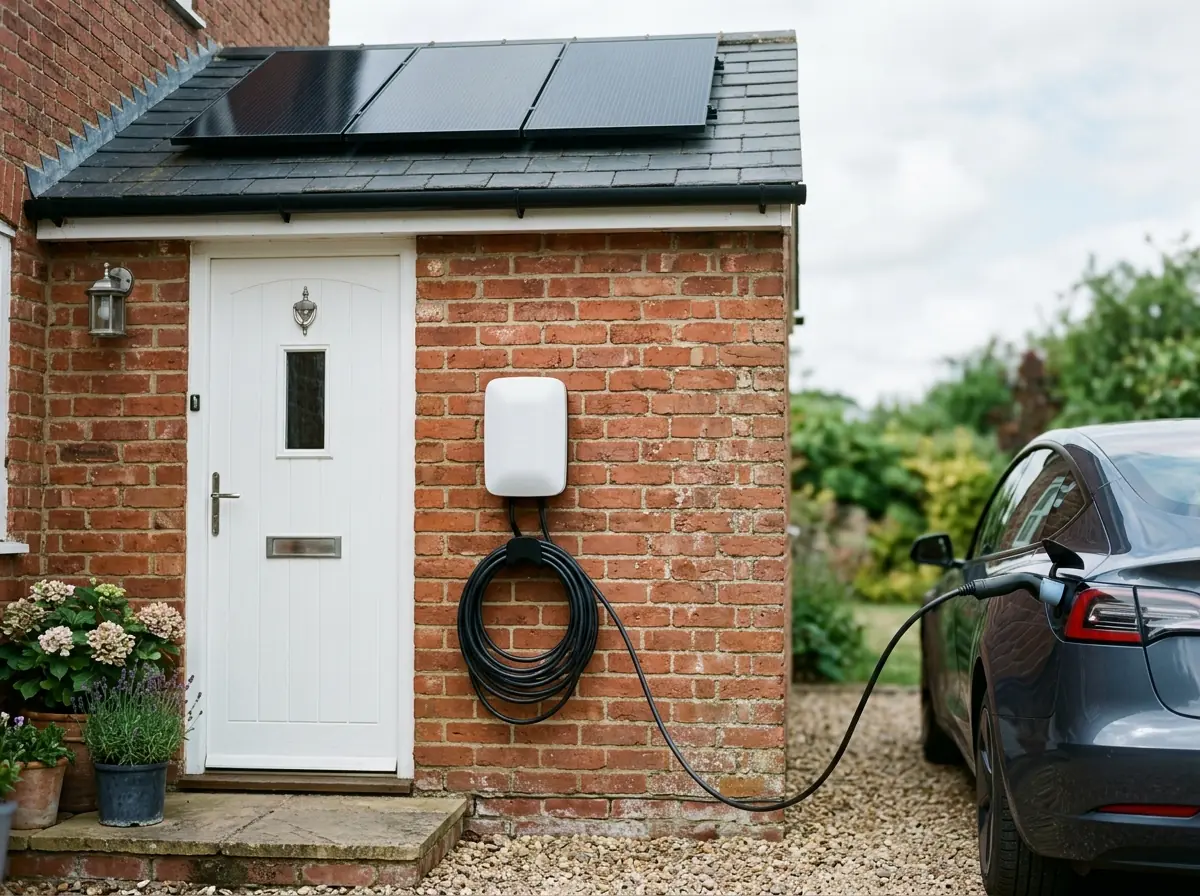
Chargers that work with solar panels tend to sit at the upper end. Heatable lists the myenergi zappi at about £999 to £1,299 fitted and the Hypervolt Home 3 Pro at about £1,050 to £1,150. Carwow puts models with solar integration at around £900 to £1,100 for the unit.
Is there still a government grant for EV chargers in 2026?
Yes, but only for some people. The EV chargepoint grant for renters and flat owners is open until 31 March 2027, according to GOV.UK Find a Grant. It pays 75% of the cost of buying and fitting a chargepoint, up to £500.
You can apply if you rent any home or own and live in a flat. You need private off-street parking and an eligible electric or plug-in hybrid car. You must also use an OZEV-authorised installer. If you own the house you live in, you cannot apply.
Since April 2026 you apply yourself through the Find a Grant service. Your installer can no longer claim it for you, Ohme says. The government can end or change the scheme early, and aims to give four weeks' notice.
How does charging an electric car from solar panels work?
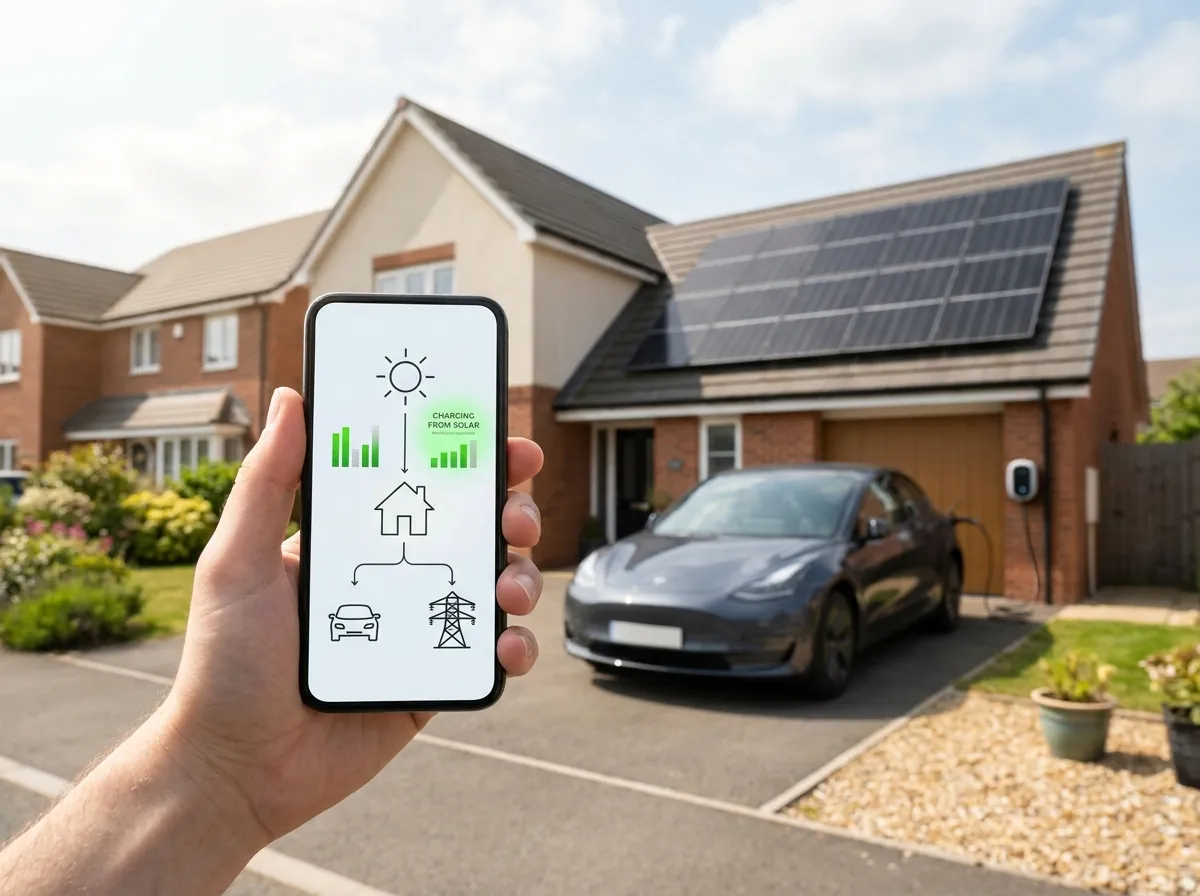
Your panels make electricity during the day. Your home uses it first. Anything left over is surplus. A normal charger will use some solar, but it pulls from the grid to reach full speed.
A solar-aware charger reads how much spare power you have, usually with a clamp on your meter cable. It then adjusts the charging speed to match, says Sunsave. On the myenergi zappi, for example, Eco mode charges from surplus and tops up from the grid when needed. Eco+ waits until there is enough spare solar, about 1.4kW on a normal home supply, before it starts, according to myenergi.
This only works if the car is plugged in at home while the sun is up. It suits people who work from home or have a second car that stays on the drive.
How many miles could a 4kW solar system add?
This is a rough estimate, not a promise. A 4kW system in the UK makes about 3,400 to 3,600 kWh a year, according to Sunsave. Most electric cars do about 3 to 4 miles per kWh, says Motorway.
If every unit from a 3,400 kWh system went into the car, that would be about 10,000 to 13,600 miles. That will not happen. Your home uses much of the power, and the car is often away when the sun is out.
A more useful sum: every 1,000 kWh of solar that goes into the car adds roughly 3,000 to 4,000 miles. How much of your output reaches the car depends on when the car is at home. Cold weather also cuts range. Below 5°C, real-world range can drop by 20 to 40%, Motorway says.
What about charging in winter and at night?
Solar output falls a long way in winter. In one example from Sunsave, a system making about 25 kWh a day in summer made under 5 kWh a day in December. And there is no solar at all after dark, which is when most people plug in.
So most households will charge from the grid for much of the year. A cheap overnight EV tariff helps a lot. Intelligent Octopus Go, for example, cut its off-peak rate to 5.49p per kWh from April 2026, according to EcoWizard. Rates vary by region, so check the current price with the supplier.
Sunsave notes that pairing an off-peak EV tariff with selling spare solar to the grid often saves more money than charging from solar alone. Solar-only charging cuts more carbon.
Should I add a battery, and can I install everything at once?
A home battery stores solar for the evening. It can also charge from the grid overnight on a cheap tariff and run your home the next day. Using a battery just to move solar into the car adds little value, says Sunsave. Its main benefit is powering the house, which frees more solar for other uses.
Solar panels and home batteries have 0% VAT in Great Britain until 31 March 2027, according to HMRC. From 1 April 2027 they go back to 5%. EV chargers are not on HMRC's list of energy-saving materials, so the 0% rate does not cover a charger fitted to an existing home. Ask installers to show the VAT on each item.
Fitting solar and a charger in one project can mean fewer electrician visits and one plan for your fuse board and supply. Ask each installer to quote for both together and separately so you can compare.
Quick answers
The short version, if you're in a hurry.
How much does a home EV charger cost?
A standard 7kW charger usually costs about £800 to £1,200 fitted. Solar-aware models often cost a bit more, at around £1,000 to £1,300 fitted.
Can homeowners get the EV charger grant in 2026?
No, not if you own the house you live in. The grant is for renters and people who own and live in a flat with private off-street parking. It runs until 31 March 2027 and pays up to £500.
Is there 0% VAT on EV chargers?
Not for a charger fitted to an existing home. The 0% rate covers solar panels and batteries until 31 March 2027, but EV chargers are not on HMRC's list of energy-saving materials.
Do I need planning permission for a wall-mounted charger?
Usually not in England. From 21 October 2026, one wall-mounted charger per house is permitted development if it is no bigger than 0.2 cubic metres and no more than 1.6 metres off the ground. Listed buildings and conservation areas are excluded, and extra limits apply next to a road, according to the <a href="https://www.planningportal.co.uk/permission/common-projects/electric-vehicle-charging/permitted-development">Planning Portal</a>.
Can I charge my car only from solar?
Only on sunny days when the car is at home. A solar-aware charger can wait for spare solar before it starts. In winter and at night you will rely on the grid.
Will a battery help me charge my car?
It can store solar for the evening, but its main value is running your home. Many people get better savings by pairing solar with a cheap overnight EV tariff.
Sources
Last updated 21 October 2026.
- Electric vehicle chargepoint grant for renters and flat owners – GOV.UK Find a Grant
- OZEV grant 2026 – Ohme
- VAT on energy-saving materials and heating equipment (Notice 708/6) – HMRC
- Electric vehicle charging: permitted development – Planning Portal
- How much does EV charger installation cost in the UK in 2026? – Heatable
- Electric car charger installation costs in 2026 – Carwow
- What are the zappi charging modes? – myenergi
- How to charge your electric car with solar panels – Sunsave
- 4kW solar panel systems: an expert guide – Sunsave
- Miles per kWh explained – Motorway
- Octopus Energy EV charging rates fall in April 2026 – EcoWizard