Farm and rural solar
Solar panels for farms and rural properties in Nottinghamshire
A straightforward solar system on a barn roof usually costs around £800 to £1,200 per kW installed, so a 10kW system is roughly £8,000 to £12,000 and a 50kW system roughly £40,000 to £60,000. Ground-mounted systems tend to cost more per kW than roof systems. Most rooftop solar on farm buildings in England can go ahead under permitted development, but larger systems need prior approval from the council and a G99 application to the local network operator.
Free · no obligation · about a minute · Quick answers
Last updated
0% VAT on solar ends 31 March 2027. That's under six months away, and it's due to go back to 5% after.
What the VAT change means for youHow much do solar panels cost for a farm or barn roof?
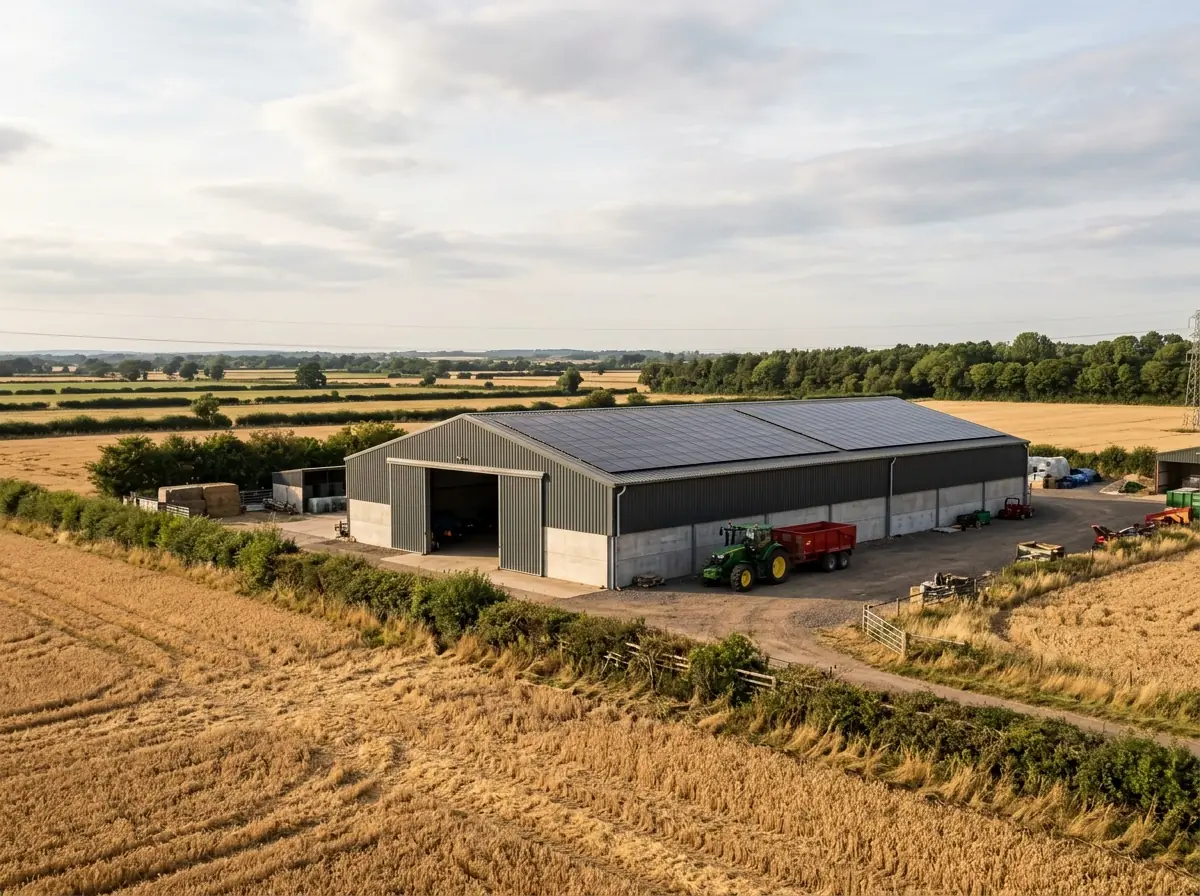
Farmers Weekly (March 2026) says figures of £800 to £1,200 per kW are a reasonable ballpark for a straightforward project, such as solar on a new barn roof. Complex jobs can cost quite a bit more or less.
Using that range, a 10kW system works out at about £8,000 to £12,000. A 30kW system is about £24,000 to £36,000. A 50kW system is about £40,000 to £60,000. These are rough guides, not quotes.
Larger systems usually cost less per kW. Evo Energy (2026) puts commercial solar at £700 to £900 per kWp, or around £70,000 to £90,000 for a 100kWp system.
As a guide to roof space, you need about 5 square metres of roof for each 1kW of panels. Adding batteries can almost double the cost of some projects, so get prices with and without them.
Is ground-mounted solar a better option than a barn roof?
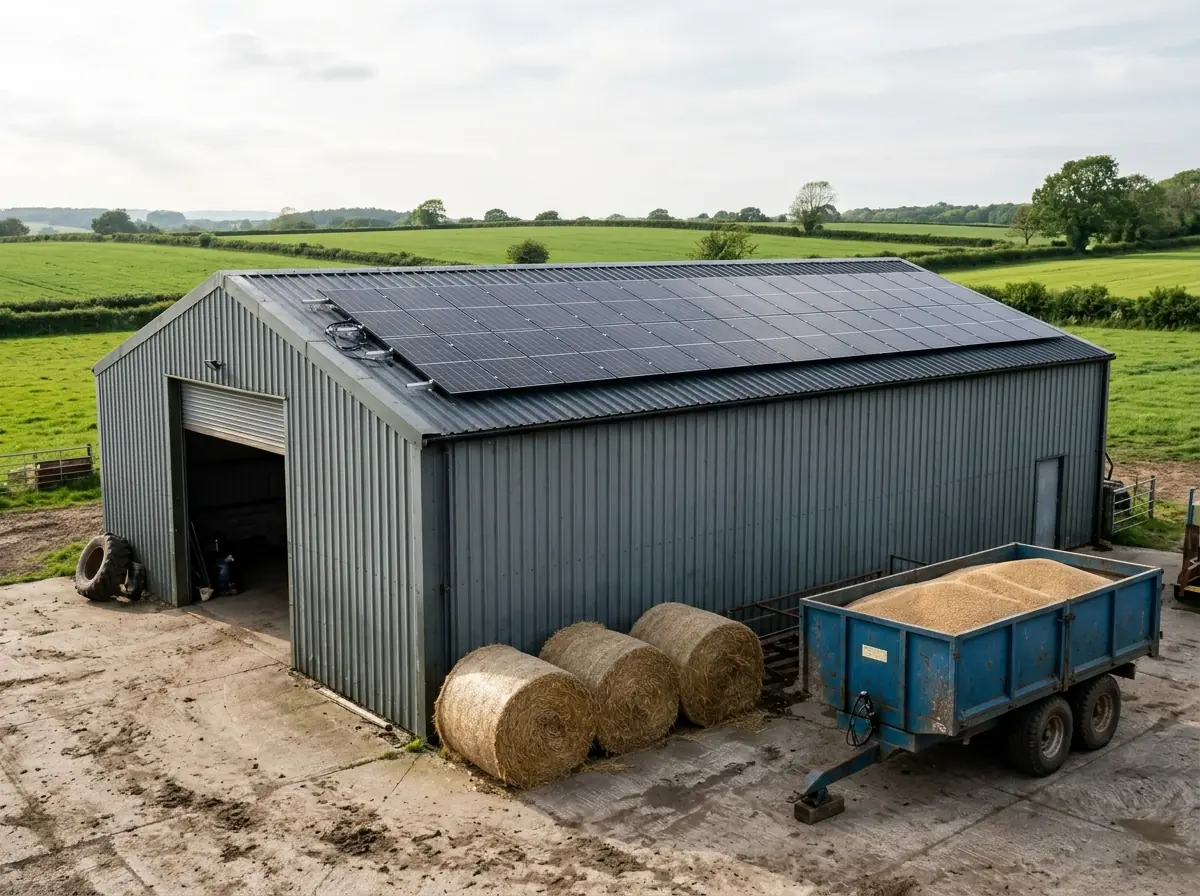
Ground-mounted solar is usually 15 to 30% more expensive per kWp than rooftop, according to Evo Energy. It can also need planning permission, trenching, fencing and extra grid works.
Roof systems are simpler. They also use space you already have and keep fields in production. That suits Nottinghamshire, where large arable fields make up most of the landscape in areas like East Notts, according to Newark and Sherwood District Council. Many farms here have big grain stores and machinery sheds with roofs that could take panels.
The roof must be in good condition and strong enough to hold the panels. An installer should check this before quoting.
Do I need planning permission for solar on farm buildings?
Often not. In England, solar on non-domestic buildings, including farm buildings, can be permitted development. Since 21 December 2023, the old 1MW cap on these rooftop systems no longer applies, according to the Planning Portal.
There are limits. Panels on a pitched roof must not stick out more than 0.2 metres. They must not be within 1 metre of the roof edge. On a flat roof, they must not be more than 1 metre above the highest part. Listed buildings are excluded. Systems larger than microgeneration (over 50kW) need prior approval from the council on design, appearance and glare.
Ground-mounted panels have much tighter permitted development limits. Under Class K of the planning rules, you can only have one stand-alone unit, up to 9 square metres of panels, no more than 4 metres high and at least 5 metres from the boundary. Anything bigger, such as a field array, needs full planning permission.
Rules can differ in conservation areas and other protected land. Check with your district council before you start.
How does grid connection and selling power work?
In Nottinghamshire, the local network operator (DNO) is National Grid Electricity Distribution, which covers the East Midlands, according to SurgePV.
Small systems up to 3.68kW per phase go through G98. The installer just tells the DNO within 28 days of switching on. Most farm systems are bigger, so they need a G99 application. The DNO must make an offer and you must accept it before the system is installed. The target for standard low-voltage G99 assessments is 45 working days.
A single-phase supply can only export up to 3.68kW. Many farms have three-phase power, but if yours does not, an upgrade adds cost. A DNO connection quote can range from a few thousand pounds to six figures if the network needs reinforcing.
You can sell spare power through the Smart Export Guarantee (SEG). Systems up to 5MW are eligible, according to Ofgem. Each supplier sets its own rate, and you can choose any SEG supplier. Power you use on the farm is usually worth more than power you export.
What about VAT, tax relief and grants?
The 0% VAT rate on solar only applies to homes and some charitable buildings. Solar on business buildings is charged at the standard 20% rate. VAT-registered businesses that make taxable sales can usually reclaim it, according to Business Energy Deals. Check with your accountant.
Solar panels count as plant and machinery for tax. They are "special rate" assets. They can qualify for the £1 million Annual Investment Allowance, which is available to companies and unincorporated businesses, such as sole traders and partnerships. Companies can also claim the 50% first-year allowance for special rate assets, according to Menzies. Full expensing (100%) does not apply to solar because it is special rate.
Can solar help a rural home heated by oil?
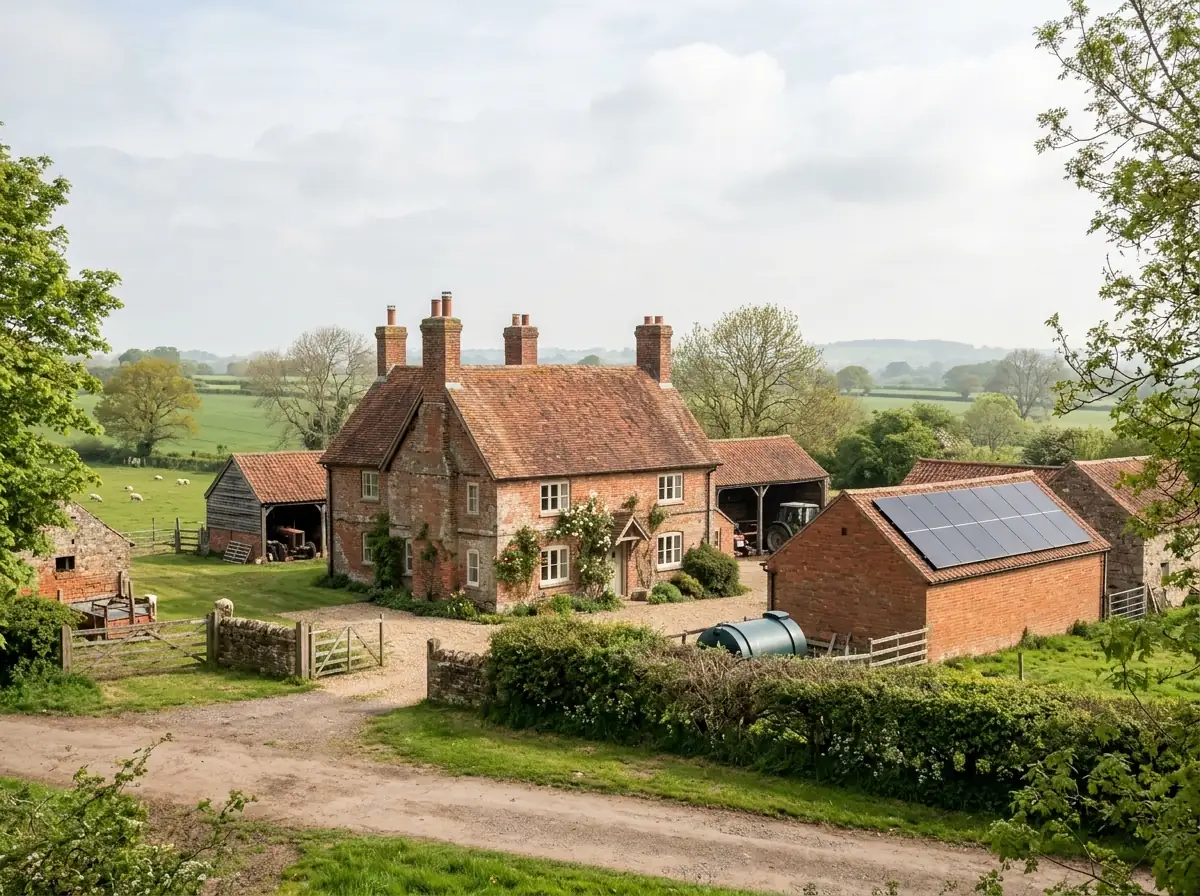
Yes, for hot water. Many rural homes in Nottinghamshire are off the gas grid. A solar diverter sends spare solar power to the immersion heater in your hot water cylinder, instead of exporting it. That means your oil boiler has less work to do.
Diverters need a hot water cylinder with an immersion heater. Branded units cost roughly £500 to £800 plus fitting, according to The Renewable Energy Hub. That article dates from 2022, so prices may have changed.
For the farmhouse itself, solar is residential, so it usually gets 0% VAT. That rate runs until 31 March 2027, then goes to 5%, according to Reonic.
Notts Solar Quotes does not install systems. We pass your enquiry to up to 3 vetted MCS-certified installers, who can survey your roof, check your supply and quote.
Quick answers
The short version, if you're in a hurry.
How much does a 50kW farm solar system cost?
Using the Farmers Weekly ballpark of £800 to £1,200 per kW, a straightforward 50kW barn roof system costs roughly £40,000 to £60,000. Your quote will depend on the roof, the grid connection and whether you add batteries.
Do I need planning permission for solar on my barn roof?
Usually not in England, as long as you follow the permitted development limits. Systems over 50kW need prior approval from the council. Listed buildings are excluded.
Was the 1MW limit on non-domestic rooftop solar removed?
Yes. Since 21 December 2023, the 1MW cap no longer applies to permitted development solar on non-domestic roofs in England. Prior approval is still needed for larger systems.
Can my farm reclaim VAT on solar panels?
Business solar is charged at 20% VAT. If your farm is VAT-registered and makes taxable sales, you can usually reclaim it on your VAT return. Ask your accountant.
Who do I apply to for a grid connection in Nottinghamshire?
National Grid Electricity Distribution is the network operator for the East Midlands. Your installer will usually handle the G98 notification or G99 application for you.
Is there a grant for farm solar panels in 2026?
The Farming Equipment and Technology Fund 2026 closed in May 2026 and did not include rooftop solar panels. Grant schemes change, so check GOV.UK for current offers.
Sources
Last updated 21 October 2026.
- How to assess whether rooftop solar is right for your farm – Farmers Weekly
- Are commercial solar installations worth it? – Evo Energy
- Rooftop solar vs ground-mounted solar – Evo Energy
- Updates in December to permitted development rights for solar panels – Planning Portal
- GPDO 2015 Schedule 2 Part 14 Class K – legislation.gov.uk
- Do I need planning permission for solar panels? – PlanWatch
- NGED DNO guide – SurgePV
- G98 solar applications – Sunsave
- Smart Export Guarantee: generators – Ofgem
- Solar panel VAT – Business Energy Deals
- VAT on solar panels UK – Reonic
- Solar panels capital allowances guide – Lanop
- Autumn Budget 2025: what's changed for capital allowances – Menzies
- Farming Equipment and Technology Fund 2026 – NFU
- FETF 2026 productivity items and specifications – GOV.UK
- Heat your water with solar PV – The Renewable Energy Hub
- East Notts Landscape Character Assessment – Newark and Sherwood District Council