Solar basics
How do solar panels work?
Solar panels turn daylight into electricity, an inverter makes it safe for your home, and anything you do not use goes to the grid. A typical 4kW system makes about 3,400 kWh a year in the UK. Panels make nothing at night and much less in winter, and a normal system switches off in a power cut for safety.
Free · no obligation · about a minute · Quick answers
Last updated
0% VAT on solar ends 31 March 2027. That's under six months away, and it's due to go back to 5% after.
What the VAT change means for youWhat are solar panels?
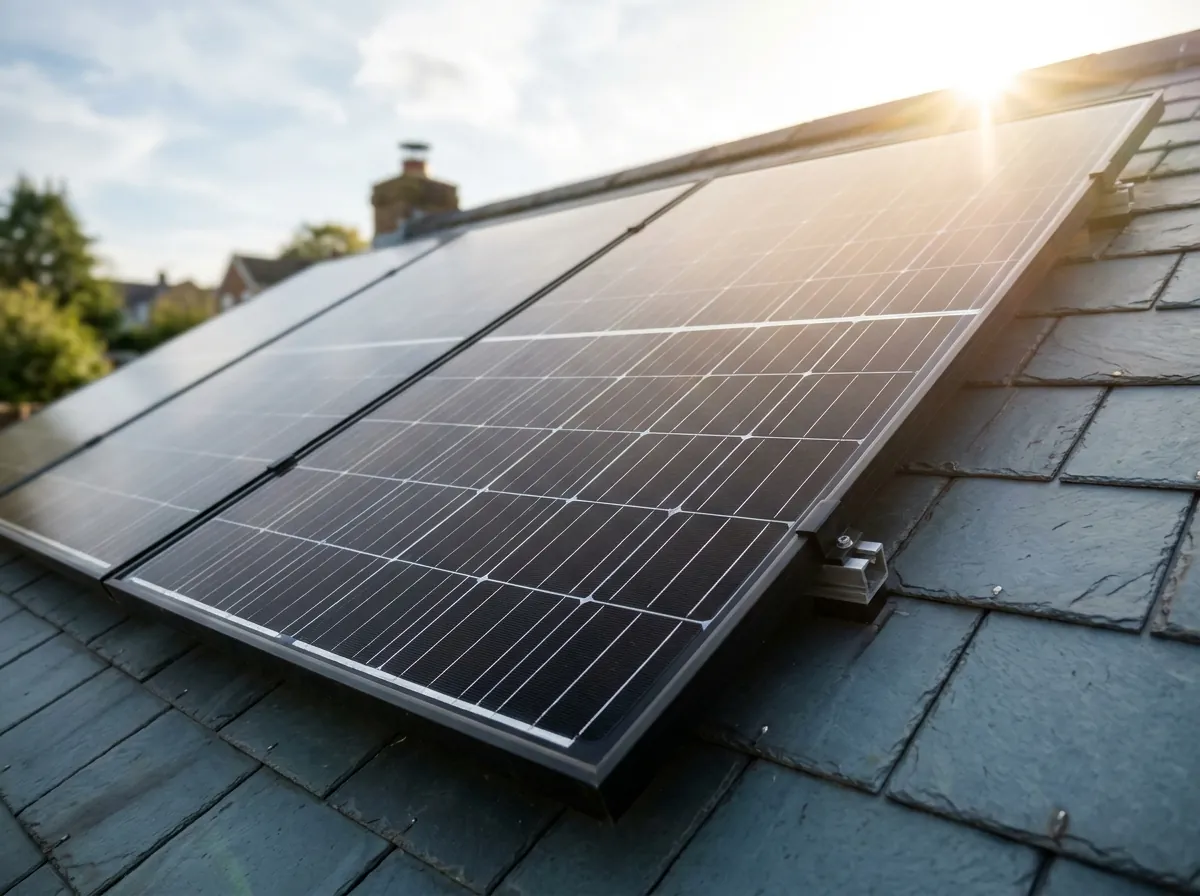
Solar panels are flat panels of solar cells that turn daylight into electricity. The cells are usually made of silicon, according to the Energy Saving Trust. Home panels are sometimes called solar PV, short for photovoltaic. They are different from solar thermal panels, which heat water instead of making electricity.
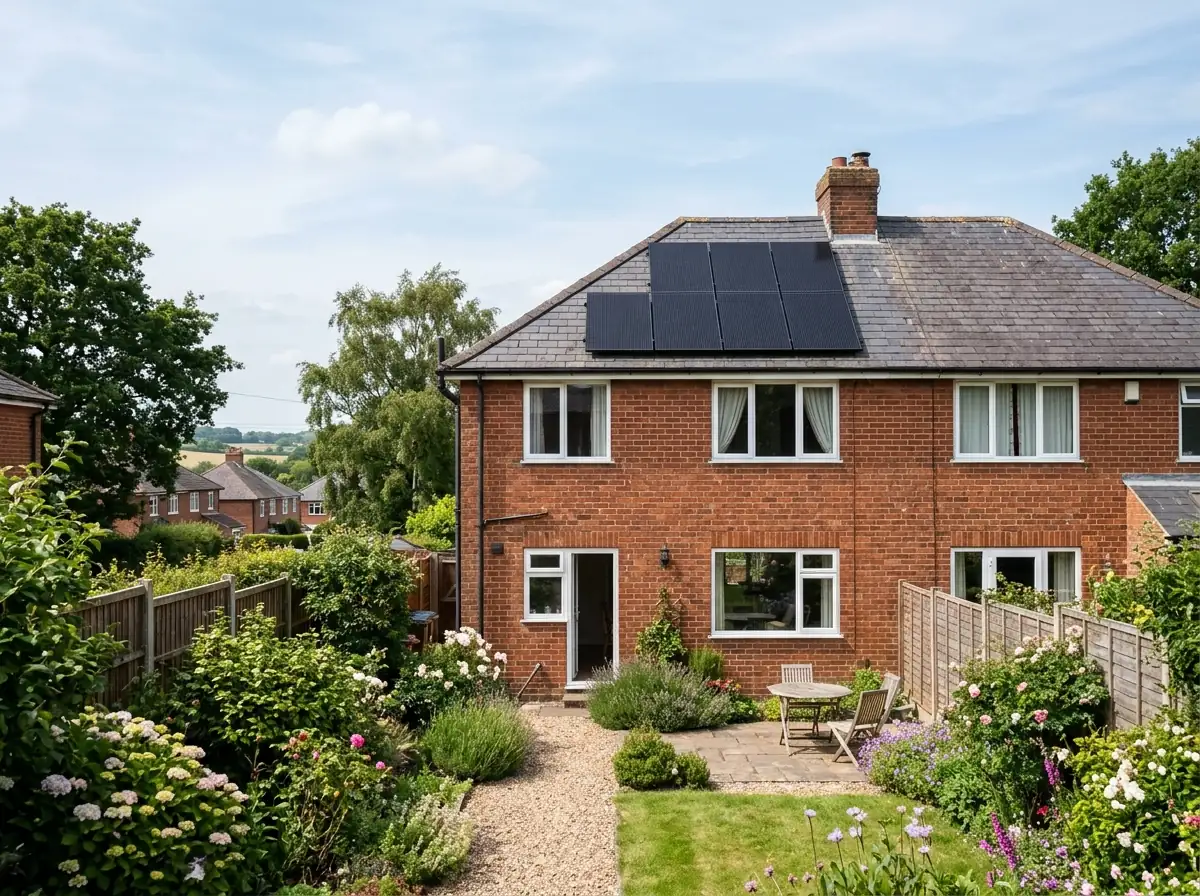
An average home system is about 4.5 kilowatt peak (kWp), usually around 12 panels, says the Energy Saving Trust. It needs about 20 to 30 square metres of roof. A 4kW south-facing system makes about 3,400 kWh a year, according to Stratford Energy. Most of that is made in the middle of the day, which matters for how much you save.
How do solar panels make electricity?
Solar panels make electricity through the photovoltaic effect: light hits the silicon cells and knocks electrons loose, which creates a flow of current. That flow is direct current (DC), the same kind a battery gives out, explains E.ON Next. There are no moving parts, no fuel and no noise. The cells sit behind toughened glass in an aluminium frame, which protects them from the weather.
The panels are wired together on your roof. A cable then carries their DC power down to an inverter, usually fitted in the loft or garage. The more light that falls on the panels, the more power they make. That is why a south-facing roof with no shade works best.
Panels do not need direct sunshine, says the Energy Saving Trust. They still work on cloudy days, just less well, because less light gets through. Heat does not help. Panels are slightly less efficient when hot, so a cold, bright spring day can give very strong output. Snow or heavy dirt on the panels will cut output until it clears.
What does a solar inverter do?
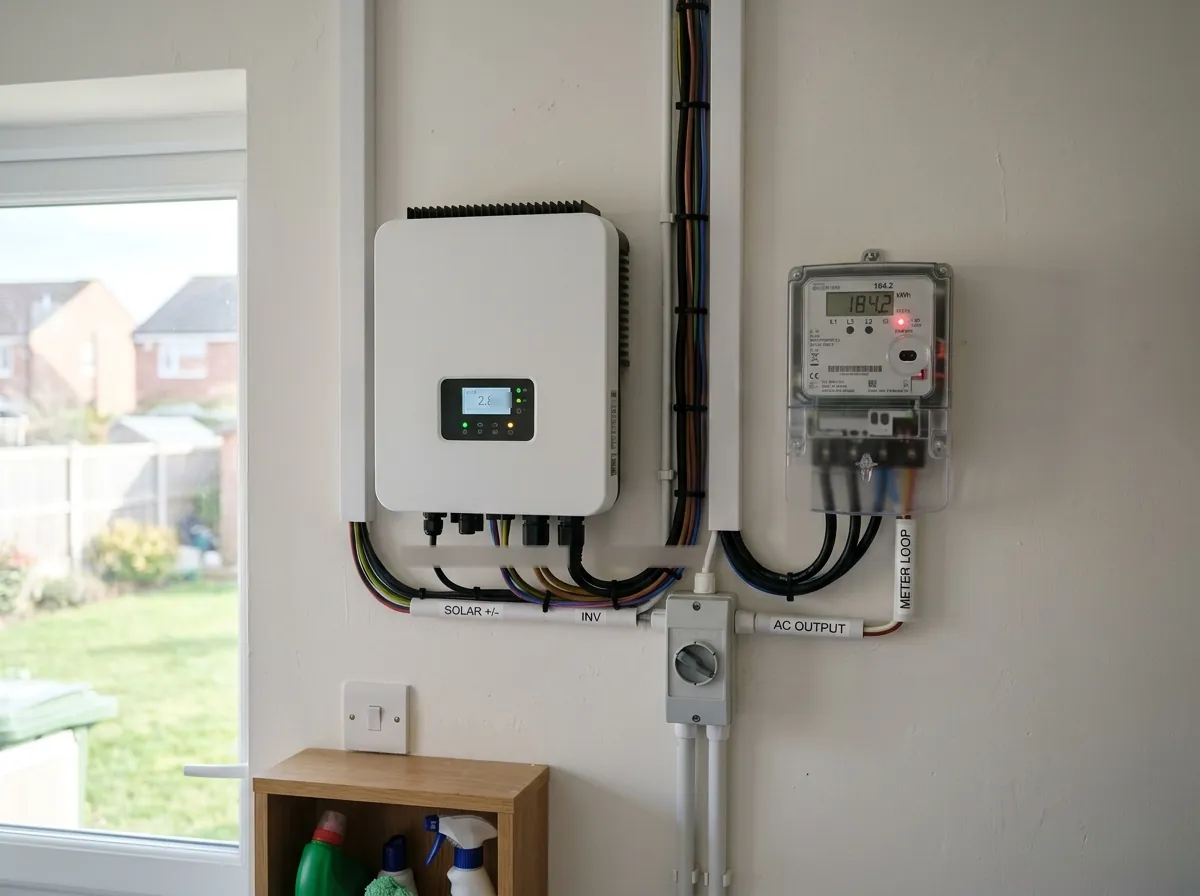
An inverter turns the DC power from your panels into alternating current (AC), the type your home and the grid use. Without it, you could not run your kettle or TV on solar power. The AC power then feeds into your fuse board and on to your sockets, explains E.ON Next.
The inverter also checks the grid all the time and controls how your system connects to it. It is often the first part to need replacing. The Energy Saving Trust says inverters typically need replacing after about 12 years, while panels last 25 years or more. Inverter warranties are at least five years and can often be extended.
Some systems use small micro-inverters or optimisers on each panel instead of one central box. Optimisers can limit the impact of shading, says the Energy Saving Trust, because one shaded panel then drags down the others less. Your installer should explain which type they plan to fit and why it suits your roof.
How does solar work with the grid?
Your home uses solar power first, takes extra from the grid when it needs more, and sends any spare to the grid. This all happens on its own, second by second. You do not need to switch anything. When the sun goes in, your home simply takes more from the grid, just as it did before.
Your installer tells your local network operator about the system. For an inverter up to 3.68kW, this is a G98 notice sent within 28 days of switching on, says Sunsave. Larger inverters need G99 approval before the job goes ahead. The installer normally handles both, so you rarely need to do anything yourself.
You can be paid for power you send to the grid through the Smart Export Guarantee (SEG). Larger suppliers, with at least 150,000 home customers, must offer an SEG tariff, and the rate must always be above zero, according to Ofgem. SEG rates are often around 5–15p per kWh, and you usually need an MCS-certified installation.
What meters do you need with solar panels?
You need a meter that records the power you export, and most systems also have a separate generation meter. To get SEG payments, your export must be measured by a meter that can take half-hourly readings, says Ofgem. In practice, that is usually a smart meter that records both import and export.
A generation meter is different. It records all the electricity your panels make, before any is used or exported, explains Fuse Energy. It sits between the inverter and your fuse board. It helps you check that your system is working as it should, and shows how much your panels have made in total since the day they were fitted.
Most inverters also come with an app that shows live output. Look at it now and then. If output drops suddenly on sunny days, something may be wrong, such as a fault, new shading or a tripped switch. Your installer should give you written guidance on checking and looking after the system.
Should you use your solar power or export it?
Using your own solar power is usually worth much more than exporting it. Grid electricity costs 26.32p per kWh under the October to December 2026 price cap, according to Uswitch. Export often pays about 5–15p. The Energy Saving Trust says buying power costs more than twice what you get for exporting it.
Without a battery, a typical home uses about 30–50% of its solar power and exports the rest, according to Stratford Energy. A study of 302 UK homes by the University of Oxford found they used about 45% on site. People who are out all day tend to use less of their own power.
You can raise your share by running the dishwasher, washing machine or tumble dryer in the middle of the day. Timers and smart plugs make this easy. Heating water with spare solar, or charging an electric car at home in the daytime, can also help use more of what your panels make.
What does a solar battery do?
A solar battery stores spare daytime solar power so you can use it in the evening instead of buying from the grid.
With a battery, a home can use about 70–90% of its solar power, up from about 30–50%, according to Stratford Energy. That is the main way a battery saves money.
A 4–5kWh battery typically adds about £3,000–£5,000 to the cost. Most batteries can also charge from the grid overnight on a cheaper tariff, which helps in winter when panels make less. The Energy Saving Trust says pairing a battery with a time-of-use tariff can cut costs further. A battery is not essential, though, and panels work fine without one.
Do solar panels work at night, in winter or in a power cut?
Solar panels make no power at night, much less in winter, and a normal system switches off in a power cut. At night your home runs on the grid, or on a battery if you have one, says E.ON Next. Moonlight and street lights are far too weak to make useful power.
Winter output is low. One estimate for a 4kW south-facing system is about 540 kWh in July but only about 75 kWh in December, according to Renewable Energy Hub. That is roughly 2–5 kWh a day in winter, against 16–22 kWh on good summer days. Most of a year's output comes from spring to early autumn.
In a power cut, a grid-connected inverter shuts down automatically. This stops your panels sending power into the lines while engineers work on them, which could cause severe injury, says Heatable. Some batteries with an emergency power supply (EPS) or backup gateway can keep chosen circuits running. If backup matters to you, ask each installer directly.
Quick answers
The short version, if you're in a hurry.
Do solar panels work on cloudy days?
Yes. They do not need direct sunshine, but they make less power when it is cloudy. Bright, cold days can give very good output.
Do solar panels work at night?
No. Panels need daylight. At night your home uses the grid, or a battery if you have one.
What does an inverter do?
It turns the DC power from your panels into AC power your home and the grid can use. Inverters typically need replacing after about 12 years.
Do solar panels work in a power cut?
Not usually. A normal grid-connected system switches off for the safety of engineers. Some battery systems with backup or EPS can power chosen circuits.
Do I need a battery with solar panels?
No. Panels work without one. A battery lets you use more of your own power, raising self-use from about 30–50% to about 70–90%, but it adds about £3,000–£5,000.
How much electricity does a 4kW solar system make?
About 3,400 kWh a year if south-facing. Output ranges from roughly 2–5 kWh a day in winter to 16–22 kWh on good summer days.
Do I get paid for electricity I send to the grid?
Yes, through the Smart Export Guarantee. Rates are often around 5–15p per kWh, and you usually need an MCS-certified installation and a suitable export meter.
Do I need to tell my energy network about solar panels?
Yes, but your installer normally does it. Systems up to 3.68kW use a G98 notice after installation; larger ones need G99 approval first.
Related guides
Are solar panels worth it in the UK in 2026?
Read the guideGuideSolar battery storage in Nottinghamshire: is it worth adding one?
Read the guideSolar in your part of Nottinghamshire
See all areas we cover.
Sources
Last updated 25 October 2026.
- Solar panels advice – Energy Saving Trust
- How do solar panels actually work? – E.ON Next
- Do solar panels work in a power cut? – Heatable
- Generation meter: how to track solar PV output – Fuse Energy
- Smart Export Guarantee guidance for generators – Ofgem
- G98 solar applications guide – Sunsave
- 4kW solar system output in winter vs summer – Renewable Energy Hub
- Solar PV self-consumption in the UK residential sector – University of Oxford (INET)
- Solar generation and payback – Stratford Energy
- October 2026 energy price cap – Uswitch