Battery storage
Solar battery storage in Nottinghamshire: is it worth adding one?
A home solar battery typically adds about £3,000–£5,000 to an installation, and it pays 0% VAT until 31 March 2027, even if you fit it to panels you already have. It stores spare daytime solar power for the evening, so you buy less electricity at the 26.32p/kWh price cap rate. Most Nottinghamshire homes can add one, including older Feed-in Tariff systems.
Free · no obligation · about a minute · Quick answers
Last updated
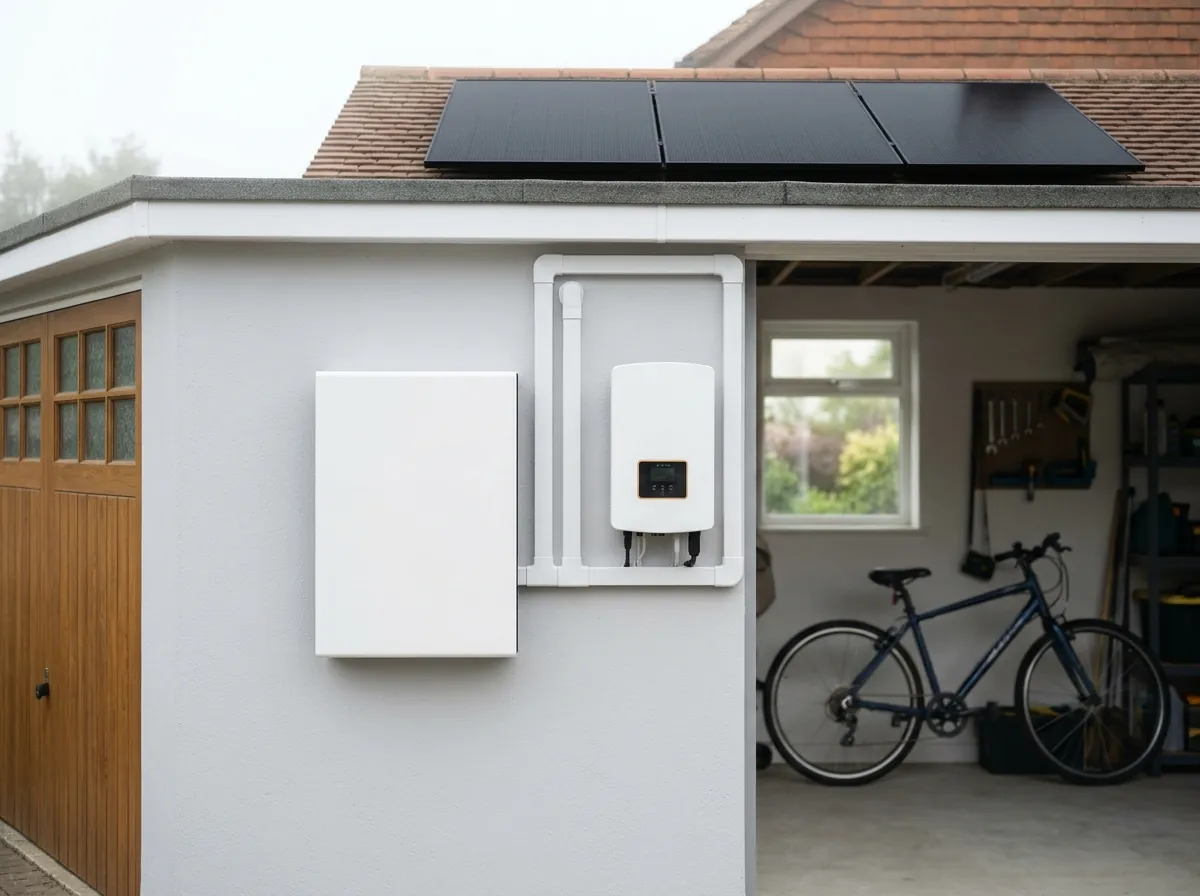
0% VAT on solar ends 31 March 2027. That's under six months away, and it's due to go back to 5% after.
What the VAT change means for youHow much does a solar battery cost in the UK?
Adding a battery to a solar installation usually costs about £3,000–£5,000, and a new 4kW system with a 4–5kWh battery is roughly £10,000–£14,000 installed. Prices depend mainly on usable capacity, the brand and whether you need a new inverter. As a rough guide, The Eco Experts puts a 5kWh battery at around £4,000–£5,000 and a 10kWh battery at around £8,500–£10,000, including fitting.
Since 1 February 2024, batteries have been zero-rated for VAT, including those retrofitted to existing panels, according to the government's explanatory memorandum. The 0% rate runs until 31 March 2027, after which it is due to rise to 5%. Which? reports that the government announced low- and zero-interest loans for batteries under the Warm Homes Plan in January 2026, so check whether these are open before you buy.

What size solar battery do I need?
Most homes need a battery big enough to cover their evening and overnight use, which for a typical three-bed home with 3–4kW of panels is around 7kWh, according to The Eco Experts.
Which? says the average home uses 8–10kWh of electricity a day, and warns against buying a battery larger than your panels can fill. A 4kW south-facing system makes about 3,400kWh a year, but far less on a grey December day.
Check the usable capacity, not just the headline figure, because usable storage is usually a little lower. A good installer will ask for your bills or smart meter data and explain how they reached their recommended size. If you expect to get an electric car or heat pump in the next few years, mention it now, as it may change the best battery size and the inverter you need.
Can I add a battery to my existing solar panels?
Yes, you can add a battery to almost any existing solar panel system, and the retrofit still qualifies for 0% VAT until 31 March 2027.
This is relevant in Nottinghamshire, where many homes had panels fitted during the early Feed-in Tariff years from 2010 to 2012. Those systems can usually take a battery without any change to the panels themselves.
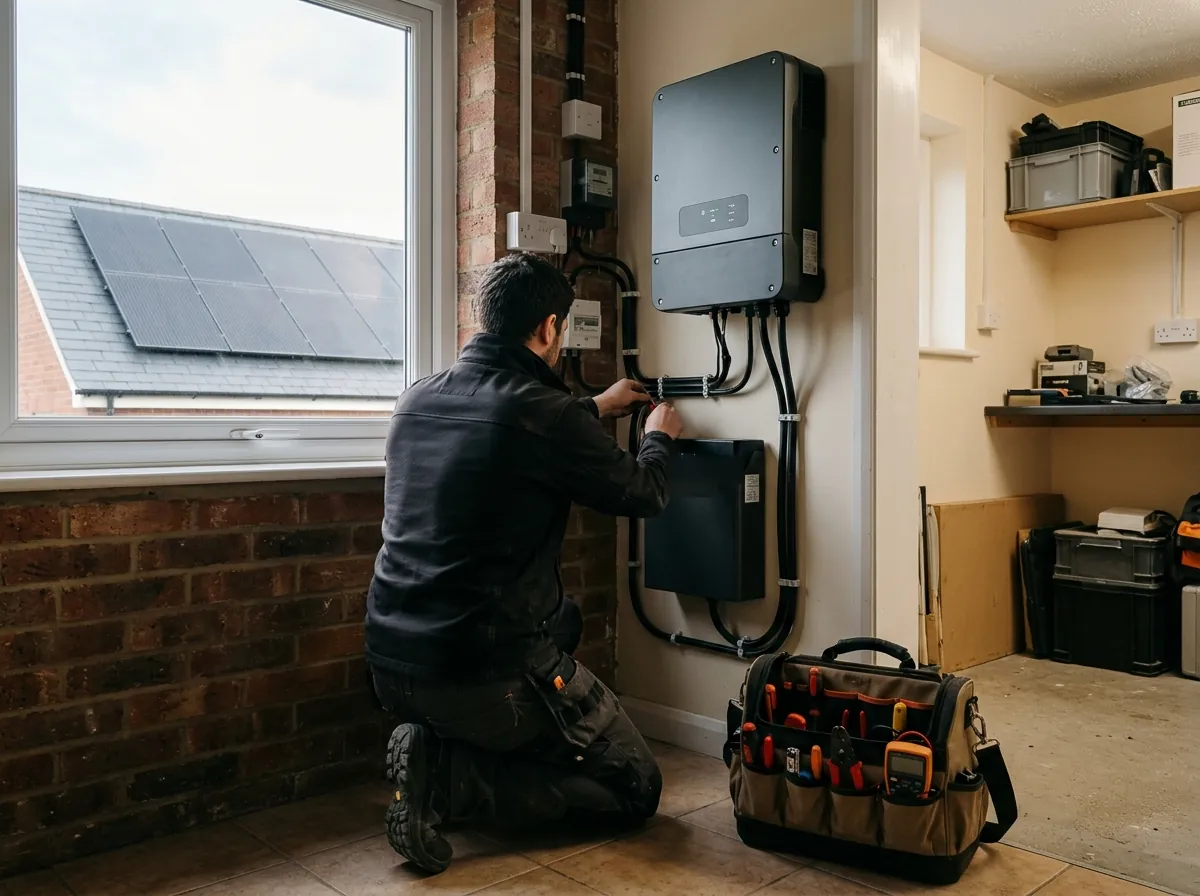
There are two main ways to do it. An AC-coupled battery has its own built-in inverter and connects to your home wiring, leaving the existing solar inverter in place. A hybrid inverter replaces your old inverter with one unit that runs both the panels and a DC-connected battery. Your installer should check your consumer unit, space and inverter age, and notify your network operator, which in Nottinghamshire is National Grid Electricity Distribution.
AC coupled vs DC coupled: which battery is better?
Neither is better in every case: AC-coupled batteries usually suit retrofits to older systems, while DC-coupled batteries with a hybrid inverter usually suit new installations. According to Which?, AC systems connect after the generation meter, so they do not affect Feed-in Tariff readings. DC systems connect before it, which Which? says is not usually recommended for retrofits and could reduce FiT payments.
A hybrid inverter combines solar conversion and battery control in one box, which means less equipment on the wall. Solar Power Portal notes that fitting a hybrid inverter at the start is often cheaper than adding an AC-coupled battery later. So if you are buying new panels and think you may want storage in future, ask installers to quote for a battery-ready hybrid inverter as well.
Can I keep my existing inverter?
Usually yes: an AC-coupled battery works alongside your existing solar inverter, so you only need to replace the inverter if it is failing or near the end of its life.
This keeps disruption and cost down, because the battery's own inverter handles charging and discharging. Your panels, roof fixings and generation meter can all stay exactly as they are.
The Energy Saving Trust says a solar inverter typically needs replacing after around 12 years. Many systems fitted in Nottinghamshire around 2011 are past that point, so some owners swap to a hybrid inverter and battery in one job. If you receive Feed-in Tariff payments, ask how a new inverter would affect your metering before agreeing, as the generation meter must keep measuring solar output only.
Does adding a battery affect my Feed-in Tariff payments?
No, adding a battery does not by itself affect your Feed-in Tariff accreditation, according to Ofgem's guidance for FIT generators.
However, the system must keep meeting the FIT metering rules for payments to continue. Ofgem says the meter must measure electricity generated by the solar panels separately from any other source, so grid power stored in the battery must never be counted as solar generation.
You should tell your FIT licensee, the supplier that pays you, when a battery is fitted. Ofgem says to provide an updated wiring diagram, meter readings and evidence of the installation and commissioning date, and it recommends an MCS installer working to the MCS battery standard. Most homes without an export meter are paid deemed export, which Which? says is usually assumed to be 50% of generation.
Are solar batteries safe?
Yes, home solar batteries are generally safe when fitted correctly by a qualified installer.
Which? reports that a 2020 government review found few recorded fires involving home lithium-ion battery storage. Batteries must pass product safety tests before they can be sold, and they must run within the manufacturer's limits for temperature, current and voltage.
Where the battery goes matters. The British Standard PAS 63100:2024 prefers batteries outside living spaces, such as a garage or outbuilding. If one must go indoors, Build It says it should be kept away from habitable rooms and escape routes, with fire detection nearby. MCS installers also work to the MCS battery standard (MIS 3012). Check with your home insurer before installation.
Do solar batteries work in a power cut?
Only some do: a battery keeps your lights on in a power cut only if the system has an emergency power supply (EPS) or backup feature.
Without one, the inverter shuts down when the grid fails, even if the battery is full. This automatic shutdown is a safety rule that protects engineers working on the electricity network.
Solar Power Portal explains that an EPS system isolates your home from the grid, then powers chosen backup circuits from the battery after a short switchover gap of about 20 milliseconds. Backup often covers selected circuits rather than the whole house, and it may need extra equipment. If power cuts matter to you, for example in a rural village, ask installers which circuits would stay on and for how long.
Quick answers
The short version, if you're in a hurry.
Can I have a solar battery without solar panels?
Yes. A battery can charge from the grid on a cheap overnight time-of-use tariff and power your home at peak times. Standalone batteries also qualify for 0% VAT until 31 March 2027.
How long do solar batteries last?
Most come with a 10-year warranty and typically last around 10–15 years. Your panels can last 25 years or more, so expect to replace the battery at least once.
Is a solar battery worth it?
It is most worthwhile if you are out during the day and use most electricity in the evening, or if you use a time-of-use tariff. Ask installers to show savings based on your own usage.
Will a battery reduce my Smart Export Guarantee income?
Yes, usually, because you export less spare power. You can still apply for the SEG with a battery, but suppliers do not have to pay for exported electricity that came from the grid.
Is there 0% VAT on a battery added to existing panels?
Yes. Since 1 February 2024 retrofitted and standalone batteries have been zero-rated for VAT. The 0% rate runs until 31 March 2027, then is due to rise to 5%.
Do I need to tell anyone before fitting a battery?
Your installer should notify your network operator, and you should tell your FIT supplier if you receive Feed-in Tariff payments. It is also worth checking with your home insurer.
Where does a home battery go?
Ideally outside living spaces, such as a garage or outbuilding. Indoors, current guidance says keep it away from bedrooms, living rooms and escape routes, with fire detection nearby.
Who can install a solar battery in Nottinghamshire?
Use an MCS-certified installer. We can pass your details to up to 3 vetted MCS installers in Nottinghamshire for free, with no obligation to go ahead.
Related guides
Is a solar battery worth it in 2026?
Read the guideGuideSolar panels and EV chargers in Nottinghamshire
Read the guideSolar in your part of Nottinghamshire
See all areas we cover.
Sources
Last updated 25 October 2026.
- Guidance for FIT Generators (Version 18) – Ofgem
- Explanatory memorandum to the VAT (Installation of Energy-Saving Materials) Order 2024 – legislation.gov.uk
- 20% VAT scrapped for battery storage – Wind & Sun
- Solar panel battery storage – Which?
- What is the Feed-in Tariff? – Which?
- Solar panels – Energy Saving Trust
- Smart Export Guarantee – Energy Saving Trust
- Solar battery storage costs – The Eco Experts
- Solar PV inverters UK: complete guide 2026 – Solar Power Portal
- New fire safety standards for domestic battery storage – Build It
- MIS 3012: Battery Installation Standard – MCS