Moving home
Selling or buying a house with solar panels: what do you need to know?
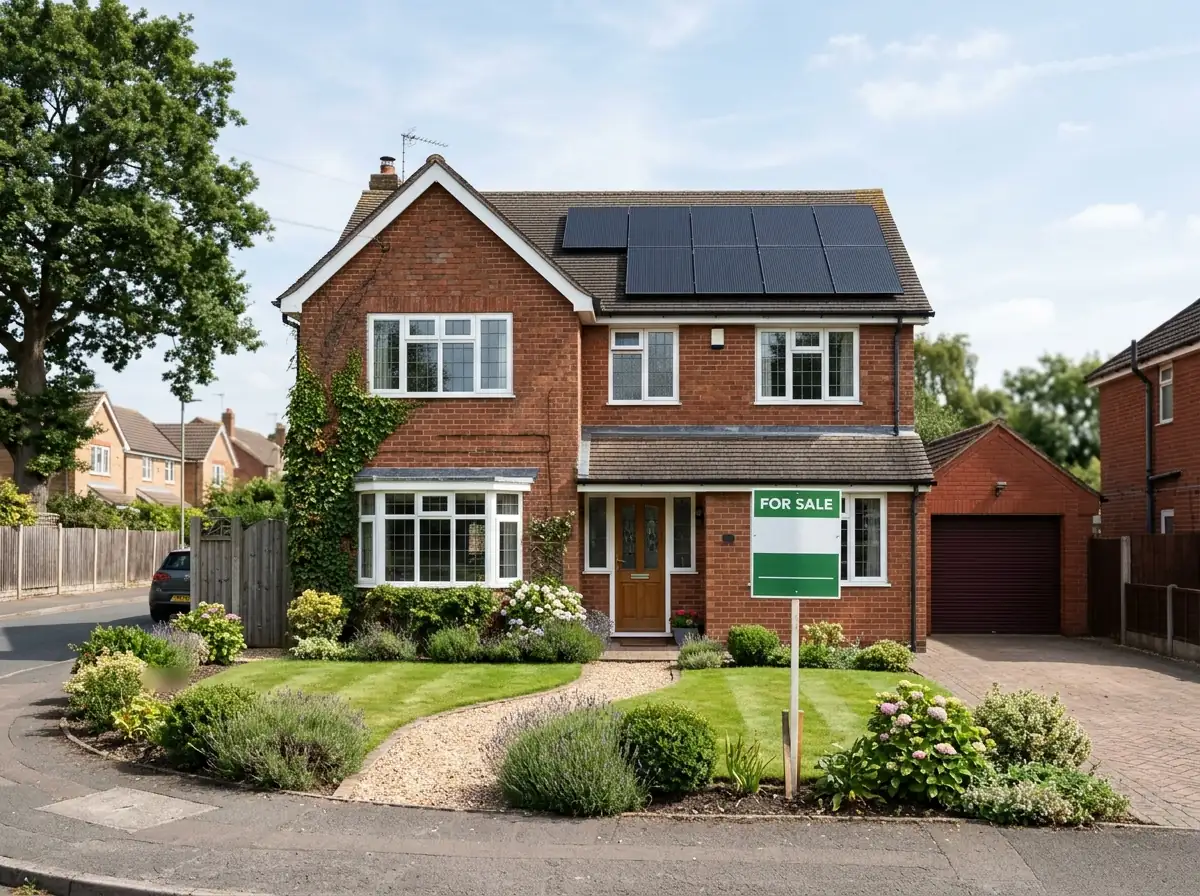
Selling a house with solar panels is usually simple if you own the panels outright and have the paperwork, and a study of nearly 1.5 million UK listings found homes with panels were marketed at a 6.1% to 7.1% premium. Leased "rent a roof" panels are different: the buyer takes on a lease of your roof, and their mortgage lender must accept it. The first thing to find out is which type you have.
Free · no obligation · about a minute · Quick answers
Last updated
0% VAT on solar ends 31 March 2027. That's under six months away, and it's due to go back to 5% after.
What the VAT change means for youDoes it matter if solar panels are owned or leased when you sell?
Yes, it matters more than anything else, because owned panels pass to the buyer like any other fixture, while leased panels come with a legal lease the buyer must take on. With owned panels, you paid for the system and you keep the savings and any export or Feed-in Tariff income. The buyer simply inherits the system and its paperwork when the sale completes.
With leased panels, a solar company owns the equipment and holds a lease of your roof space, often for around 20 to 25 years, according to Fraser Dawbarns. The company usually keeps the Feed-in Tariff payments, and the homeowner gets some free or cheaper electricity. That lease transfers to your buyer, who is bound by its terms.
If you are not sure which you have, check your purchase documents, your title register and any contract from the installer. If you never paid for the panels, they are very likely leased. Your conveyancer can also get a copy of a registered lease from HM Land Registry, as Irwin Mitchell explains.
Do solar panels add value to a house in the UK?
Owned solar panels can add value, and one UK study found homes with panels were listed at a premium of 6.1% to 7.1%. The research, by economists at Swansea University and the University of Birmingham, used Zoopla data on nearly 1.5 million properties. It put the premium at roughly £14,062 to £16,368, according to the Urban Big Data Centre.
Treat this figure with care. It is based on listing data, and it does not guarantee what your home will sell for. Premiums were larger in some price brackets and areas than others. The value of your system also depends on its age, condition, remaining warranties and how well it has performed, as Juno points out.
Leased panels are a different story. Some buyers are less keen on taking on a lease, and some lenders will not lend against one. So a lease can narrow your pool of buyers rather than add value. Ask your estate agent how local buyers see panels, and be ready to show bills or generation figures that prove the savings.
What are the problems with leased or "free" solar panels?
The main problem with leased or "free" solar panels is that a lease of your roof can put off buyers and their mortgage lenders. These rent-a-roof deals were common in the 2010s after the Feed-in Tariff began. A 2025 Which? survey of more than 2,100 solar owners found 3% had signed one, as reported by Sunsave.
Leases often run for up to 25 years. Some have no buy-out clause, which can lock you in until the lease ends. Some limit roof repairs or extensions, or make the homeowner pay when panels must be removed for roof work. Coodes Solicitors also warns that a lease may stop owners removing or altering the panels.
Another risk is the provider itself. If the original company has gone bust, it can be hard to find out who now gives consents or does maintenance. QualitySolicitors Parkinson Wright says tracing a successor can take time, and the provider may charge a fee or need to consent to the transfer. Build extra time into your sale.
Do mortgage lenders accept houses with solar panels?
Most lenders accept houses with owned solar panels, and many will lend on leased panels too, but only if the lease meets their rules. For owned systems, many lenders will not proceed unless the panels were fitted under MCS, according to Irwin Mitchell. Any loan taken out for the panels must also be paid off at completion.
For leased panels, lenders in England and Wales follow UK Finance minimum requirements for leases of roof space. Most mortgage conditions say the lender must consent to any lease. To get consent, the provider must show MCS installation, membership of an approved consumer code and a copy of the lease, among other things, according to UK Finance guidance.
Many lenders also want the right to end the lease if they repossess the home. Some lenders will not lend on a property with a solar lease at all. In the worst case, a lease can make a home unmortgageable and limit it to cash buyers. Rules differ in Northern Ireland and Scotland. Always check with your lender or mortgage broker early.
What paperwork do I need for solar panels when selling?
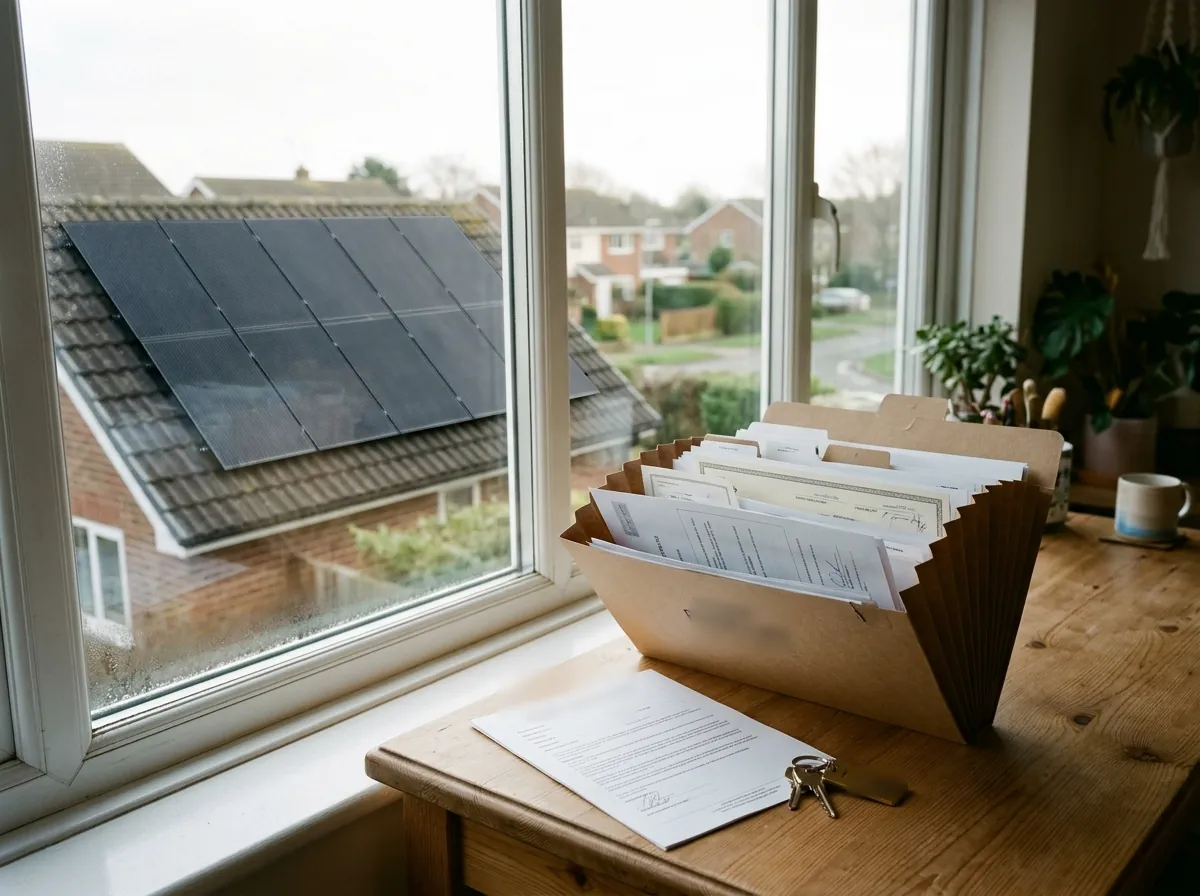
You need your MCS certificate, the electrical building regulations certificate and your warranties, plus the lease if the panels are leased. Irwin Mitchell also lists any roof survey, any planning permission needed, and consent under your title deeds if they restrict external changes. Buyers' solicitors ask for these papers as a matter of routine, so having them ready keeps things moving.
For owned panels, add your Feed-in Tariff or Smart Export Guarantee details, recent bills or payment statements, service records and any finance redemption statement. For leased panels, gather the lease itself and the landlord and tenant notices that went with it. If you cannot find the lease, your solicitor may be able to get it from HM Land Registry.
Gather these before you put your home on the market. Missing documents are one of the most common causes of delay. If something is missing, ask the original installer or check the MCS records for your certificate. Your solicitor will tell you exactly what your buyer's side is likely to ask for.
What does the TA6 form ask about solar panels?
The TA6 Property Information Form asks sellers for details of any solar panel installation that a buyer or lender will need to know. The latest edition, released in 2024 by the Law Society, includes solar panels in Part 1. That part covers material information, which estate agents and sellers should share early.
In practice, your conveyancer will want to know when the panels were fitted, whether you own them or they are leased, and whether they earn Feed-in Tariff or export payments. Answer honestly and fully. If you are not sure of something, say so rather than guess, and attach the paperwork that backs up your answers.
Wrong answers on the TA6 can lead to claims against you after the sale. If your panels are leased, or if you have a loan secured on them, raise this with your solicitor straight away. The TA6 applies in England and Wales, so different forms are used in Scotland and Northern Ireland. Check with your solicitor which form you need.
How do you transfer the Feed-in Tariff to a new owner?
You transfer the Feed-in Tariff by telling your FIT supplier about the sale and giving a meter reading on completion day, after which the buyer applies to take over the payments. This only applies to owned panels. With leased panels, the lease usually decides who gets the payments, and that is normally the solar company.
One FIT supplier, Good Energy, asks sellers to take a generation meter reading on completion day and send written confirmation of the completion date, the buyer's name and that the system was included in the sale. The seller is paid up to completion. The buyer then completes a change of ownership form with ID and proof of the sale.
Each supplier has its own forms, so check with yours. Do not hand your account login to the buyer, as this can cause overpayments. If you are on the Smart Export Guarantee instead, the buyer will need to set up their own export tariff. The Energy Saving Trust suggests buyers compare SEG offers, because rates vary by supplier.
Do you need to tell your home insurer about solar panels?
Yes, you should tell your home insurer about roof-mounted solar panels, whether you are installing them or buying a home that has them. Roof panels are usually covered under buildings insurance as a permanent fixture, according to LV and MoneySuperMarket. Premiums may rise slightly because the rebuild value goes up.
Standard cover may not include accidental damage or wear and tear, so check what your policy says. Batteries may fall under buildings or contents cover depending on where they are kept. If the panels are leased, the solar company should insure its own equipment and hold liability cover, as Juno explains.
If you are buying, ask your solicitor when you become responsible for insuring the building, and make sure cover is in place from that date. Ask the seller for the system's details so you can give your insurer accurate information. Rules vary between policies, so always check with your insurer before you rely on cover.
Quick answers
The short version, if you're in a hurry.
Do solar panels make a house harder to sell?
Owned panels with full paperwork rarely cause problems. Leased panels can make a sale slower or harder, because the buyer and their lender must accept the roof lease.
Can I buy out a solar panel lease before selling?
Sometimes. It depends on whether your lease has a buy-out clause and whether the provider agrees. Ask the provider for a quote in writing and check with your solicitor before you agree.
Who gets the Feed-in Tariff when I sell my house?
With owned panels, you are paid up to the completion date and the buyer can then apply to take over the payments. With leased panels, the solar company usually keeps the payments.
What if I have a loan for my solar panels?
Any loan for the panels normally needs to be paid off on or before completion. Ask your lender for a redemption statement and tell your solicitor early.
What should I check when buying a house with solar panels?
Check whether the panels are owned or leased, ask for the MCS and electrical certificates, warranties and FIT or SEG details, and confirm your lender and insurer are happy. A surveyor should also look at the roof.
Do I need an MCS certificate to sell a house with solar panels?
It is not a legal must, but many lenders want proof of MCS installation and it is needed for the Smart Export Guarantee. Without it, expect more questions from the buyer's side.
Does the TA6 form ask about solar panels?
Yes. The 2024 TA6 asks for details of any solar panel installation. Your conveyancer will want to know when they were fitted, whether they are owned or leased, and about any tariff payments.
Are free solar panels a problem when selling?
They can be. "Free" panels were usually supplied under a rent-a-roof lease of up to 25 years, which some buyers and lenders will not accept. Check the lease terms with your solicitor before you market your home.
Related guides
Solar panel finance: should you buy solar panels on finance?
Read the guideGuideAre solar panels worth it in the UK in 2026?
Read the guideSolar in your part of Nottinghamshire
See all areas we cover.
Sources
Last updated 25 October 2026.
- Solar panels and the Lenders' Handbook – UK Finance
- Guidance and minimum requirements regarding leases of roof space for PV panels – UK Finance
- Solar panels in residential transactions: legal must-knows for buyers and sellers – Irwin Mitchell
- Selling a property with solar panels – QualitySolicitors Parkinson Wright
- Buying a house with solar panels: what should you check? – Fraser Dawbarns
- Questions to ask when buying a property with solar panels – Coodes Solicitors
- The Juno guide to buying a house with solar panels – Juno
- Material information included in TA6 Property Information Form – The Law Society
- How do solar panels affect property prices in the UK? – Urban Big Data Centre
- Rent-a-roof solar panels: what went wrong? – Sunsave
- I'm selling my property and the attached FiT technology, what do I need to do? – Good Energy
- Buying a house with solar panels – Energy Saving Trust
- Solar panels and home insurance – LV
- Solar panels and home insurance – MoneySuperMarket
- MCS – Microgeneration Certification Scheme