Installation
Solar panel installation: what happens and how long does it take?
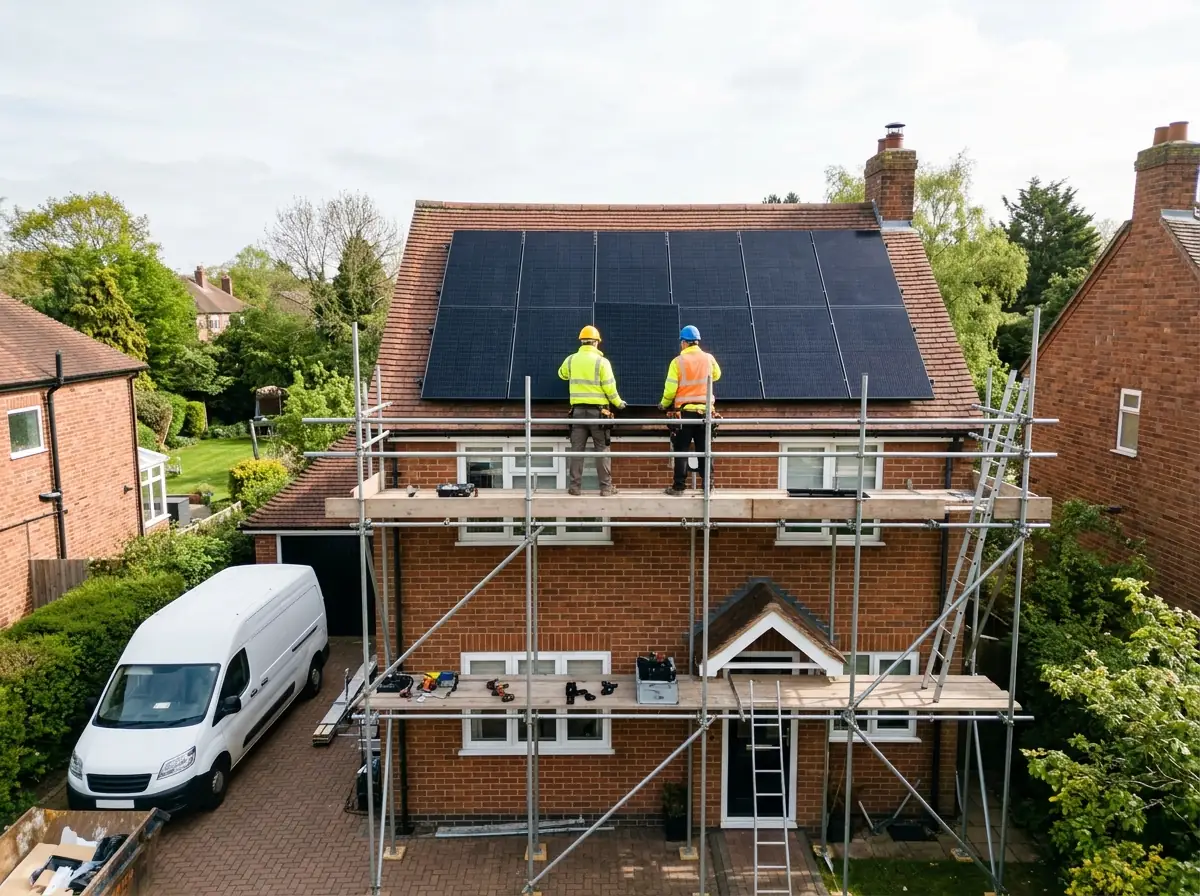
Fitting solar panels usually takes one to two days on the roof, although scaffolding is often up for 10 days to four weeks in total. The full process runs from survey and quote, through deposit, scaffolding, panels, inverter and commissioning, to paperwork such as your MCS certificate and DNO notification.
Free · no obligation · about a minute · Quick answers
Last updated
0% VAT on solar ends 31 March 2027. That's under six months away, and it's due to go back to 5% after.
What the VAT change means for youHow does the solar panel installation process work?
Solar panel installation follows a set order: survey, quote, contract and deposit, scaffolding, fitting the panels, electrics and inverter, commissioning, then paperwork. A typical 4kW system for a 3-bed home costs around £7,300 to £7,500 installed, and 0% VAT applies to home solar and batteries until 31 March 2027. Scaffolding is usually included in the quote.
If your inverter is bigger than 3.68kW per phase, your installer must get approval from the local electricity network (DNO) before fitting, which can add weeks. Smaller systems can be fitted first and the DNO told afterwards. Once everything is signed off, you can apply for a Smart Export Guarantee tariff, which pays around 5p to 15p per kWh you export and needs an MCS certificate.
What happens at the solar survey and quote stage?
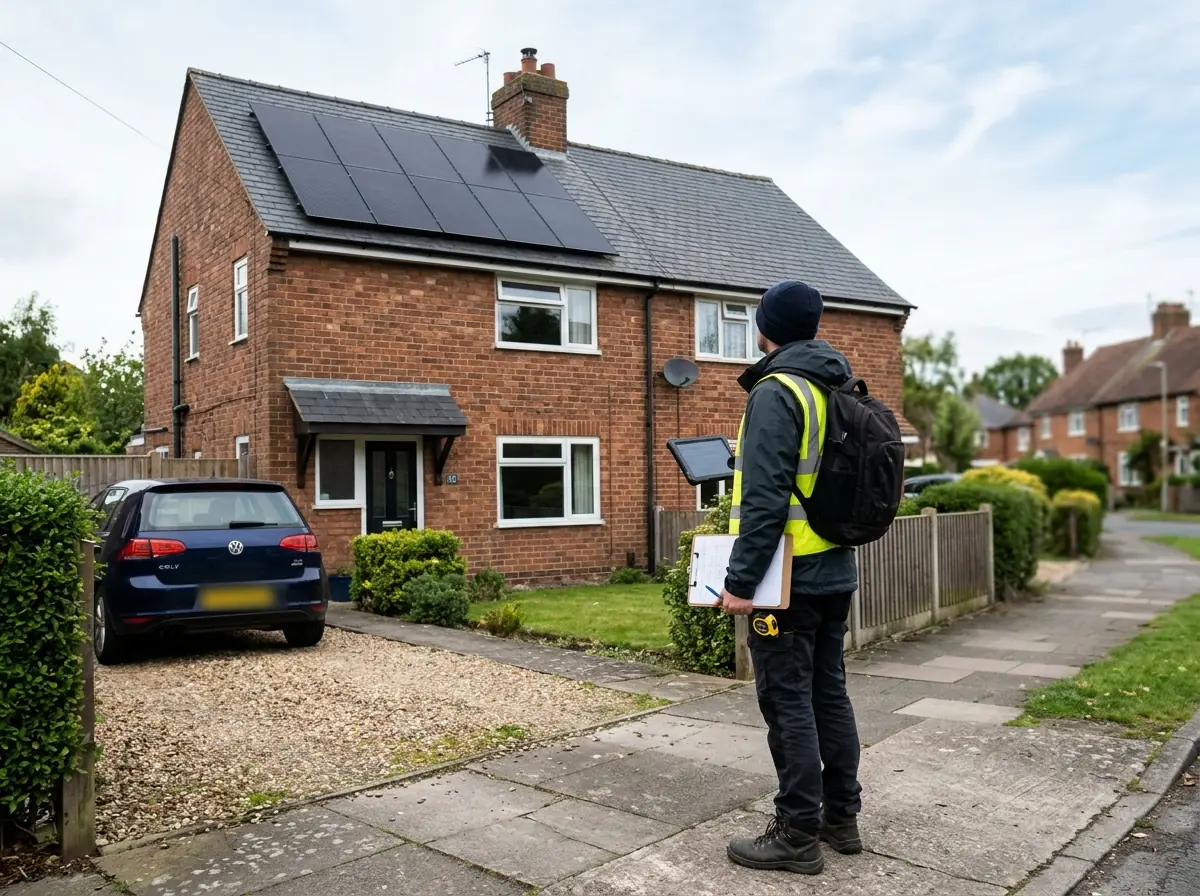
At the survey, the installer checks whether your roof and electrics are suitable and works out the right system size.
They look at the roof's direction, pitch and shading, the condition of the tiles and rafters, and where the inverter and any battery could go. They also check your fuse board (consumer unit) and how you use electricity.
Your quote should list the panels, inverter, any battery, scaffolding, bird mesh if included, and an estimate of yearly generation. It should also name the consumer code the installer belongs to, such as RECC or HIES. Notts Solar Quotes passes your details to up to three MCS-certified installers, so you can compare like-for-like quotes before deciding.
How much deposit should I pay, and is it protected?
You should not pay more than 25% of the contract price up front, and that money should be insured, according to the Renewable Energy Consumer Code. RECC members must protect all money paid before installation, so you get it back if the installer goes out of business. Ask who provides the deposit insurance and get it in writing.
If you sign at home or online, you have at least 14 days to cancel under UK consumer law, explains Citizens Advice. The period starts the day after you agree the contract, and you can normally get your deposit back. If you ask for work to start within the 14 days, you may have to pay for work already done if you then cancel.
Under the RECC code, if you sign at home or purely online, the cooling-off period can run until 14 days after the goods are delivered. If you sign later in your own time after a sales visit, you have 14 days from signing. Installers must get your express written consent before starting work during this time. Always cancel in writing and keep a copy.
How long does solar panel installation take?
Most home solar installations take about one to two days on site, not counting scaffolding. Expert Reviews puts the whole job at about two days, noting that one-day promises usually leave out putting up and taking down the scaffolding. Bigger systems, batteries, tricky roofs and bad weather can all add time.
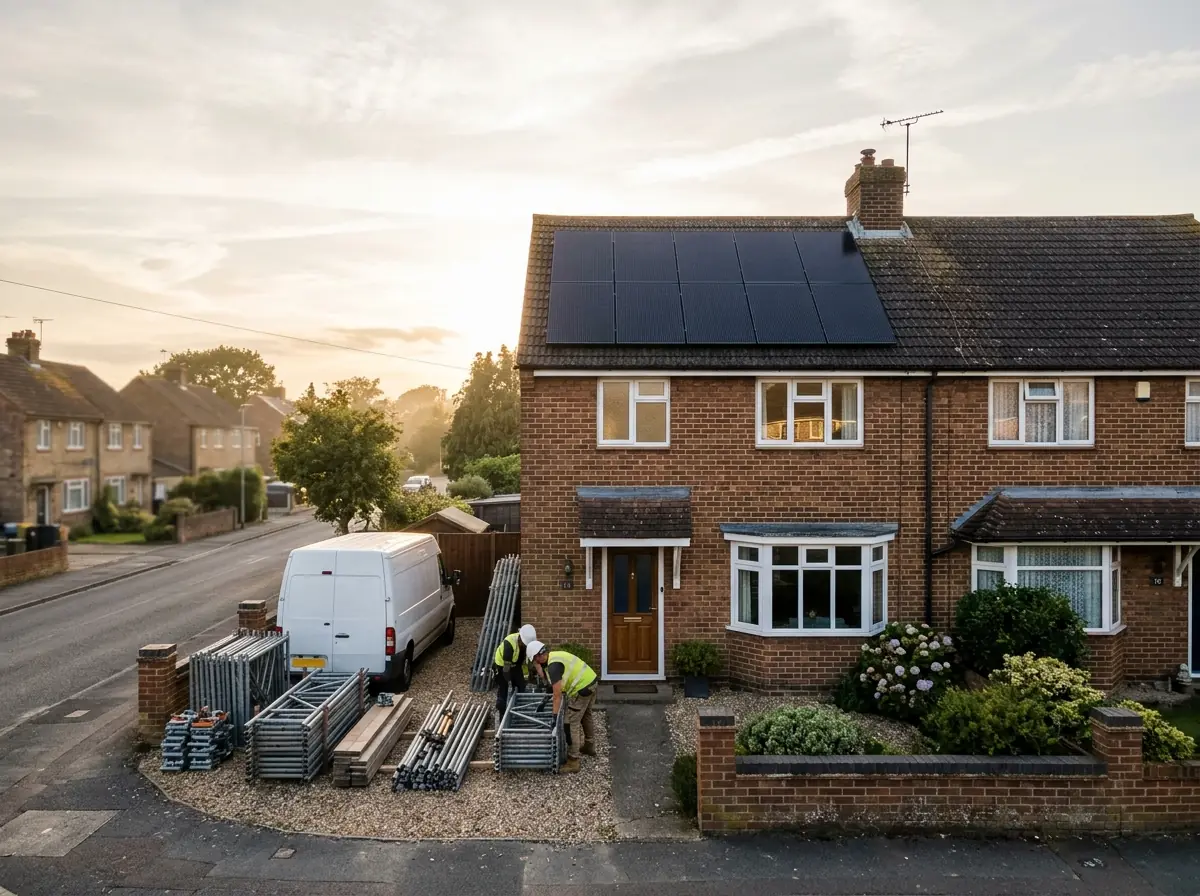
Scaffolding is usually up for 10 days to four weeks overall, according to Sunsave. It often goes up four or five days before the install and stays for about five days after for small fixes. Slate roofs usually take one or two days longer than tiled roofs. From signing to switch-on, a G99 approval can add several weeks, so ask your installer for a timeline.
What happens on solar installation day?
On installation day, the team fixes the mounting system to your roof, fits the panels, then wires them to the inverter and your fuse board.
First, brackets are attached to the rafters, which means lifting some roof tiles. Rails go across the brackets and the panels clip onto them. Most panels come pre-wired, so the cables plug together on the roof.
Inside, the electrician fits the inverter, usually in the loft, which takes about four to six hours depending on system size, says Expert Reviews. A battery, if you chose one, is fitted at the same time. The system is then connected to your consumer unit, tested and commissioned, and the installer should show you the isolator switches and monitoring app before leaving.
Do I need to be home for solar installation?
Yes, you or another adult usually needs to be home on installation day, because the electrician needs to get into your loft and to your fuse board.
Most of the work happens on the roof, so it is not very disruptive. The inverter and any battery are the main parts fitted indoors, and your electricity is likely to be switched off for a while when the system is connected to the fuse board.
Ask your installer how long the power will be off, so you can plan around freezers, home working or medical equipment. Clear a path to the loft hatch and fuse board before the team arrives. Keep cars, bins and garden furniture away from the scaffolding, and let your neighbours know if it goes close to their side.
What is DNO notification for solar panels (G98 and G99)?
DNO notification means telling your local electricity network operator that you have connected solar, using a G98 form for small systems or a G99 application for larger ones. Your installer handles this for you. In the East Midlands, the network operator is the company that runs the local power lines, not your energy supplier.
A G98 covers inverters up to 3.68kW per phase. It is a connect-and-notify process, so the installer sends the form within 28 days of commissioning, explains Sunsave. A G99 is needed above 3.68kW per phase and must be approved before installation. Approval times vary by network, and some installers charge an admin fee for G99 forms.
You cannot be paid for export until the DNO has the G98 or G99. Your export meter number (MPAN) is issued after the DNO receives the form, usually within one to four weeks of signing up to an export tariff, according to Sunsave. Keep a copy of the DNO paperwork with your MCS certificate and other documents.
What paperwork should I get after solar installation?
After installation you should get an MCS certificate, an electrical installation certificate, DNO paperwork and your warranties. A handover pack typically also includes a system diagram, product data sheets, shutdown and isolation instructions, and guidance on applying for export payments, says Payaca. Your insurance-backed guarantee certificate and deposit protection details should be in there too.
Your installer registers the system on the MCS Installations Database, which creates your MCS certificate. Heatable says certificates should generally be raised within 30 days of commissioning, and many come sooner. If you have not had yours after a few weeks, ask the installer to confirm it is registered. You need it to apply for the Smart Export Guarantee.
Keep everything together in one safe place, as you will need it if you sell the house, claim on a warranty, sign up for an export tariff or tell your home insurer about the system. Check with your insurer and mortgage lender whether they need to know about the new panels and battery.
Quick answers
The short version, if you're in a hurry.
How long does it take to install solar panels?
Usually one to two days on site. Scaffolding is often up for 10 days to four weeks overall, and a G99 approval can add several weeks before fitting.
Is scaffolding included in a solar panel quote?
It usually is. Scaffolding for a house typically costs £700 to £2,000, so check it is listed on your quote.
Do I need to be in for a solar panel installation?
Usually yes, as the electrician needs access to your loft and fuse board, and your power will be switched off while the system is connected.
What is the difference between G98 and G99?
G98 covers inverters up to 3.68kW per phase and is sent within 28 days after installation. G99 covers bigger systems and must be approved before fitting.
When do I get my MCS certificate?
Usually within 30 days of commissioning, once your installer registers the system on the MCS Installations Database. You need it for the Smart Export Guarantee.
How much deposit should I pay for solar panels?
No more than 25% under the Renewable Energy Consumer Code, and it should be insured in case the installer stops trading.
Can I cancel a solar panel contract?
Yes. If you signed at home or online, you have at least 14 days to cancel under UK consumer law, though you may pay for any work you asked to start early.
Related guides
How do I choose a good solar panel installer?
Read the guideGuideDo solar panels damage your roof?
Read the guideSolar in your part of Nottinghamshire
See all areas we cover.
Sources
Last updated 25 October 2026.
- Consumer leaflet – Renewable Energy Consumer Code (RECC)
- About deposit and workmanship warranty protection – RECC
- Cancelling a service you've arranged – Citizens Advice
- Consumer protection – Energy Saving Trust
- How are solar panels installed? – Expert Reviews
- Scaffolding for solar panels: costs and tips – Sunsave
- Solar panels on slate roofs – Sunsave
- G98 solar applications: the expert guide – Sunsave
- Solar commissioning compliance – Payaca
- What does an MCS certificate look like? – Heatable
- MCS approved financial protection products – MCS