Business solar
Commercial solar panels in Nottinghamshire: cost, payback and tax relief
Commercial solar panels typically cost about £800 to £1,300 per kW for systems up to 50kW and around £700 to £1,000 per kW for larger roofs, so a 100kW system is roughly £70,000 to £100,000. Most published estimates put payback at about 3 to 10 years, helped by tax relief and an exemption from business rates in England. Tell us about your building and we can pass your enquiry to up to 3 vetted installers for free, with no obligation.
Free · no obligation · about a minute · Quick answers
Last updated
0% VAT on solar ends 31 March 2027. That's under six months away, and it's due to go back to 5% after.
What the VAT change means for youHow much do commercial solar panels cost?
Commercial solar panels usually cost about £800 to £1,300 per kW installed for systems up to 50kW, and roughly £700 to £1,000 per kW for larger systems. That is based on figures from Heatable and ExpertSure. The bigger the system, the lower the cost per kW, because fixed costs such as scaffolding, design and grid paperwork are spread over more panels.
As a rough guide, a 10kW system costs about £13,000 to £15,000, a 30kW system about £24,000 to £39,000, and a 100kW system about £70,000 to £100,000. ExpertSure gives £130,000 to £170,000 for a 200kW example and around £700 to £900 per kW for 250kW and above. Your price depends on roof type, access, cabling distances and any grid upgrades needed.
Costs have been falling. Government data reported by pv magazine shows the median cost of 10kW to 50kW installations fell 3% in real terms in 2025/26 compared with the year before. Panel prices change often, so treat any figure as a guide only. Getting several quotes is the best way to check you are paying a fair price for your building.
How long does commercial solar take to pay back?
Commercial solar usually pays back in about 3 to 10 years, depending on how much of the power you use on site. Heatable estimates 3 to 6 years for most businesses. ExpertSure gives a worked example of a 50kW system costing £65,600 and saving £8,299 a year, which pays back in 7.9 years.
Payback is faster for businesses than for most homes because firms tend to use power in the daytime, when the panels are producing. Every unit you use yourself avoids buying it from the grid at full price. Units you export earn much less. ExpertSure estimates a 100kW system makes about 85,000 to 95,000kWh a year, so the more of that you use, the better the return.
Tax relief can shorten payback further, because you can often deduct much or all of the cost from taxable profits in year one. Panels typically last 25 years or more, so a system that pays back in under ten years can give many years of low-cost power. Ask installers to base savings on your real half-hourly meter data, not averages.
Is solar worth it for warehouses, offices and schools?
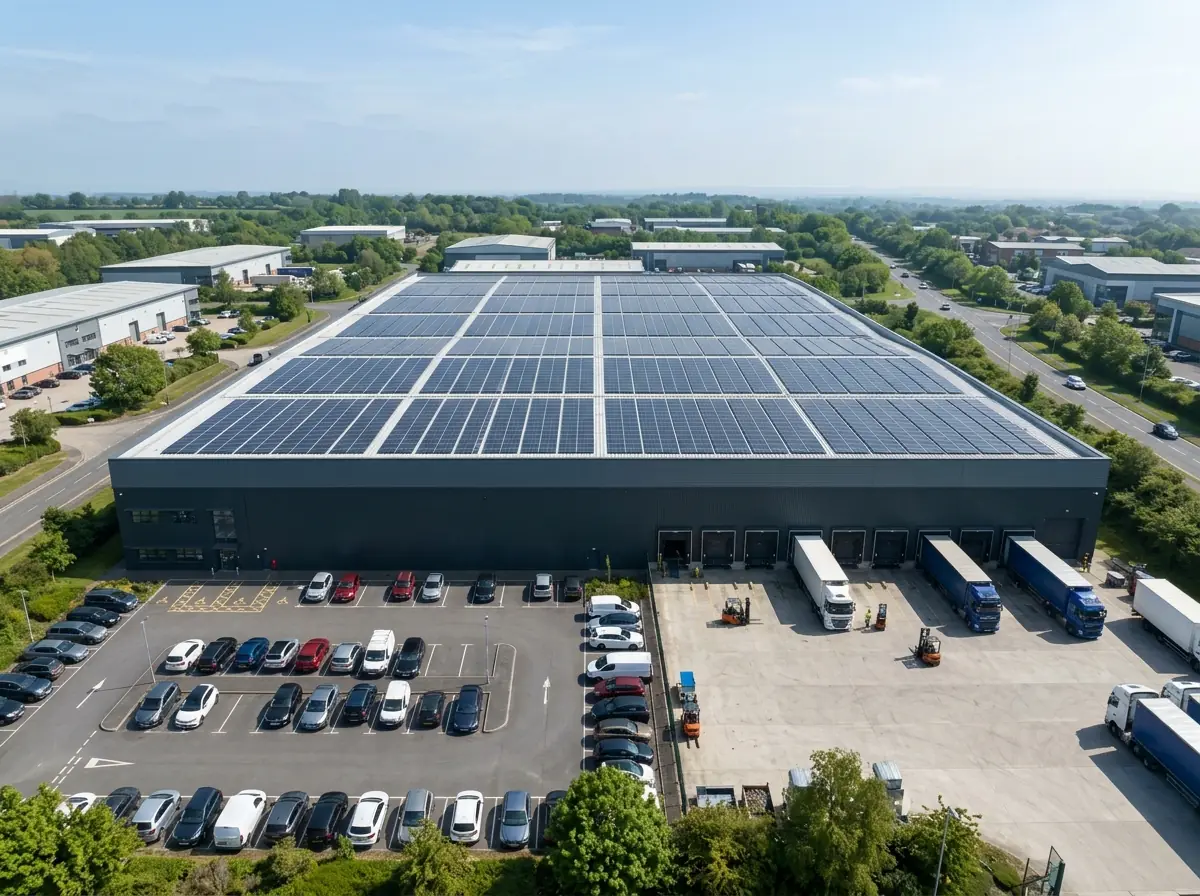
Solar is usually worth it for warehouses, offices and schools because they have large roofs and use most of their electricity during daylight hours. Warehouses and factories often have big, flat or low-pitched roofs that can take hundreds of panels. Cold stores, workshops and production lines that run all day can use almost everything the panels make, which gives the strongest savings.
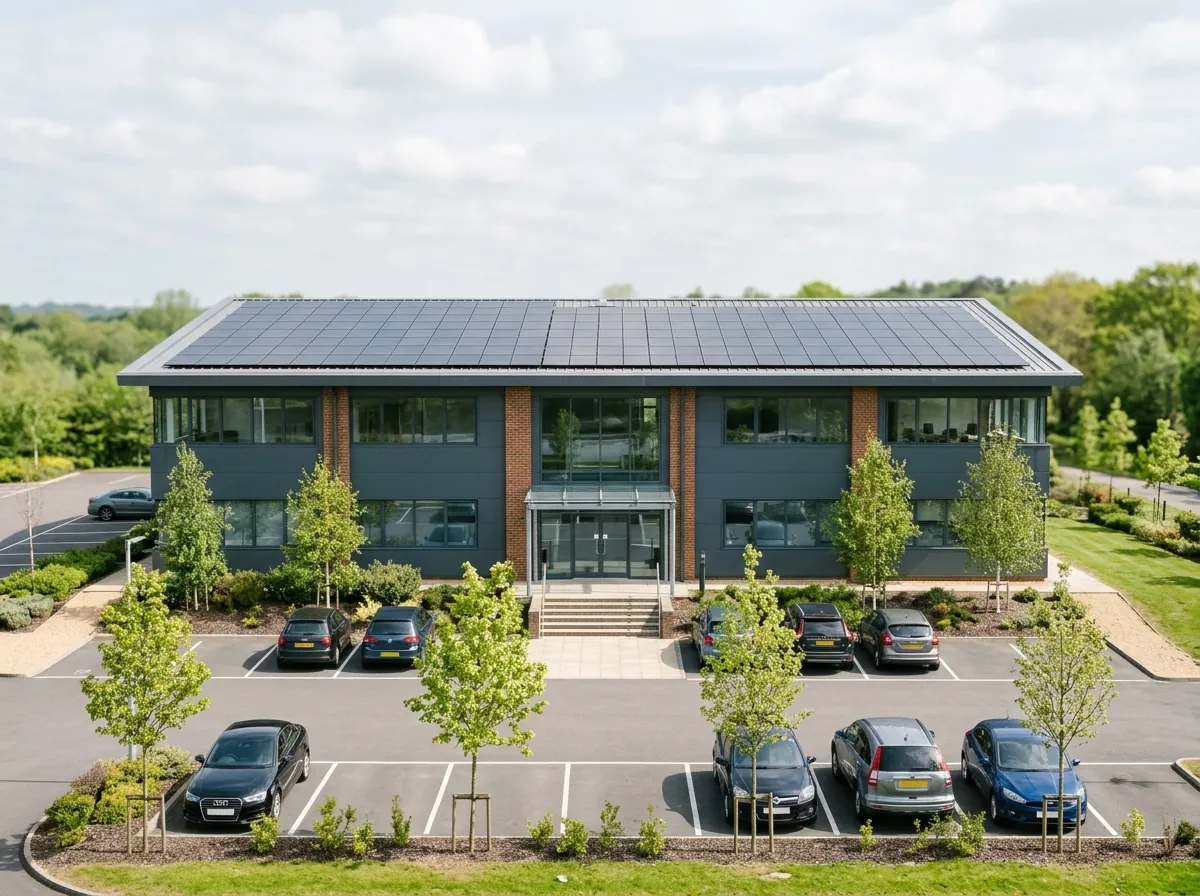
Offices use power for lighting, computers, heating and cooling through the working day, which matches solar output well. Schools are busiest in the day too, but they are closed in the summer holidays, when output peaks, so more power may be exported. A battery can help store midday power for later use. In each case, a structural survey should confirm the roof can carry the extra weight.
Farms, garages, shops and leisure centres in Nottinghamshire can also do well, especially where there is heavy daytime use. If a building is used solely for a relevant charitable purpose, such as some charity buildings, it may qualify for 0% VAT on solar until 31 March 2027. Check with your VAT adviser whether yours qualifies.
Do businesses pay VAT on solar panels?
Yes, businesses usually pay VAT at the standard 20% rate on solar panels, but VAT-registered businesses can normally reclaim it. The 0% rate on solar under HMRC VAT Notice 708/6 covers homes and certain charity buildings, not ordinary commercial premises. If you are VAT registered and the system is used for your taxable business, the VAT is usually recoverable through your VAT return.
From 1 February 2024, the relief was extended to buildings used solely for a relevant charitable purpose, under the VAT (Installation of Energy-Saving Materials) Order 2024. The zero rate runs until 31 March 2027, with a reduced rate due after that. Businesses that are not VAT registered, or that make exempt supplies, may not be able to reclaim all the VAT, so check with your accountant.
What tax relief can you claim on commercial solar panels?
Most businesses can claim the Annual Investment Allowance, which gives 100% tax relief on up to £1 million of qualifying spending a year, including solar panels. Solar panels are treated as special rate plant and machinery for capital allowances, according to Menzies. Any spending not covered by the allowance goes into the special rate pool and is written down at 6% a year.
Companies paying Corporation Tax can also claim a 50% first-year allowance on special rate spending, which the Government made permanent alongside full expensing. Full expensing itself gives 100% relief but only for main rate assets, so it does not usually cover solar. The new 40% first-year allowance from 1 January 2026 is also aimed at main rate spending.
In England, rooftop solar used for onsite generation is also exempt from business rates from 1 April 2022 to 31 March 2035. The explanatory memorandum says this covers plant and machinery used mainly or exclusively for onsite renewable generation, so panels should not push up your rateable value. Tax rules depend on your circumstances, so speak to your accountant before you commit.
Do commercial solar panels need planning permission?
Most rooftop solar on commercial buildings in England does not need planning permission, because it counts as permitted development if certain conditions are met.
Since 21 December 2023, the old 1MW limit on non-domestic rooftop solar has been removed, according to the Planning Portal. Systems over 1MW can now go ahead under permitted development, subject to prior approval from the council.
Some sites still need permission or extra approval. Listed buildings generally need listed building consent. In conservation areas and other protected land, panels on roof slopes facing a highway may need prior approval. Ground-mounted arrays and car park canopies are more likely to need full planning permission. Your installer should check the rules with your local council, such as Bassetlaw, Newark and Sherwood or Nottingham City, before work starts.
What is G99 and can you sell spare solar power?
G99 is the grid approval process that almost every commercial solar system needs before it can be installed and connected. Any system above 16 amps per phase, about 3.68kW on a single phase, falls under G99 rather than the simpler G98 rules. In Nottinghamshire, the network operator is National Grid Electricity Distribution, which must issue a connection offer before work begins.
For a standard low-voltage application, National Grid Electricity Distribution has a target of 45 working days for its technical assessment, and offers usually need accepting within 30 days. The offer may limit how much you can export. That is why you should not count on export income until the offer confirms it. Your installer will normally handle the application for you.
You can sell spare power through the Smart Export Guarantee, which covers solar systems up to 5MW. Suppliers set their own rates. Under Ofgem guidance, systems up to 50kW need an MCS-certified installation and installer, while larger systems need a certified installation. Another option is a power purchase agreement, where a third party funds and owns the panels and sells you the power at a discount.
Can you put solar panels on a leased commercial building?
Yes, you can put solar panels on a leased building, but you will normally need the landlord's consent and a clear written agreement. If you are a tenant, the landlord usually grants a licence for alterations. HC Solicitors says it should cover how the work is done, avoiding damage, and what happens to the panels at the end of the lease.
Lease length matters, because panels last 20 to 30 years. If your lease ends before the system has paid back, you could lose the benefit. Some landlords install the panels themselves and sell the power to tenants. Others let the roof to a solar company under a power purchase agreement, which often runs for 20 to 25 years.
Roof warranties are another issue. Work on a newer roof could void the roofing contractor's warranty, so check before drilling or fixing anything. Insurance, repairs, roof access and who pays to remove the panels should all be agreed in writing. Have a solicitor review your lease, any licence and any power purchase agreement before you sign.
Quick answers
The short version, if you're in a hurry.
How much do commercial solar panels cost per kW?
Roughly £800 to £1,300 per kW for systems up to 50kW, and about £700 to £1,000 per kW for larger systems. A 100kW system is typically £70,000 to £100,000.
What is the payback on commercial solar?
Most estimates put payback at about 3 to 10 years. It is fastest where you use most of the power on site during the day.
Can a business reclaim VAT on solar panels?
Usually, yes. Commercial solar is charged at 20% VAT, which VAT-registered businesses can normally reclaim if the system is used for taxable business.
Do solar panels qualify for capital allowances?
Yes. They are special rate plant and machinery, so you can claim the Annual Investment Allowance of up to £1 million. Companies can also claim a 50% first-year allowance on spending above that.
Do commercial solar panels increase business rates?
Not in England at present. Plant and machinery used for onsite renewable generation, such as rooftop solar, is exempt from business rates until 31 March 2035.
Do I need planning permission for solar on a warehouse roof?
Usually not in England, as most non-domestic rooftop solar is permitted development and the 1MW cap was removed in December 2023. Listed buildings and some protected areas need extra approval.
Who approves commercial solar grid connections in Nottinghamshire?
National Grid Electricity Distribution. Systems over about 3.68kW per phase need G99 approval before installation, and your installer normally applies for you.
Can I install solar if I rent my business premises?
Yes, with your landlord's consent, usually through a licence for alterations. Make sure your lease is long enough to benefit and get a solicitor to check the paperwork.
Related guides
Solar panels for farms and rural properties in Nottinghamshire
Read the guideGuideSolar panel finance: should you buy solar panels on finance?
Read the guideSolar in your part of Nottinghamshire
See all areas we cover.
Sources
Last updated 25 October 2026.
- Solar for business: costs, benefits and how to get started in 2026 – Heatable
- Commercial solar panels – ExpertSure
- UK hits 22.3 GW solar capacity as cost per kW falls – pv magazine
- Energy-saving materials and heating equipment (VAT Notice 708/6) – GOV.UK
- The Value Added Tax (Installation of Energy-Saving Materials) Order 2024 – legislation.gov.uk
- Tax implications of solar panels – Menzies
- Capital allowances: permanent full expensing for companies investing in plant and machinery – GOV.UK
- Capital allowances: new first-year allowance and reducing main rate writing-down allowances – GOV.UK
- Explanatory memorandum to SI 2022/405 (business rates plant and machinery) – legislation.gov.uk
- Updates in December to permitted development rights for solar panels – Planning Portal
- NGED DNO guide – SurgePV
- Smart Export Guarantee (SEG) – Ofgem
- Smart Export Guarantee: guidance for generators – Ofgem
- Solar panels – generating electricity on your commercial building – HC Solicitors