Roofs
Do solar panels damage your roof?
No. Solar panels fitted correctly by an MCS-certified installer do not damage your roof, and most homes need no planning permission as long as panels stand no more than 200mm proud of a pitched roof (600mm on a flat roof). A typical panel weighs about 18kg, which most sound UK roofs carry easily after a survey.
Free · no obligation · about a minute · Quick answers
Last updated
0% VAT on solar ends 31 March 2027. That's under six months away, and it's due to go back to 5% after.
What the VAT change means for youDo solar panels damage your roof?
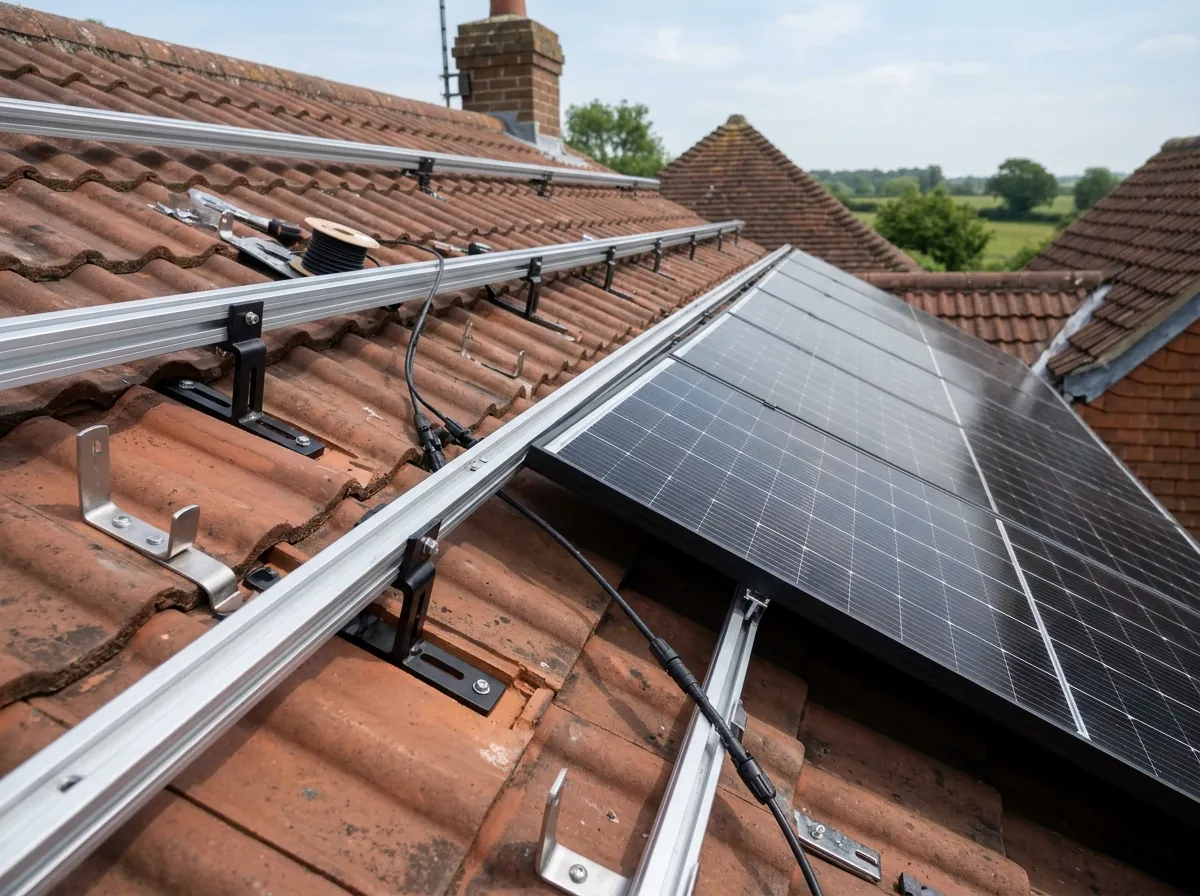
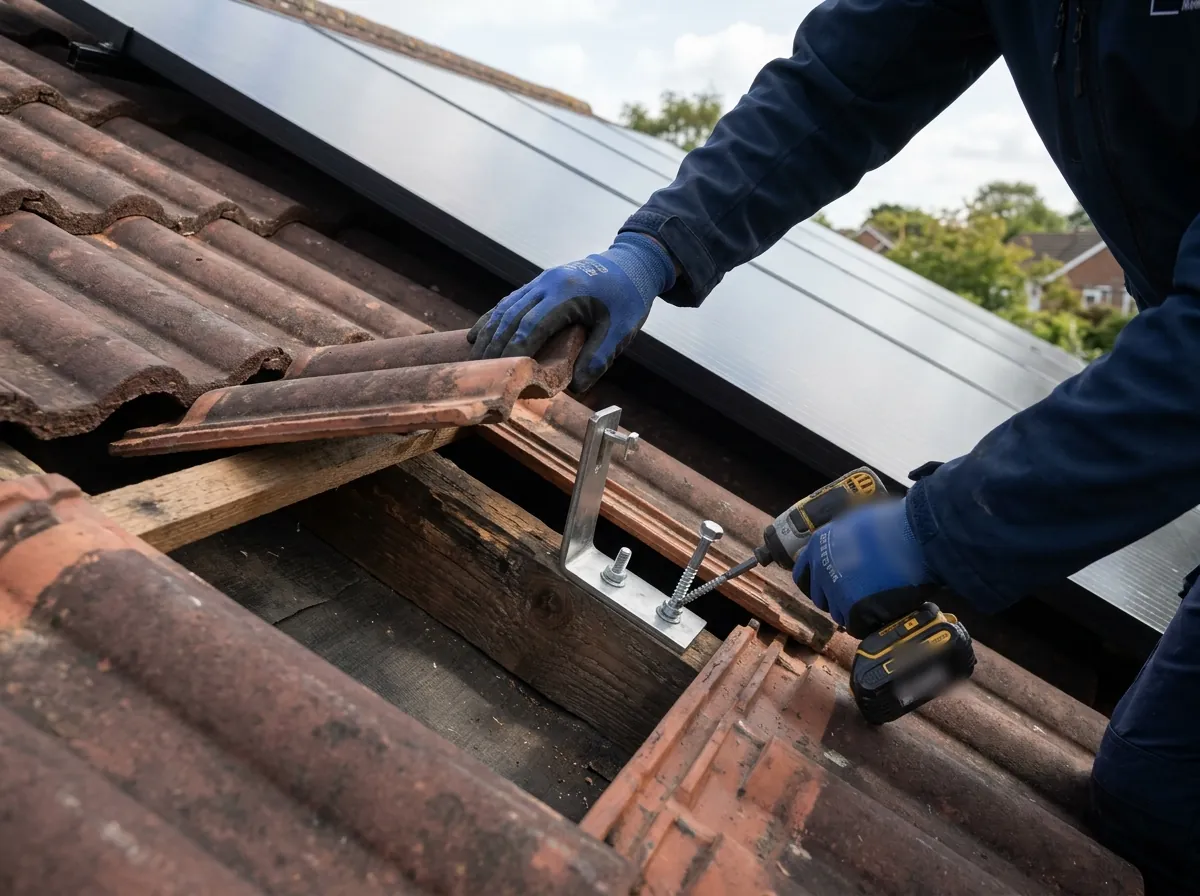
Solar panels do not damage your roof if they are installed correctly, according to the Energy Saving Trust. On a pitched roof, the installer lifts a few tiles, fixes metal brackets to the rafters underneath, then puts the tiles back. Rails clip onto the brackets and the panels clip onto the rails. Done properly, the roof covering stays watertight.
Leaks usually come from poor workmanship, not from solar itself. Common causes are tiles cracked while being lifted, drilling straight through slate, or missing flashing around brackets. A good installer replaces any tiles they break. Under MCS rules, your installer must belong to a consumer code, which means you get a workmanship warranty, backed by insurance, that covers the roof works as well as the electrics.
If you spot a damp patch in the loft after an install, report it to your installer straight away and take dated photos. It is also worth telling your home insurer that you have added solar panels, and checking with your lender if the house is mortgaged, as some want to know about changes to the property.
Is my roof suitable for solar panels?
Most sound UK roofs are suitable for solar panels and can take the weight without strengthening. A typical home panel weighs around 18kg, according to The Eco Experts. Spread across a pitched roof, that works out at roughly 14kg per square metre, which is less than many people expect. Older roofs in poor condition, or with sagging or rotten timbers, may need repairs first.
Your installer should check the rafters, battens and roof covering during the survey before giving you a final price. Under Building Regulations guidance (Approved Document A), a retrofit that adds more than 15% to the load on a roof needs a structural assessment, as Designing Buildings explains. Ballasted flat-roof systems are the most likely to reach this point, because the concrete blocks weigh more than the panels.
If your roof will need replacing in the next 10 years or so, it usually makes sense to do it before fitting solar. Panels are designed to keep working for 25 years or more, so they will outlast a tired roof. Tradespeople quoted about £500 to £1,000 to remove and refit eight panels later, on MyJobQuote.
Scaffolding comes on top of that unless it is already up, and typically costs £700 to £2,000 for a house, according to Sunsave. If you are re-roofing anyway, ask whether the roofer and solar installer can share one set of scaffolding. A new roof is also the best time to consider in-roof panels.
Can you put solar panels on a slate or tile roof?
Yes, solar panels can go on slate, concrete tile and clay tile roofs, but slate takes more care and usually costs more.
On concrete or clay tiles, the installer lifts a tile, fixes the bracket to the rafter and rests the tile back over it. This is quick and leaves the roof looking as it did.
Slate is brittle and cannot be handled that way. The installer removes some slates, fits lead or zinc flashing, fixes the brackets to the rafters, then cuts slates to fit around them. Good installers avoid drilling straight through slate, because that weakens it and makes leaks more likely, says Sunsave. Expect a slate job to take one or two days longer than a typical install.
In-roof vs on-roof solar panels: which is better?
On-roof panels are the usual choice for an existing roof, while in-roof panels suit new builds and re-roofs where you want a flush, neat finish. On-roof panels sit on rails a few centimetres above the tiles. They are simpler and quicker to fit, and normally cheaper. Air flows behind them, which helps keep them cool.
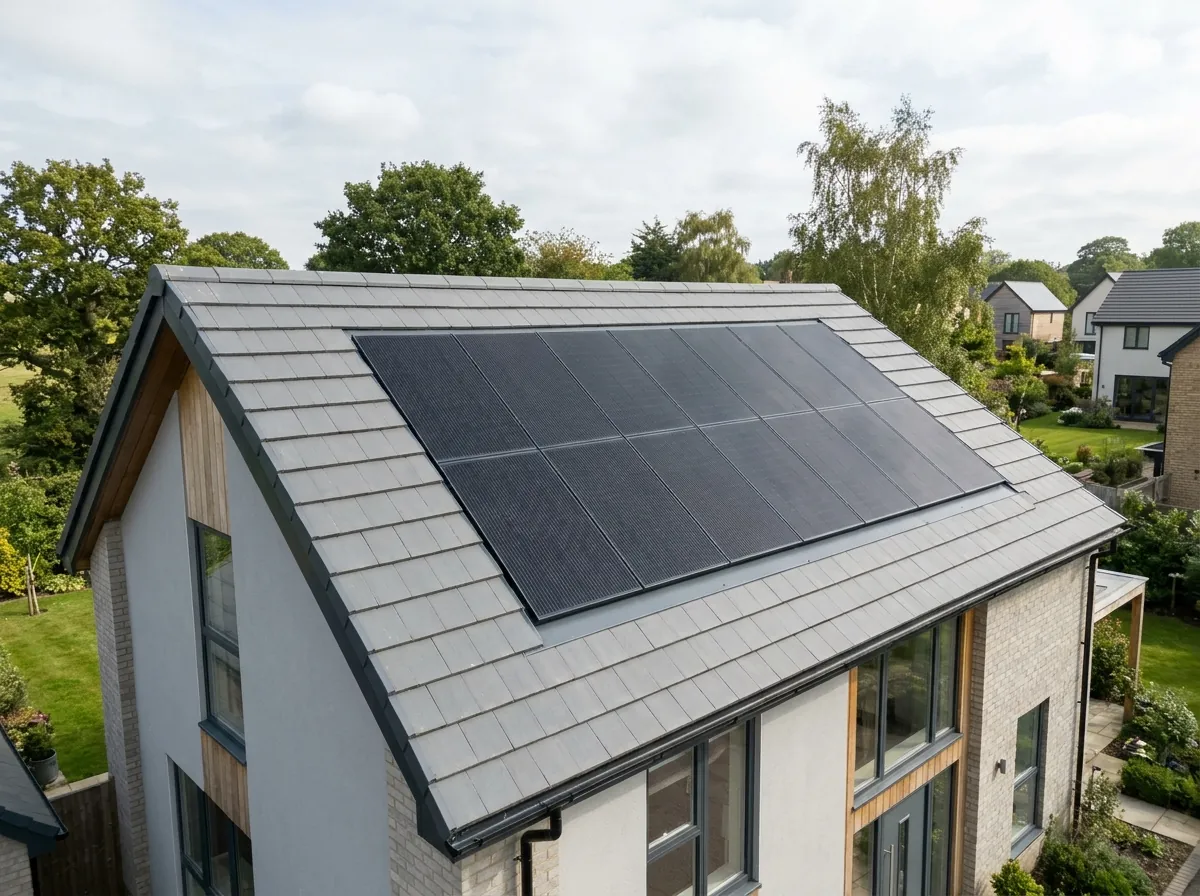
In-roof (integrated) panels replace a section of tiles and sit in special trays over a waterproof membrane, so the panels become part of the roof covering, explains Fuse Energy. They look tidier but cost more, because fitting is more involved and needs extra parts. With less airflow they can run slightly warmer, which can trim output a little on very hot days. Either type should be within the 200mm permitted development limit.
Can you put solar panels on a flat roof or garage roof?
Yes, solar panels work well on flat roofs and garage roofs as long as the structure is strong enough. On a flat roof, panels sit on angled frames so they tilt towards the sun and shed rain. Many frames are held down by concrete ballast rather than fixings, so the waterproof layer is not pierced. Under MCS rules, ballasted flat-roof designs must be checked by a structural engineer, notes Designing Buildings.
In England, panels on a flat roof are usually permitted development if the highest part of the equipment is no more than 600mm above the highest part of the roof, not counting the chimney, according to the Planning Portal. The same rules cover other buildings within the grounds of your house, such as a garage, but not listed buildings.
For a garage, ask the surveyor to check the roof deck and timbers, which are often lighter than on the house. The cable run back to your fuse board also matters, because a long run adds cost. A south-facing garage roof can be a good option if the house roof is shaded or faces north.
Are east-west solar panels worth it?
Yes, east-west panels are usually still worth it, producing roughly a fifth less than a south-facing roof.
Sunsave's PVGIS-based figures for a 4.9kWp system show about 4,513kWh a year facing south, 3,693kWh facing west and 3,619kWh facing east, as set out by Sunsave. For comparison, a 4kW south-facing system in the UK makes around 3,400kWh a year.
Splitting panels across both sides of an east-west roof spreads generation over the day. You get more power in the morning and evening, when many households use most electricity, and less of a midday peak. That can mean you use more of your own solar rather than exporting it. An installer's quote should give an estimated yearly output for your actual roof.
Do you need planning permission for ground-mounted solar panels in the UK?
In England, a small ground-mounted array is usually permitted development, but larger ones need planning permission. The Planning Portal says the array must be no more than 9 square metres. New rules for houses came in on 27 August 2026, with height limits of 4m in most places, 2m within 5m of the boundary, and 1m if it is also in front of the house.
Until 27 August 2027 you can follow either the new rules or the old ones. Under the old rules, only the first stand-alone installation counted as permitted development, it had to be at least 5m from the boundary, and no more than 4m high. Panels within the grounds of a listed building or scheduled monument are not covered. Always check with Bassetlaw, Newark and Sherwood or your own council before buying.
Nine square metres is only about four or five panels, so most ground arrays big enough for a family home need planning permission, notes the Federation of Master Builders. It puts ground mounts at about 25% to 35% dearer than roof systems. A cable trench around 450mm deep runs back to the house, so check your quote includes digging it.
How do you stop pigeons getting under solar panels?
The usual fix is bird mesh, a galvanised wire mesh clipped around the edge of the panels so pigeons cannot get underneath. Pigeons like the gap because it is warm, dry and safe from predators. Their droppings and nests can stain the roof, trap moisture and block airflow. Birds can also peck cable insulation, which iHeat links to a higher fire risk.
Bird proofing for a home system usually costs about £300 to £800, depending on the size of the array, roof height and access, according to iHeat. Evo Energy gives a wider range of roughly £300 to £1,000. Fitting mesh at the same time as the panels, while the scaffolding is up, is usually the cheapest way to do it.
Fit proofing before birds start nesting. Wild birds' active nests are protected by law, so if pigeons are already nesting, work may need to wait until they have left. Ask your installer whether bird mesh is included in the quote, and check that removing nests or fitting mesh will not affect your warranty.
Quick answers
The short version, if you're in a hurry.
Do solar panels cause roof leaks?
Not when they are fitted properly. Leaks usually come from cracked tiles, slates drilled through or missing flashing, and your installer's insurance-backed workmanship warranty should cover roof works.
How heavy are solar panels on a roof?
A typical home panel weighs about 18kg, or roughly 14kg per square metre on a pitched roof. Most sound UK roofs carry this easily, and your installer checks the structure at the survey.
Can I put solar panels on a flat roof without planning permission?
Usually yes in England, as long as the equipment is no more than 600mm above the highest part of the roof, excluding the chimney. Listed buildings and some protected areas have extra rules.
How big can ground-mounted solar panels be without planning permission?
In England the array must be no more than 9 square metres, with height limits of 1m to 4m depending on how close it is to the boundary under the rules from 27 August 2026.
How much does bird mesh for solar panels cost?
Usually around £300 to £800 for a home system, and up to about £1,000 for large or hard-to-reach roofs. It is cheapest to add while the scaffolding is up.
Should I get a new roof before solar panels?
If the roof needs replacing within about 10 years, yes. Removing and refitting panels later can cost around £500 to £1,000 plus scaffolding.
Are east-west solar panels a good idea?
Usually yes. They make roughly a fifth less than south-facing panels but spread generation across the morning and evening, when many homes use more power.
Is in-roof solar more expensive than on-roof?
Yes. In-roof panels cost more because fitting is more involved and needs special trays, so they are best value when you are building or re-roofing.
Related guides
Solar panel installation: what happens and how long does it take?
Read the guideGuideDo you need planning permission for solar panels in Nottinghamshire?
Read the guideSolar in your part of Nottinghamshire
See all areas we cover.
Sources
Last updated 25 October 2026.
- Solar power facts – Energy Saving Trust
- Solar equipment mounted on a house or building – Planning Portal
- Stand-alone solar equipment within the grounds of a house – Planning Portal
- Changes to permitted development rules for domestic solar installations – Planning Portal
- How much do solar panels weigh? – The Eco Experts
- Ballasted solar PV on flat roofs – Designing Buildings
- How much does solar panel removal cost? – MyJobQuote
- Scaffolding for solar panels: costs and tips – Sunsave
- Solar panels on slate roofs – Sunsave
- Solar panels on east-facing and west-facing roofs – Sunsave
- The UK homeowner's guide to in-roof solar panels – Fuse Energy
- Ground mounted solar panels – Federation of Master Builders
- Solar panel bird proofing – iHeat
- How much does it cost to pigeon proof solar panels? – Evo Energy