Plug-in solar
Plug-in solar panels in the UK: are they legal and are they worth it?
Plug-in solar panels have been legal to buy and use in Great Britain since 27 August 2026, as long as the kit meets UK standards, is no bigger than 800W and is registered before use. Compliant kits cost from around £450 and the Government says they can save up to £110 a year. A typical 4kW rooftop system saves roughly four to six times more, so plug-in solar is a top-up, not a replacement.
Free · no obligation · about a minute · Quick answers
Last updated
0% VAT on solar ends 31 March 2027. That's under six months away, and it's due to go back to 5% after.
What the VAT change means for youWhat are plug-in solar panels?
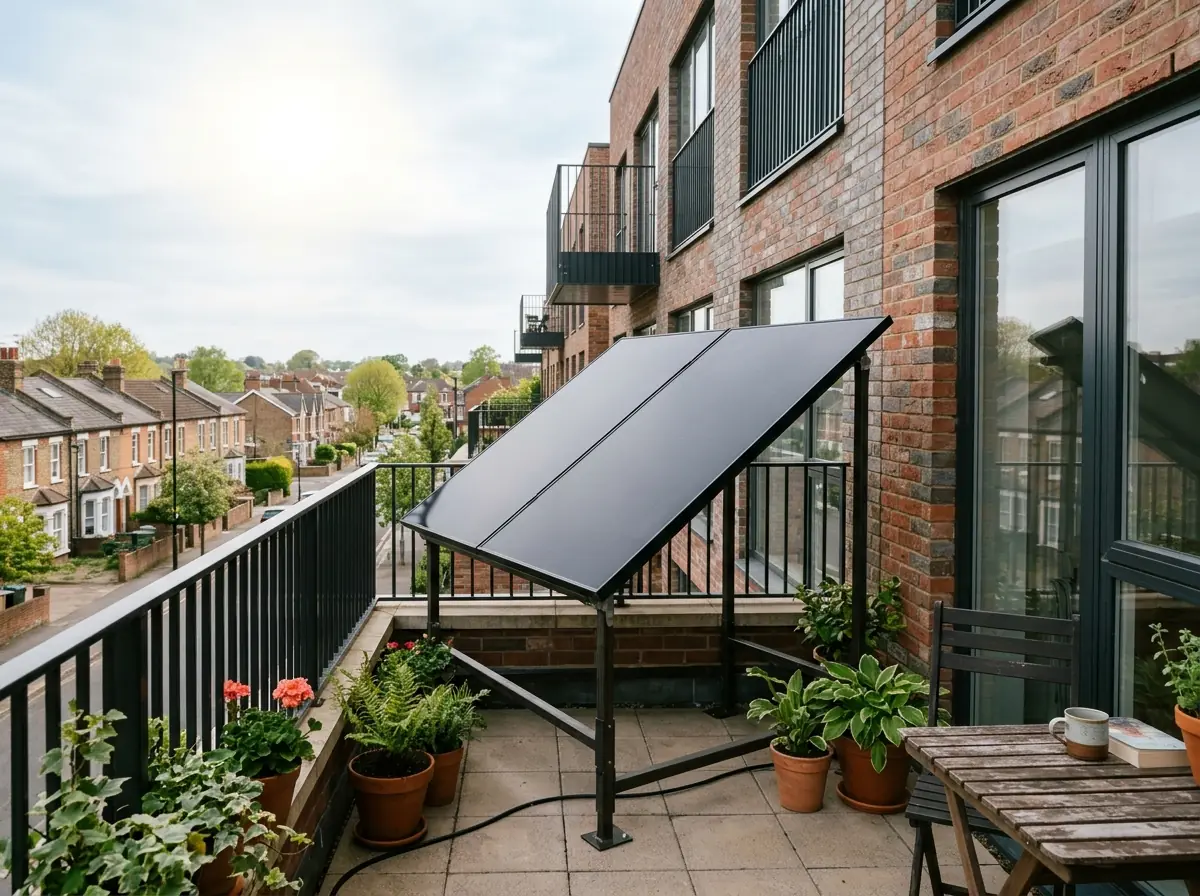
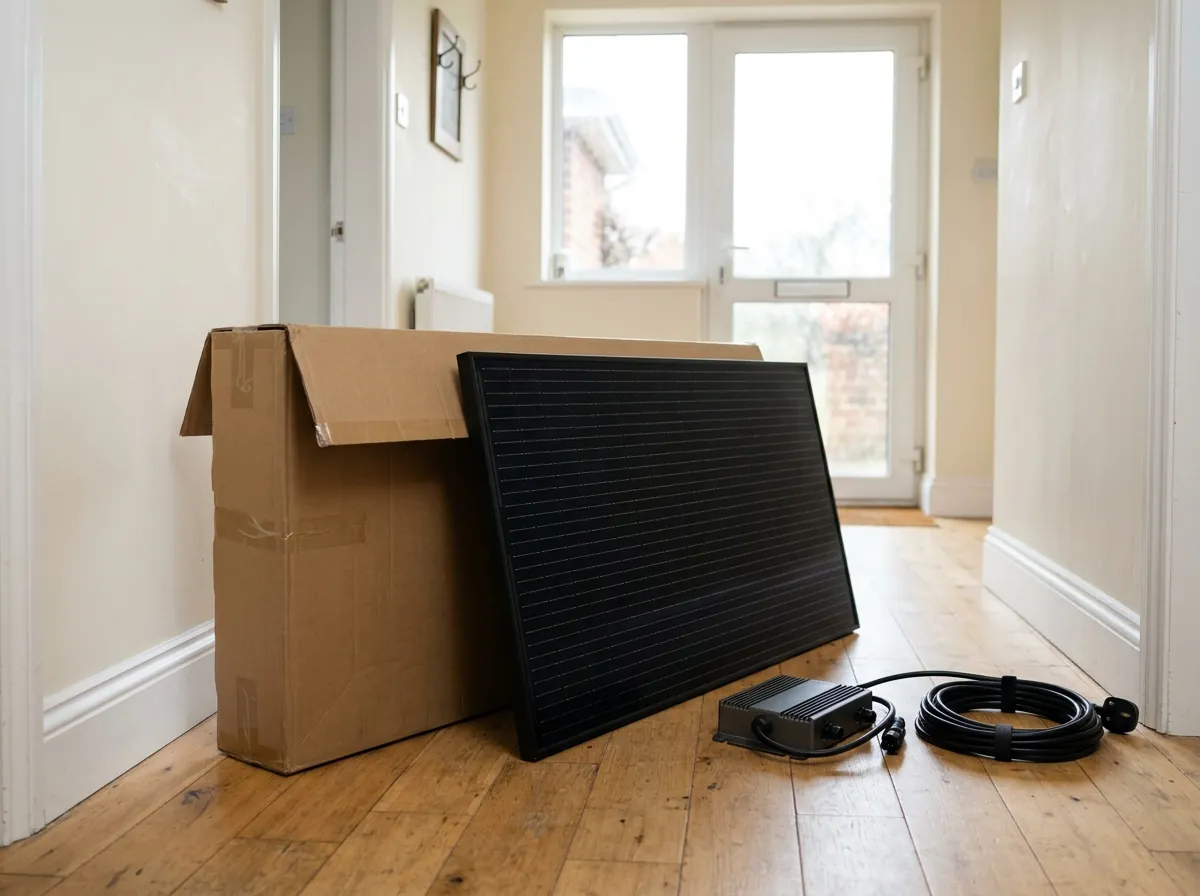
Plug-in solar panels are small, self-installed solar kits that plug into an ordinary 3-pin socket and feed power straight into your home's wiring. A kit is usually one or two panels plus a microinverter. The panels make DC power and the microinverter turns it into AC power your appliances can use. You may also see them called balcony solar, because they are hugely popular on flats in Germany.
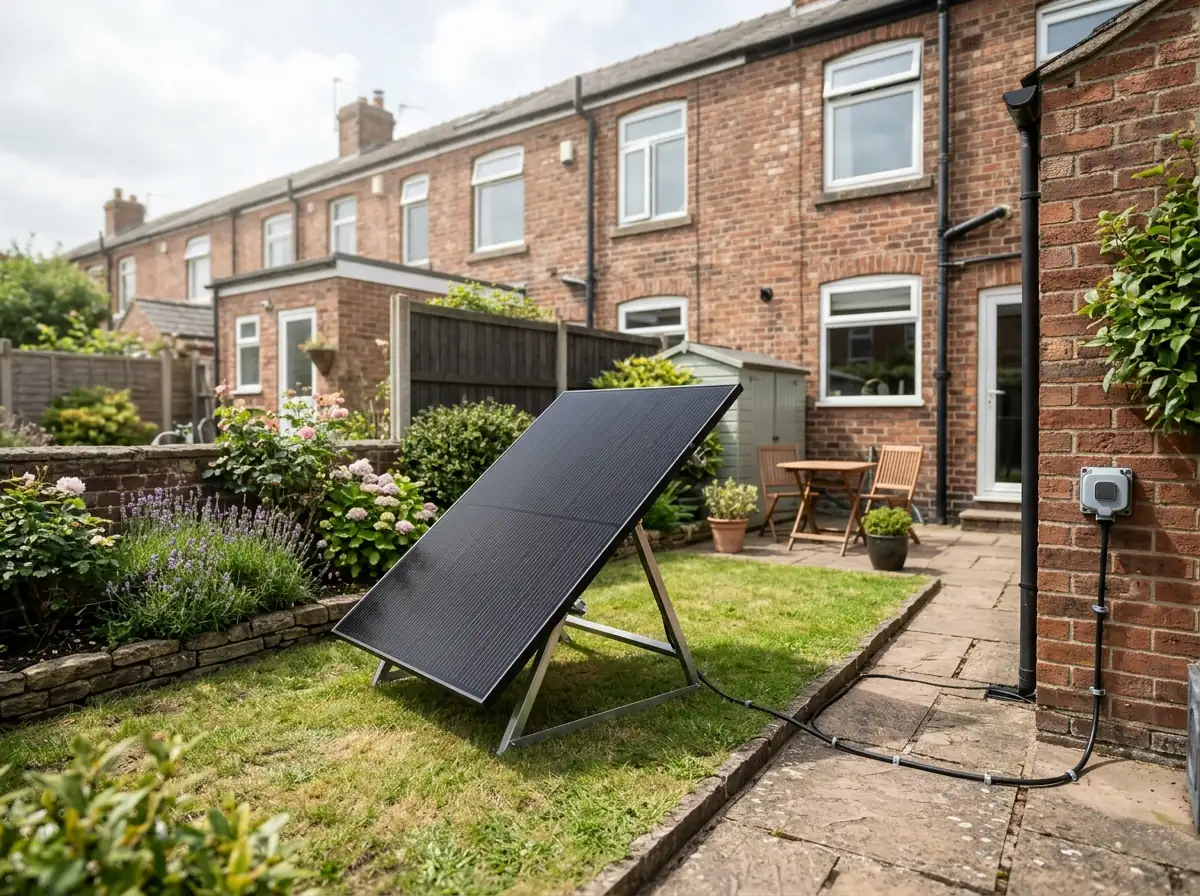
Whatever the panels make is used first by appliances that are running at the time, such as a fridge, router or TV. Anything extra flows out to the grid, and any shortfall comes from the grid as normal. According to the Energy Saving Trust, there is no installer, no scaffolding and no roof work. The kits are portable, so you can take them with you when you move.
Are plug-in solar panels legal in the UK?
Yes, plug-in solar panels have been legal to buy and use in Great Britain since 27 August 2026, provided the kit meets the new UK standards.
The GOV.UK announcement was published on 26 August 2026. Before that, plugging a generator into a household socket was not allowed under UK wiring and safety rules. Northern Ireland is not yet covered, says the Energy Saving Trust.
Several rules changed to make this possible. The Government amended product and electricity safety regulations and published an interim product specification for plug-in solar devices. On 11 August 2026, Ofgem approved a change to the G98 grid connection rules so plug-in kits of 800W or less can connect. Your home's wiring still has to meet the BS 7671 wiring regulations.
What rules do plug-in solar panels have to follow?
The main rule is that a UK-compliant kit can produce no more than 800W, and you are allowed only one kit per home. You cannot plug in two kits or link them together, which is called daisy chaining. Kits with a built-in battery are not covered by the current rules, according to the Energy Saving Trust. The Government may change these limits later.
You must register your kit with your electricity network operator before you use it. You need your name, postcode and the make and model of the device. For Nottinghamshire homes, the network operator is National Grid Electricity Distribution, but registration goes through the national online route. Electricity North West explains that this is a legal requirement and that you should check the model is on the Energy Networks Association device register first.
Citizens Advice says to buy an all-in-one kit with a UK 3-pin plug and a UKCA mark, and never to connect it through an extension lead. If a kit you bought does not meet these standards, try to return it or contact the Citizens Advice consumer service on 0808 223 1133.
How much do plug-in solar panels cost?
Compliant plug-in solar kits cost from around £450, including the panels, microinverter, brackets and cables, according to the Energy Saving Trust. There is no installation charge because you fit the kit yourself. That compares with roughly £7,300 to £7,500 for a typical 4kW rooftop system on a three-bed home, fitted by an MCS installer.
Early prices vary with panel size. A Yorkshire Post round-up in September 2026 found kits from about £350 for a 400W panel to around £670 for a 460W to 515W kit. Most single-panel kits come in under the 800W limit. Check what is included, as some prices leave out the mounting frame. Many kits come with a 10-year warranty.
If you do not have a suitable outdoor socket, you may need an electrician to fit one. The Renewable Energy Association advises a weatherproof outdoor socket rated IP66 or above. That cost is on top of the kit price, so get a quote and factor it in before you buy. Ask your insurer too.
How much do plug-in solar panels save?
Plug-in solar panels save around £70 to £110 a year for most homes, depending on how much power you use while the sun is out. The Government says up to £110 a year and claims an 800W kit can cover up to 20% of an average home's electricity. The Energy Saving Trust estimates about £100 if someone is home in the day, or £70 if not.
The Energy Saving Trust's figures assume an 800W kit facing south at 30 degrees with no shade, making about 700kWh a year. Real savings will be lower if your kit is smaller, shaded or facing east or west. North-facing is not recommended. As a simple sum, a £450 kit saving £70 to £110 a year pays for itself in roughly four to seven years.
You normally cannot get paid for spare power. The Smart Export Guarantee usually needs an MCS certificate, which plug-in kits do not have. Some suppliers may offer an export deal without one, so ask yours. In practice, the best way to save is to run appliances such as the dishwasher or washing machine on sunny days.
Can renters and flat owners use plug-in or balcony solar?
Yes, renters and flat owners can use plug-in solar, but you must get permission from your landlord or freeholder first.
Because there is no roof work and the kit can move with you, plug-in solar is one of the few solar options for people who do not own their roof. Citizens Advice says renters and leaseholders should ask before buying.
Balconies are possible but not always the best fit. The Energy Saving Trust says current UK kits suit gardens better, and balcony use needs permission plus a proper frame or anchors. The Government also says to check whether you need planning permission or listed building consent. Check your tenancy agreement or lease, and tell your insurer.
Are plug-in solar panels safe?
Plug-in solar panels are considered safe if the kit meets UK rules and is set up correctly. The Government says the rules followed independent safety testing of all key electrical parts, and that the UK specification is stricter than Germany's. The 800W limit is there to stop household wiring from overheating.
Some electricians still have concerns. Solar Power Portal reports worries about older circuits, earthing and cheap non-compliant kits sold online. The Renewable Energy Association suggests an electrical check (an EICR) in older homes. Plug straight into a suitable outdoor socket, never an extension lead or adaptor, and do not run cables through an open window.
Fix the panels firmly to a sturdy frame or surface so wind cannot move them, and keep cables clear of trip hazards. The panels switch off during a power cut, so they will not keep your lights on. If you are unsure about your wiring, ask a qualified electrician before plugging in.
Is plug-in solar better than rooftop solar?
No, rooftop solar saves far more money than plug-in solar, but plug-in solar is cheaper and easier to start with. The Government compares savings of up to £110 a year for plug-in with up to £480 for rooftop. A typical 4kW south-facing roof system makes about 3,400kWh a year, around five times the 700kWh of a plug-in kit.
Rooftop solar costs much more upfront, at around £7,300 to £7,500 for 4kW, but saves roughly £400 to £650 a year before export and pays back in about 9 to 14 years. It is MCS certified, so you can earn Smart Export Guarantee payments of around 5p to 15p per kWh. You can also add a battery, which plug-in rules do not yet allow.
Plug-in solar suits renters, flats with outdoor space, and homes where the roof is shaded or unsuitable. If you own your home and have a decent roof, rooftop solar is likely to give a much bigger return over its life. Home solar and batteries also have 0% VAT until 31 March 2027.
Quick answers
The short version, if you're in a hurry.
Are plug in solar panels legal in the UK?
Yes. Since 27 August 2026, plug-in solar kits that meet UK standards are legal in Great Britain. They must be 800W or less and registered with your network operator before use.
How much do plug in solar panels cost in the UK?
Compliant kits cost from around £450, with early prices ranging from about £350 to £670. There is no installation fee, though you may need an electrician to fit an outdoor socket.
How much will a plug in solar panel save me?
Around £70 to £110 a year for most homes. The Government says up to £110, and the Energy Saving Trust says about £100 if you are home in the day.
Can I have more than one plug in solar kit?
No. Current rules allow only one plug-in solar device per home, and you must not link kits together. The Government may review this.
Can I use an extension lead with plug in solar?
No. Plug the kit straight into a suitable wall socket, ideally a weatherproof outdoor one. Extension leads and adaptors are not allowed.
Do I need permission for balcony solar panels?
If you rent or own a leasehold flat, you need permission from your landlord or freeholder. Listed buildings and conservation areas may also need council approval.
Can I get paid for power from plug in solar?
Usually not. The Smart Export Guarantee normally needs an MCS certificate, which plug-in kits do not have, but some suppliers may offer a deal, so ask yours.
Is plug in solar worth it compared with rooftop solar?
It is a cheap, easy start, but rooftop solar saves around four to six times more each year. If you own your home and have a good roof, rooftop is usually the better long-term choice.
Related guides
Are solar panels worth it in the UK in 2026?
Read the guideGuideHow do solar panels work?
Read the guideSolar in your part of Nottinghamshire
See all areas we cover.
Sources
Last updated 25 October 2026.
- Households can save as plug-in solar panels come to market – GOV.UK
- Plug-in solar panels – Energy Saving Trust
- Plug-in solar panels now available – Energy Saving Trust
- Decision to approve DCRP/MP/26/02: plug-in microgeneration – Ofgem
- Six things to know before plug-in solar panels hit the shelves – Citizens Advice
- Plug-in solar panels: 5 top tips to save money and stay safe – Renewable Energy Association
- Plug-in solar – Electricity North West
- Inside the evolving landscape of plug-in solar in the UK – Solar Power Portal
- Best UK plug-in solar kits as prices start from £349.99 – Yorkshire Post