Buying guide
Which solar panels are best for a UK home?
There is no single best solar panel: the best one for your home is an MCS-certified monocrystalline panel that fits your roof, with a strong warranty and a good temperature coefficient. In 2026 most domestic panels are around 400–450W, so a typical 4kW system needs about 9–10 panels. The inverter choice matters just as much, especially on shaded roofs.
Free · no obligation · about a minute · Quick answers
Last updated
0% VAT on solar ends 31 March 2027. That's under six months away, and it's due to go back to 5% after.
What the VAT change means for youHow do I choose the best solar panels?
Choose panels by checking five things: wattage, efficiency, temperature coefficient, warranty length and whether the product is MCS-certified. Brand name matters far less than how well the panels and inverter suit your roof, your shading and your budget. Comparing these figures side by side across two or three quotes tells you more than any list of top brands.
MCS certification is the first filter. You can check a panel on the MCS Product Directory, which MCS says confirms products meet its standards for quality, reliability and performance. You also need an MCS installation to claim Smart Export Guarantee payments. After that, compare quotes on price, warranties and the installer's workmanship guarantee, and ask each installer why they chose that panel for your roof.
What wattage solar panels should I get?
Most UK homes in 2026 are fitted with panels of around 400–450W each, according to iHeat.
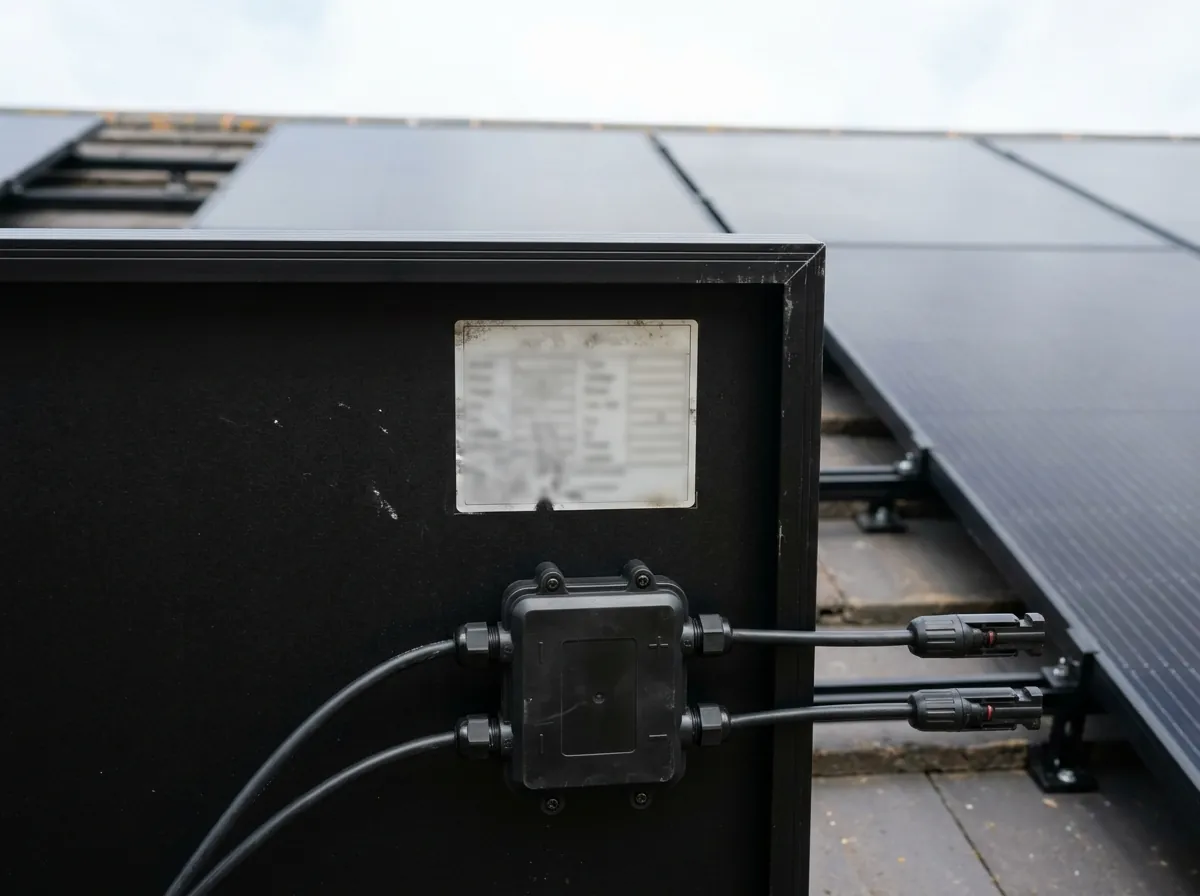
Higher-wattage panels let you fit more power onto a small roof, but they are not automatically better value. A typical domestic panel is about 1.7–1.8m tall and 1.1m wide, so at around 430W a 4kW system needs roughly 9–10 panels.
Wattage is measured in lab conditions, so real output depends on your roof direction, pitch and shading. A 4kW south-facing system makes about 3,400kWh a year. The Energy Saving Trust describes a typical home system as about 4.5kWp using around 12 panels. On a large, unshaded roof, cheaper lower-wattage panels can give the same total output for less money.
Monocrystalline vs polycrystalline: which is better?
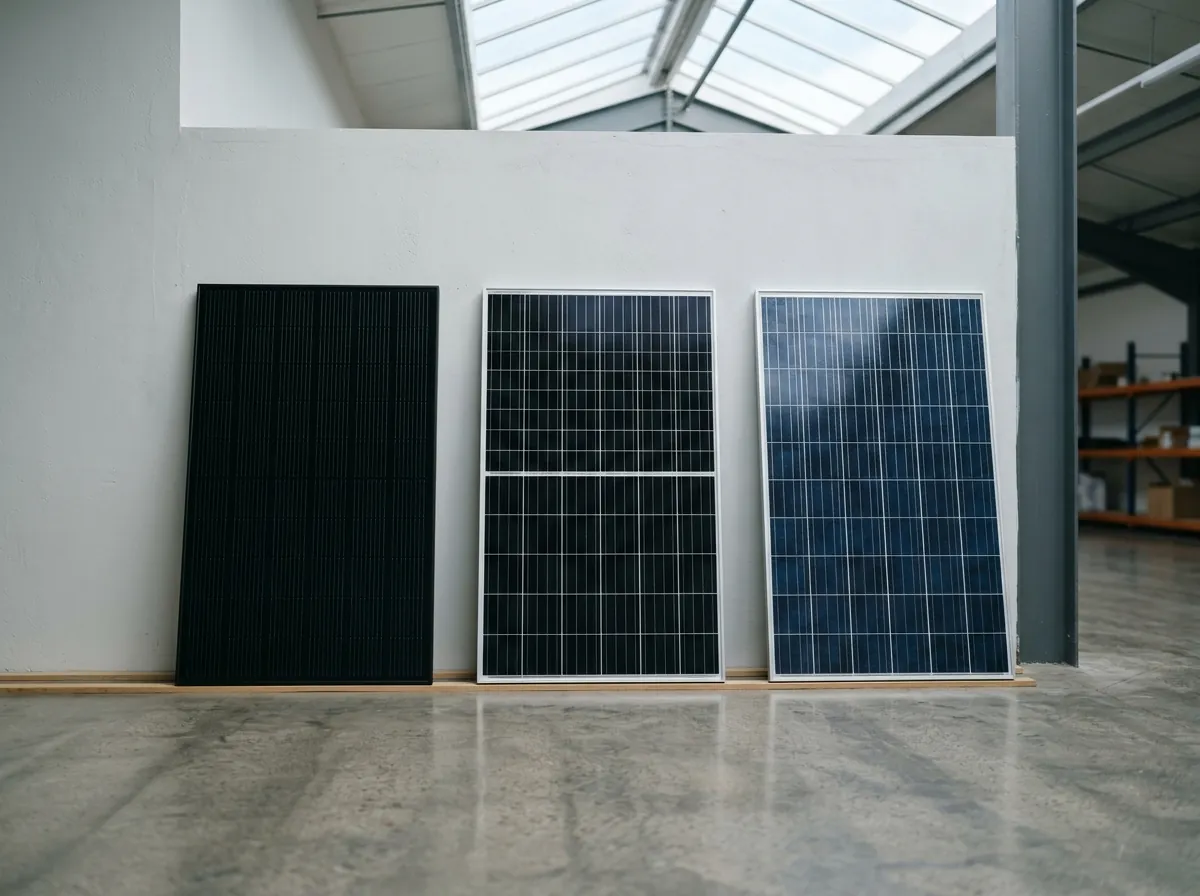
Monocrystalline panels are better for almost every UK home because they are more efficient, and they now make up nearly all new domestic installations.
Polycrystalline panels, with their blue speckled look, are now rare in new home systems. Within monocrystalline, newer n-type cells such as TOPCon have largely taken over from older p-type designs.
PV Tech, reporting the ITRPV industry roadmap, says n-type TOPCon overtook p-type PERC cells in 2024, and n-type wafers held about 82% of the market in 2025. Back-contact panels move the electrical contacts to the rear of the cell, so the front catches more light and looks cleaner. They are among the most efficient and most expensive options. Heterojunction (HJT) is another high-efficiency n-type technology.
How efficient are solar panels in 2026?
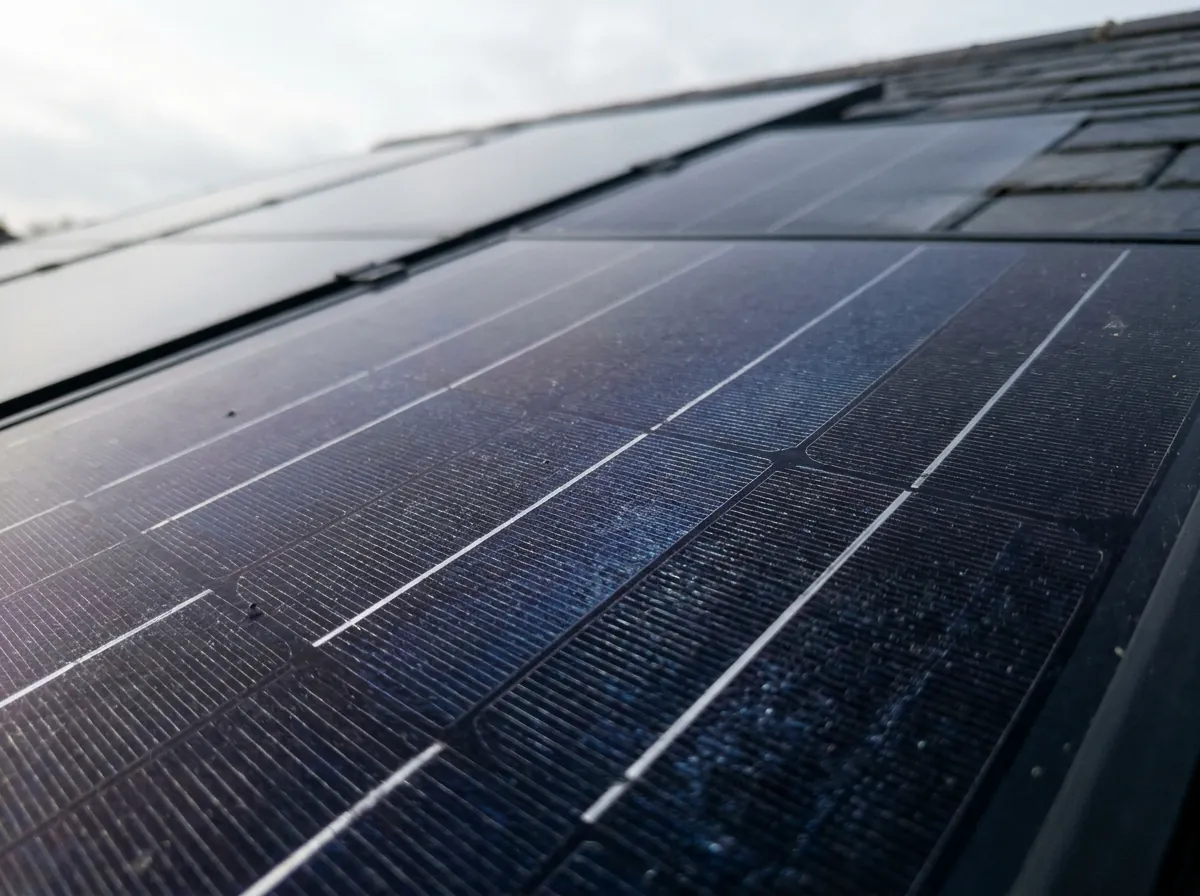
Most new panels in 2026 are roughly 22–24% efficient, with premium back-contact panels at the top of that range. Efficiency tells you how much power a panel makes per square metre. The ITRPV roadmap, reported by PV Tech, gives average module efficiencies of 23.5% for n-type TOPCon, 21.7% for older PERC and 24.1% for TOPCon-based back-contact panels.
Efficiency is not the only figure to check. The temperature coefficient shows how much output a panel loses for every degree it heats above 25°C, and a lower number is better. Heatable says typical values run from about -0.26% to -0.35% per °C. Panels on a sunny roof run far hotter than the air, so a panel at -0.26% copes better on bright summer days.
Higher efficiency matters most when your roof is small or awkward. If you have plenty of space, a slightly less efficient panel can deliver the same total output for less money. That is why it is better to compare each quote's predicted yearly output in kWh, alongside the price, rather than the efficiency figure alone.
What warranty should solar panels have?
Look for a long product warranty, ideally 12 years or more, and a performance warranty of 25–30 years.
The product warranty covers faults in the panel itself, while the performance warranty guarantees a minimum output as the panel ages. Heatable reports product warranties ranging from 10 to 25 years across current panels.
Performance warranties commonly last 25–30 years and typically promise roughly 85–92% of original output after 25 years. A warranty is only as good as the company behind it, so check who handles claims in the UK. Also ask about the installer's workmanship warranty, and whether the installation is covered by an insurance-backed guarantee if the installer stops trading.
Are tier 1 solar panels better?
Not necessarily: tier 1 is a financial ranking of manufacturers, not a measure of panel quality.
The list is produced by BloombergNEF and is based on whether a maker's panels have been used in projects financed by several different commercial lenders. It is published every quarter and is only available in full to Bloomberg subscribers.
Wind & Sun quotes BloombergNEF saying the classification is purely a measure of industry acceptance and does not directly account for product quality. There are no official tier 2 or tier 3 lists, as those labels are marketing terms. Tier 1 can hint that a maker is large and established, but MCS certification, datasheet figures and a UK-backed warranty tell you more.
What are all black solar panels like?
All black solar panels use black cells, frames and backsheets for a neater look, and they produce slightly less power than standard panels.
Many people choose them for appearance, especially on dark slate or tiled roofs. According to Solar Power World, they run a little hotter and capture less reflected light, and manufacturers put the efficiency gap at about 0.5 percentage points or less.
They usually cost a bit more, so you are paying mainly for looks. For most homes the difference in yearly output is small, but it is worth asking installers to quote both versions so you can see the price gap. If you live in a listed building or conservation area, check with your district council before going ahead, as planning rules can be stricter.
Which solar inverter is best: string, microinverters or optimisers?
A string inverter is best for most simple, unshaded roofs, while microinverters or optimisers suit roofs with shading or panels facing different ways.
The inverter turns the panels' DC power into AC power for your home. Solar Power Portal says string inverters are the most common and cheapest option for UK homes, but shade on one panel can pull down the whole string.
Microinverters put one small inverter behind each panel, so shading only affects that panel and you can monitor each one. Optimisers are fitted to each panel but still feed a central string inverter, and usually cost less than microinverters. A hybrid inverter also manages a battery, which suits you if you want storage now or later. The Energy Saving Trust says inverters typically last around 12 years.
Quick answers
The short version, if you're in a hurry.
What is the best solar panel brand in the UK?
There is no single best brand. Choose an MCS-certified panel with good efficiency, a low temperature coefficient and a long UK-backed warranty, fitted by an MCS installer.
How many solar panels do I need for a 4kW system?
About 9–10 panels at 400–450W each. The exact number depends on the panel wattage and your roof layout.
Are polycrystalline panels still worth buying?
Rarely for homes. Monocrystalline panels are more efficient and now make up almost all new UK domestic installations.
What is TOPCon?
TOPCon is an n-type monocrystalline cell technology. It has overtaken older PERC cells and averages around 23.5% module efficiency, according to the ITRPV industry roadmap.
What is a good temperature coefficient for solar panels?
Lower is better. Typical values are about -0.26% to -0.35% per °C, and panels nearer -0.26% lose less output on hot days.
Do all black solar panels produce less power?
Slightly. They run a little hotter, and manufacturers put the efficiency gap at about 0.5 percentage points or less. Most people choose them for looks.
How long does a solar inverter last?
The Energy Saving Trust says inverters typically need replacing after around 12 years. Warranties are often 5–10 years and can sometimes be extended.
Do I need microinverters?
Only if your roof has shading or panels face different directions. On a simple unshaded roof, a string inverter is usually cheaper and works well.
Related guides
How do I choose a good solar panel installer?
Read the guideGuideSolar panel maintenance: what do solar panels need?
Read the guideSolar in your part of Nottinghamshire
See all areas we cover.
Sources
Last updated 25 October 2026.
- MCS Product Directory – MCS
- Solar panel sizes UK 2026 – iHeat
- Solar panels – Energy Saving Trust
- ITRPV 2026: solar industry maintains historic learning curve – PV Tech
- Most efficient solar panels UK 2026 – Heatable
- BloombergNEF Tier 1 does not mean high quality – Wind & Sun
- All about all-black solar panels – Solar Power World
- Solar PV inverters UK: complete guide 2026 – Solar Power Portal