Maintenance
Solar panel maintenance: what do solar panels need?
Solar panels need very little maintenance: a visual check every one to two years, an occasional clean and a professional service every three to five years. The biggest running cost is usually a replacement inverter after 10 to 15 years, which the Energy Saving Trust puts at around £800.
Free · no obligation · about a minute · Quick answers
Last updated
0% VAT on solar ends 31 March 2027. That's under six months away, and it's due to go back to 5% after.
What the VAT change means for youDo solar panels need maintenance?
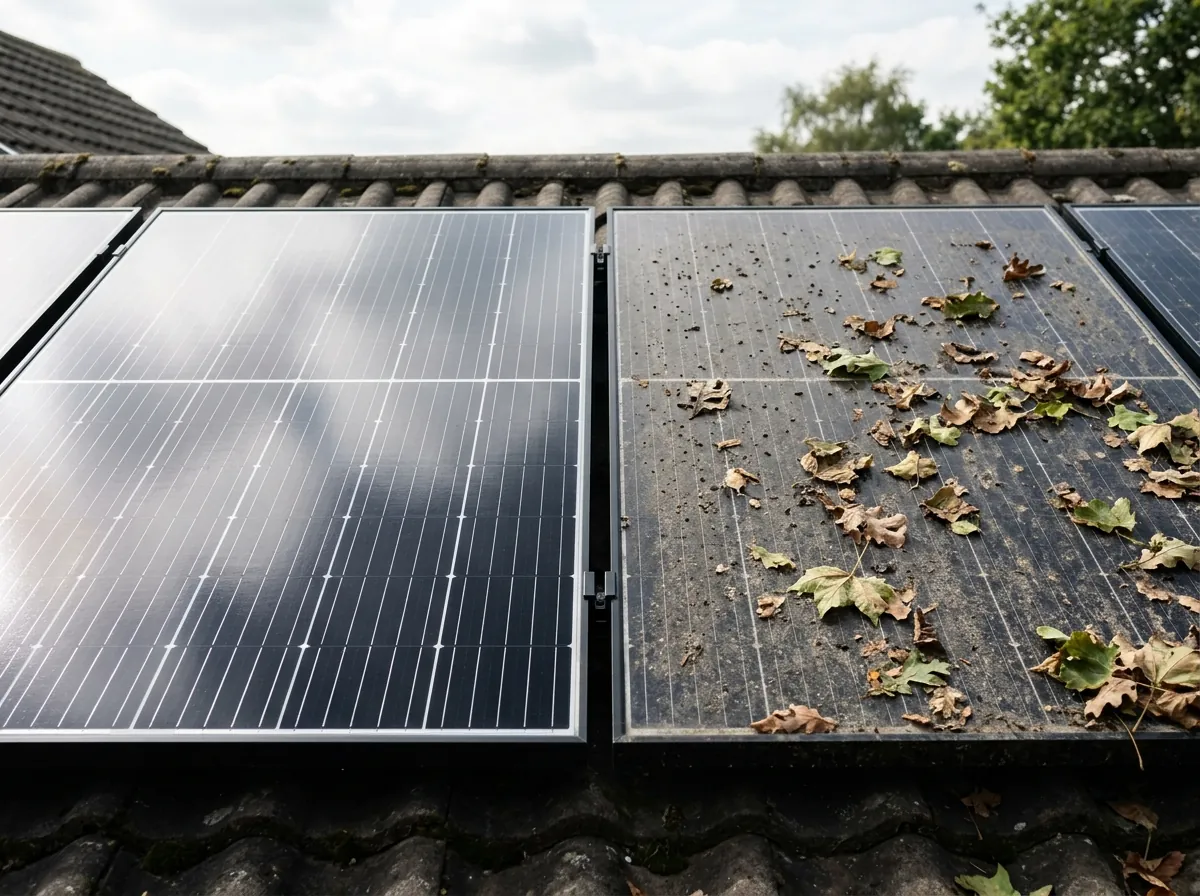
Solar panels need very little maintenance, because they have no moving parts and rain washes off most dirt. The Energy Saving Trust suggests inspecting the panels, mounting system and visible wiring every one to two years. Look for damage, water getting in, heavy dirt, bird droppings or lichen. You can do this from the ground with binoculars or your phone's zoom.
Every three to five years, the Energy Saving Trust recommends a full professional service to look for small cracks and inverter problems. Some installers' warranties require a service within a set period, so read your warranty terms and keep receipts. Trimming nearby branches also helps, as it cuts shading and stops leaves building up on the panels.
Never climb onto the roof or stand on the panels yourself, as you could fall or crack the glass. If you see damaged or loose cables, turn the system off at the isolator if it is safe to do so, and report the problem to your installer straight away rather than touching anything. Note the date and take photos from the ground for your warranty claim.
Do solar panels need cleaning?
Most UK solar panels only need cleaning every two or three years, because regular rain does much of the work, according to Sunsave.
Clean them sooner if you can see heavy grime, if you live near trees or a dusty farm, or if output drops for no obvious reason. Bird droppings are the most damaging, and lichen needs a professional.
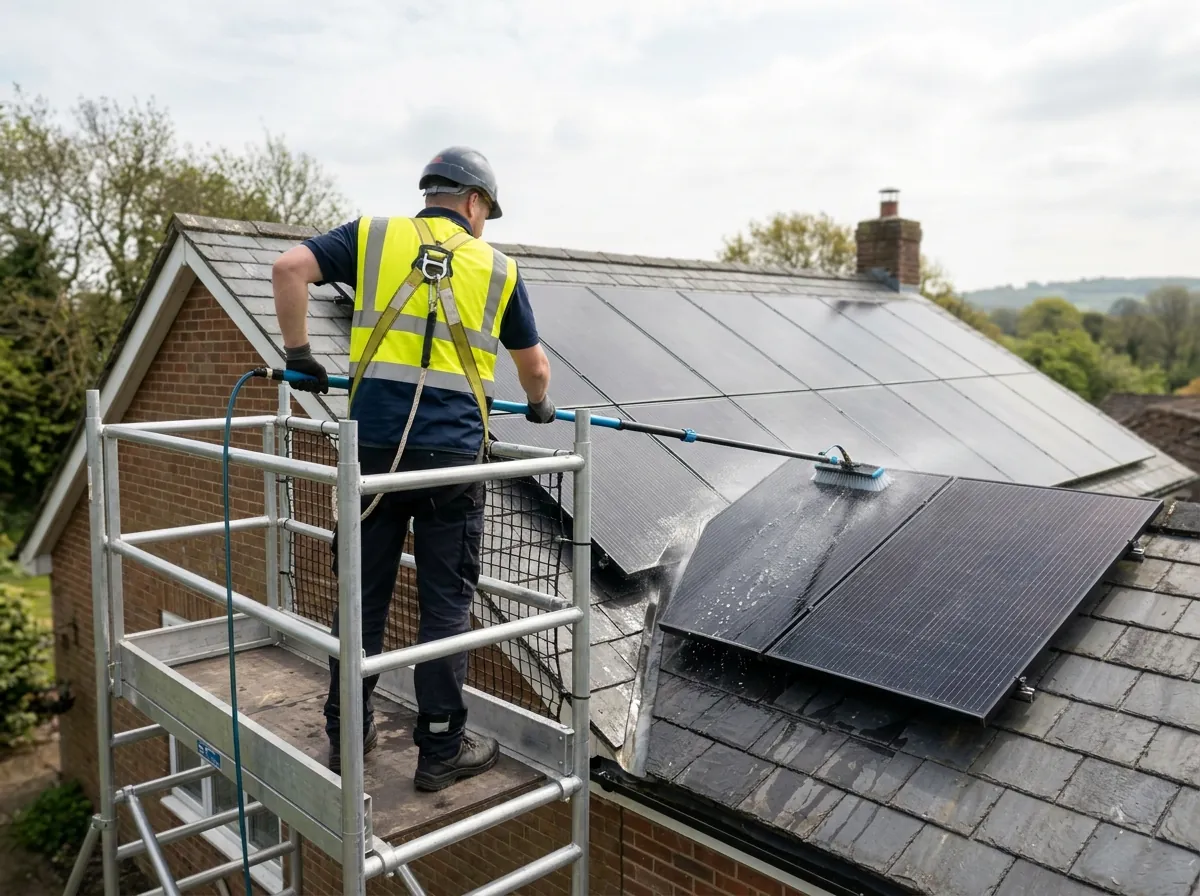
If you clean them yourself, use plain water and a soft brush or sponge on a long pole, working from the ground. Avoid washing-up liquid, which leaves residue, and never use a pressure washer, which can damage seals and wiring. Turn the system off first, and clean early or late in the day so water does not dry into streaks, advises the Energy Saving Trust.
How much does solar panel cleaning cost?
Professional solar panel cleaning usually costs about £100 to £150 for a typical home, with an average of around £150, according to MyJobQuote in October 2026.
It lists £80 to £150 for a 2–3 bed terraced or semi, £120 to £180 for a 4-bed detached, and £50 to £90 for a bungalow or ground-mounted system.
Some firms charge per panel instead, at roughly £4 to £15 each, often with a minimum charge. The Energy Saving Trust says cleaning typically starts at about £60 to £100 for a standard system. Most jobs take 30 to 45 minutes. A telescopic cleaning pole for DIY costs about £70 to £150, says Sunsave, so it can pay for itself after one clean.
How do I check my solar panels are working?
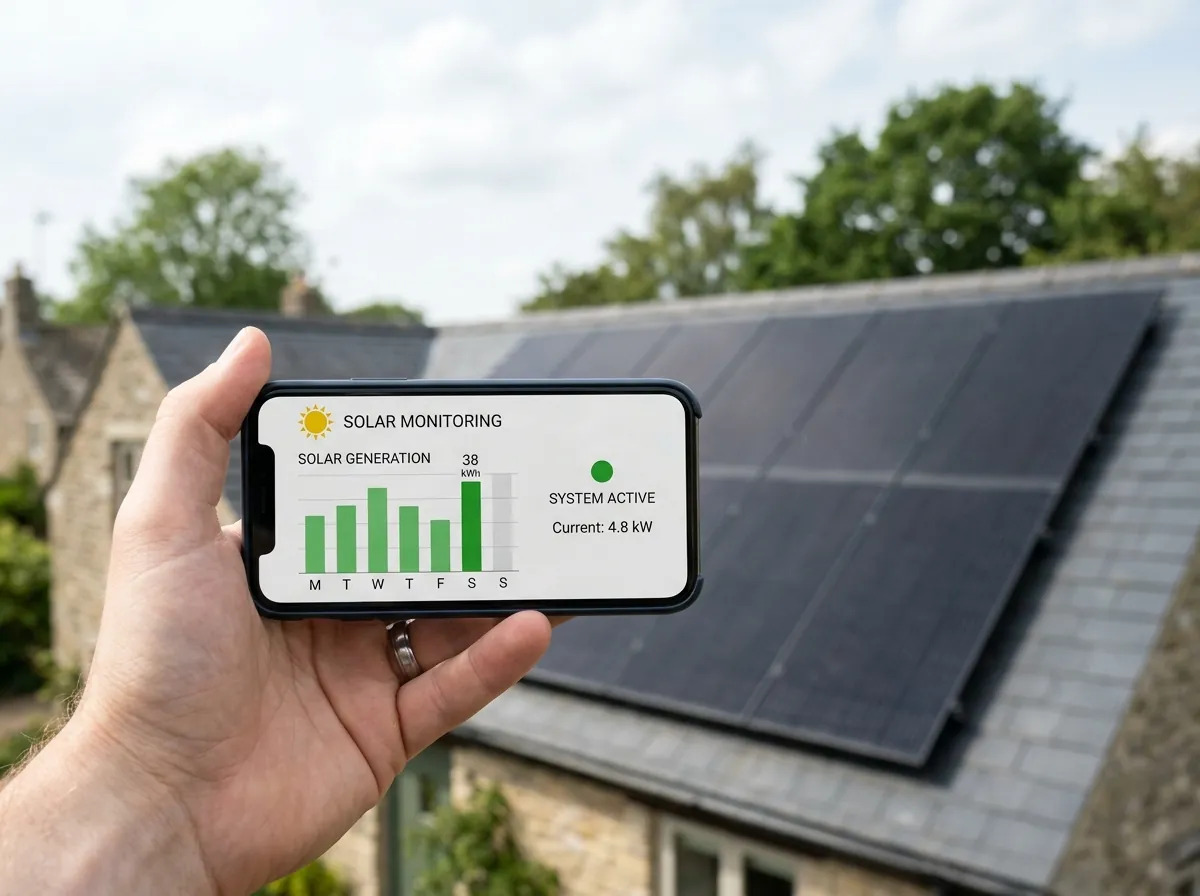
The easiest way to check your solar panels are working is to look at the inverter's monitoring app or the generation meter. Most inverters come with a free app from the inverter maker that shows how much you generate, use, import and export, by day, month or year, explains Sunsave. Inverters also log error codes, which help your installer find a fault.
Compare your yearly total with the estimate on your MCS certificate. As a guide, a 4kW south-facing system makes around 3,400kWh a year in the UK. Output is much lower in winter, so compare a month with the same month last year, not with summer. A sudden drop on a sunny day, a blank inverter screen or a red warning light is worth reporting to your installer.
How long do solar panels last and how much do they degrade?
Solar panels usually last 25 to 30 years or more, and lose only a small amount of output each year.
The Energy Saving Trust says panels can work well for around 30 years with regular upkeep, and its wider guidance expects a system to last at least 25 years. Many panels keep generating beyond their warranty period, though a little more slowly each year.
This slow loss is called degradation. Fuse Energy puts typical degradation at about 0.5% to 0.8% a year, with some modern panels lower. Most makers guarantee at least 80% of the original output after 25 to 30 years. So a 4kW system making 3,400kWh in its first year should still make at least about 2,700kWh a year after 25 years if it meets an 80% guarantee.
When does a solar inverter need replacing and what does it cost?
A solar inverter usually needs replacing after 10 to 15 years, at a cost of around £800, according to the Energy Saving Trust.
The exact price depends on the size of your system and the make of inverter. The inverter turns the panels' direct current into the alternating current your home uses, so when it fails, the system stops producing power.
Because panels last far longer, most homes replace the inverter once during the life of the system. Inverter warranties are typically 5 to 12 years, and some can be extended to 15 or 20, says Reonic. If you are adding a battery later, ask whether a hybrid inverter would make sense when the old one is replaced.
What warranties come with solar panels?
Solar panels usually come with five layers of cover: a product warranty, a performance warranty, an inverter warranty, a workmanship warranty and an insurance-backed guarantee. According to Reonic, panel product warranties cover defects for 10 to 25 years, while performance warranties guarantee around 80% to 90% of original output after about 25 years.
The installer gives a workmanship warranty covering the installation and roof works, often 2 to 10 years. MCS-certified installers must belong to a consumer code approved by Trading Standards, such as RECC or HIES, notes the Energy Saving Trust. Under the RECC code you should get an insurance-backed workmanship warranty of at least two years.
The insurance-backed guarantee matters if your installer stops trading, because the insurer then honours the workmanship warranty. Under the RECC scheme, these guarantees run from 1 to 12 years depending on the provider. Ask for the name of the insurer and a copy of the policy certificate when the job is finished, and keep all warranty paperwork with your MCS certificate.
What happens if a solar panel stops working?
If a solar panel or inverter stops working, contact your installer first, as the fault is usually covered by a warranty in the early years. Note any error code on the inverter or app and take screenshots of your generation data. A big or sudden drop in output is worth reporting quickly, as faults rarely fix themselves.
If the fault is in the equipment, the installer will normally claim on the manufacturer's warranty. If it is down to poor fitting, the workmanship warranty applies. Where the installer has gone out of business, claim on the insurance-backed guarantee. If you cannot agree, RECC offers mediation and independent arbitration for its members' customers.
Pigeons nesting under panels can strip cable insulation, so check for birds during your yearly look from the ground and consider bird mesh if you see them. If the system is out of warranty, a qualified solar engineer can test the panels, wiring and inverter and quote for repairs. Often the inverter is the part that has failed, and replacing it costs around £800.
Quick answers
The short version, if you're in a hurry.
Do solar panels need servicing?
Yes, but not often. The Energy Saving Trust suggests a visual check every one to two years and a full professional service every three to five years.
How often should solar panels be cleaned in the UK?
Usually every two or three years, as rain does most of the work. Clean sooner if you see heavy dirt, bird droppings or an unexplained drop in output.
How much does it cost to clean solar panels?
Around £100 to £150 for most homes, or roughly £4 to £15 per panel. Small or ground-mounted systems can cost £50 to £90.
How much does a new solar inverter cost?
Around £800, depending on the size of system and make, according to the Energy Saving Trust. Most need replacing after 10 to 15 years.
How long do solar panels last?
Typically 25 to 30 years or more. They lose about 0.5% to 0.8% of output a year, and most are guaranteed to keep at least 80% after 25 years.
What is an insurance-backed guarantee for solar panels?
It is insurance that honours your installer's workmanship warranty if the installer stops trading. RECC members must provide one lasting at least two years.
Can I clean solar panels with a pressure washer?
No. Pressure washers can damage seals and wiring. Use plain water and a soft brush from the ground, and avoid washing-up liquid.
How do I know if my solar inverter is broken?
Check the inverter screen or app for error codes or a red warning light, and look for zero generation on a bright day. Report it to your installer with screenshots.
Related guides
Do solar panels damage your roof?
Read the guideGuideWhich solar panels are best for a UK home?
Read the guideSolar in your part of Nottinghamshire
See all areas we cover.
Sources
Last updated 25 October 2026.
- Solar panel cleaning and maintenance – Energy Saving Trust
- Solar power facts – Energy Saving Trust
- Consumer protection – Energy Saving Trust
- Consumer leaflet – Renewable Energy Consumer Code (RECC)
- About deposit and workmanship warranty protection – RECC
- MCS approved financial protection products – MCS
- Solar panel cleaning cost – MyJobQuote
- Cleaning solar panels – Sunsave
- Solar panel apps: how do they work? – Sunsave
- How long do solar panels last? – Fuse Energy
- Solar panel warranty UK – Reonic
- Solar panel bird proofing – iHeat